Fires started by hot work are rarely dramatic at the time. A spark drops into a wall cavity, onto insulation or into a pile of offcuts, the welder packs up, and the fire starts an hour later when nobody is watching. A hot work permit exists to stop that sequence: it makes someone check the area before the work, keep watch after it, and sign it off only when the area is cold.
What counts as hot work on a building site
Welding and oxy cutting are obvious. The ones that catch builders are grinding (sparks travel several metres), torch-on membrane roofing and waterproofing, soldering copper pipe near timber framing, and heat guns. Any task that produces sparks, flame or enough heat to ignite nearby material belongs under a permit.
The legal and standards framework
WHS laws require the risks of fire and explosion to be managed like any other risk, and the model code of practice on welding processes covers hot work hazards. AS 1674.1 sets out fire precautions for welding and allied processes. Principal contractors and insurers frequently require a permit system for hot work, and some policies set specific conditions such as fire watch periods. Check your insurance policy: a fire from unpermitted hot work is a claim you do not want to argue about.
First question: can you avoid it?
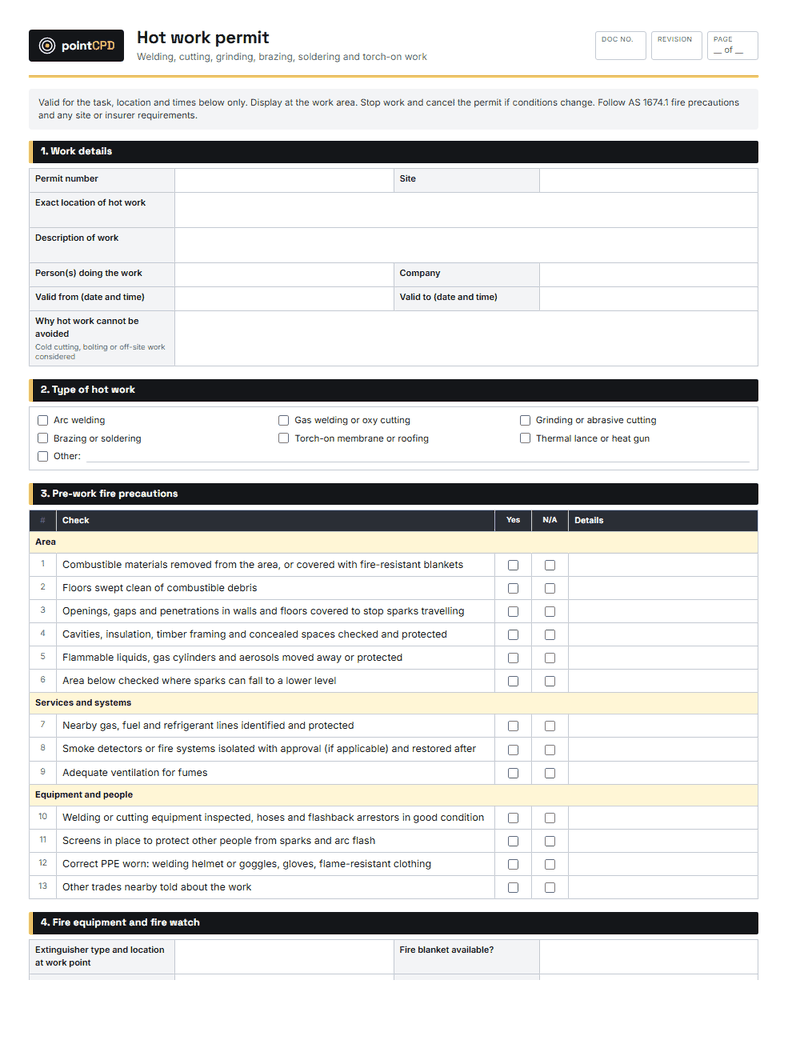
The permit starts by asking why hot work cannot be avoided, because eliminating the hazard is always the best control. Bolted steel connections, press-fit plumbing fittings, cold cutting tools, and fabricating off site all remove the fire risk from the building. Where they are practicable, they beat any permit.
The precautions that matter most
- Remove or protect combustibles. Move them away, or cover with fire-resistant blankets. Sweep floors of sawdust and offcuts.
- Close the paths sparks take. Cover gaps, penetrations and openings, and check the level below.
- Check what is hidden. Wall cavities, insulation, timber framing and ceiling spaces are where delayed fires start.
- Move fuel. Flammable liquids, gas cylinders, aerosols and fuel cans away from the work.
- Extinguisher at the work point, of the right type, with a fire watch trained to use it.
The fire watch
The fire watch is a named person whose only job is to watch for fire during the work and for a period after it finishes. The period is set by the site rules, the insurer or the relevant standard, and it is written on the permit. The fire watch then makes a final check of the area, including below, behind and inside cavities, before the permit is closed. On a small job the fire watch may be the second tradesperson, but it must not be the welder, whose attention is on the weld.
Authorisation and close-out
A competent person who is not doing the work inspects the area and signs the permit, with the valid times. The permit is displayed at the work area. If the task, location or conditions change, the work stops and a new permit is needed. After the fire watch period, the fire watch and the authorising person sign the close-out. A permit that was issued but never closed out is a red flag in any investigation.
Fitting it into your paperwork
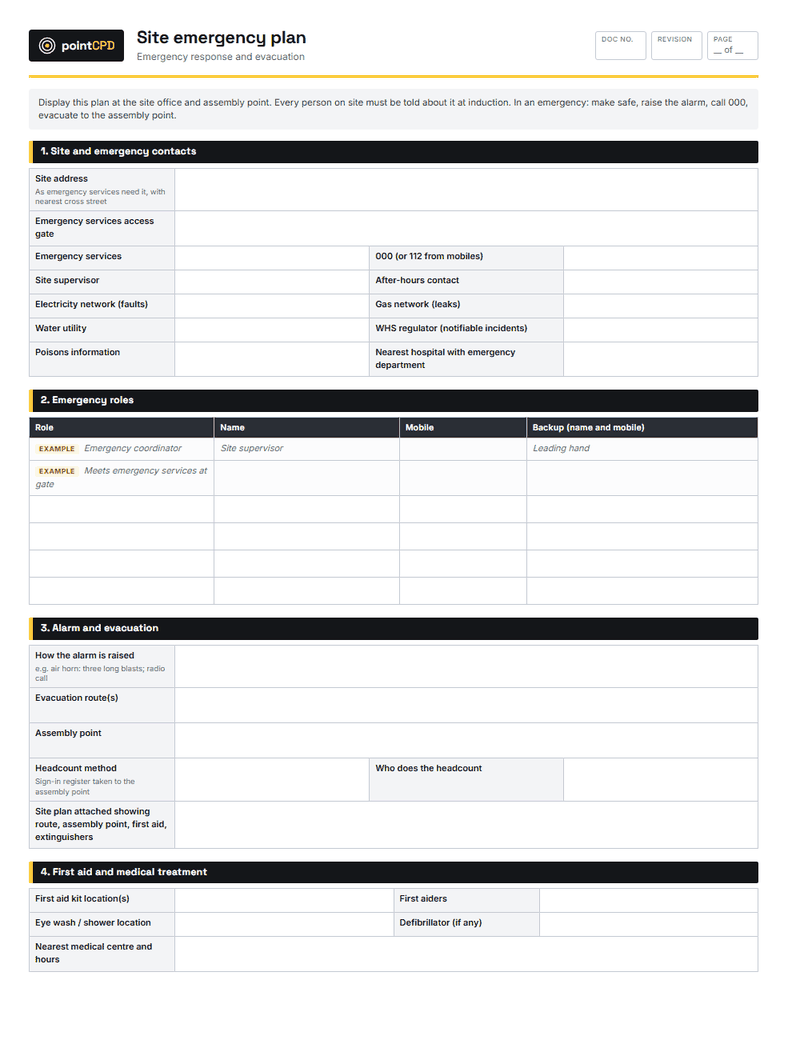
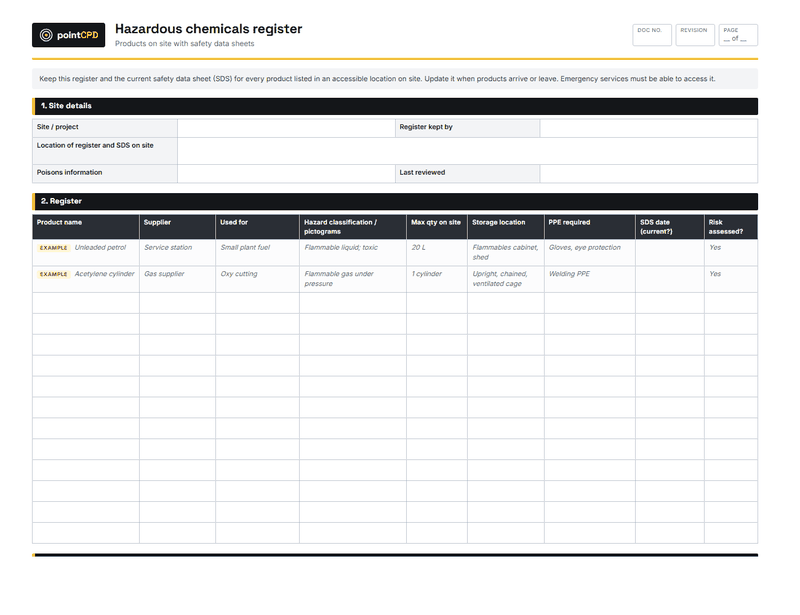
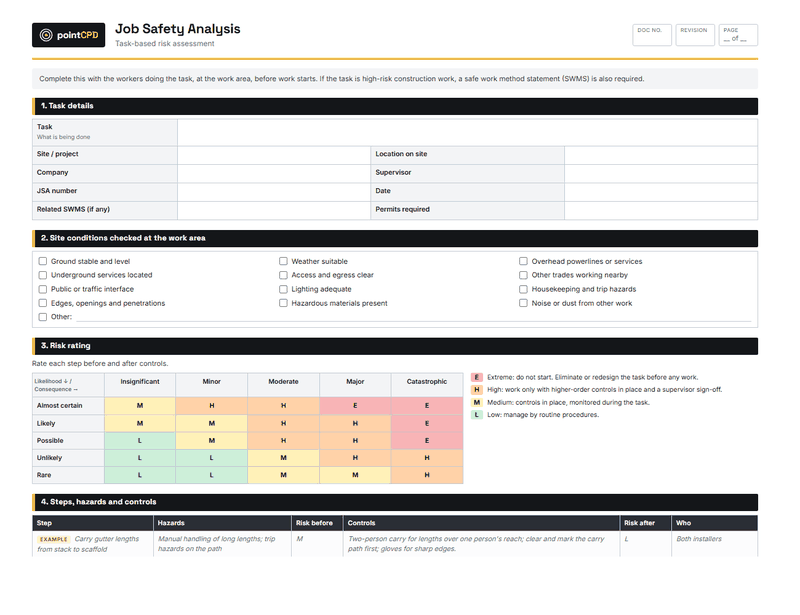
Hot work is often part of a larger task covered by a SWMS or JSA; the permit sits alongside it for the fire risk. Make sure the site emergency plan covers fire, and that gas cylinders are on the hazardous chemicals register.
Torch-on membranes: the hot work builders forget
Torch-applied bituminous membranes on flat roofs, balconies and planter boxes are one of the most common sources of fire on residential and small commercial jobs. The torch operates at very high temperature, the work is often next to timber framing, fascias, insulation and cavities, and the membrane itself is combustible. Treat torch-on work exactly like welding: a permit, combustibles removed or protected, cavities and upstands checked, an extinguisher at hand, and a fire watch that continues after the torch goes out. Where the design allows, self-adhered or liquid-applied systems eliminate the flame entirely.
Hot work in existing homes and renovations
Renovations carry extra fire risk from hot work, because existing buildings hide dust, old insulation, bird nests and debris in cavities and roof spaces, and because occupants and their belongings may be nearby. Before hot work in an existing building:
- check what is behind and above the work, opening up if needed;
- ask whether the home’s smoke alarms need temporary protection, and restore them after;
- move the owner’s belongings and flammable items well away;
- make sure occupants know where the work is and to stay clear; and
- extend the fire watch and final check into roof spaces and sub-floors near the work.
Soldering copper pipe in a wall cavity of an older house is a classic cause of delayed fires. Press-fit fittings remove the flame altogether and are often the better choice in renovation plumbing.