Key takeaways
- Concrete, bricks, tiles, pavers and mortar all contain crystalline silica. Cutting, grinding, drilling, chasing and dry sweeping release respirable dust that can cause silicosis and lung cancer.
- Materials with 1% or more crystalline silica are crystalline silica substances, and businesses working with them have specific duties on top of their general WHS duties.
- Workers must not be exposed above the workplace exposure standard of 0.05 mg/m³ as an eight-hour time-weighted average, with air monitoring where exposure is uncertain.
- Controls work in combination: avoid cutting where possible, use water suppression or on-tool extraction, clean up with a suitable vacuum rather than a broom, and use fitted respiratory protection.
- Health monitoring is required for workers doing ongoing processing of silica materials where there is a significant risk to health.
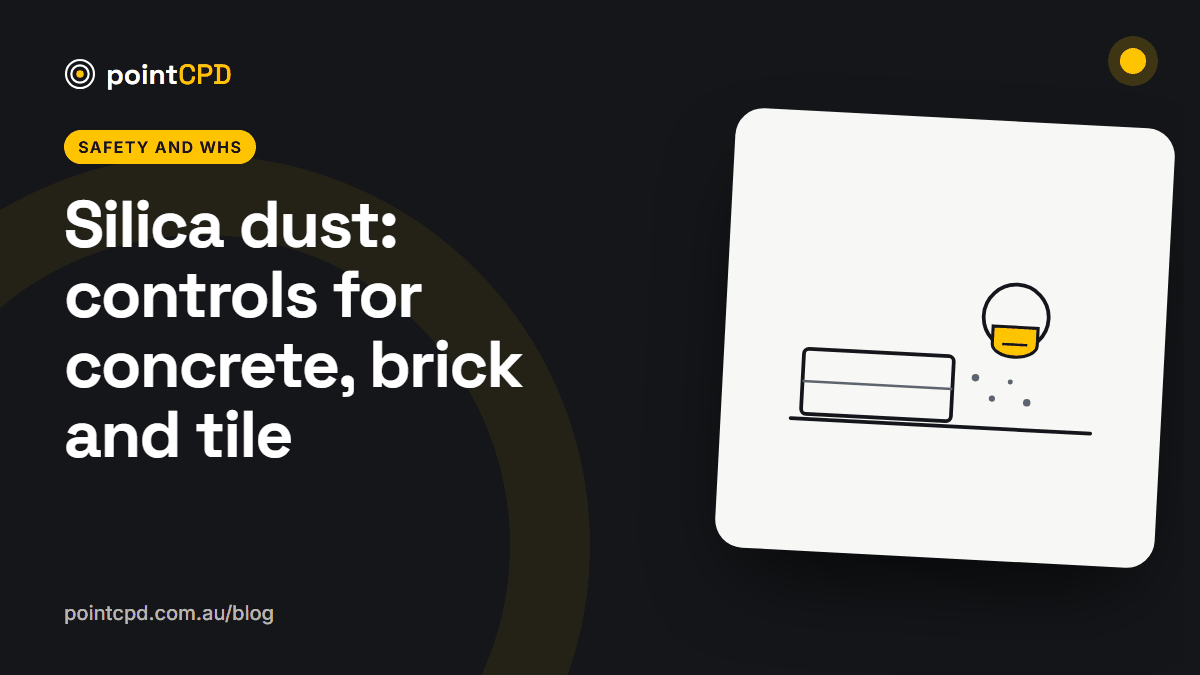
When engineered stone was banned across Australia, many people outside the benchtop industry assumed the silica problem had been dealt with. It had not. Engineered stone was the worst material, with crystalline silica content up to 97%, but it was never the only one. Concrete, bricks, tiles, pavers, mortar and many natural stones contain crystalline silica too, and cutting, grinding and chasing them are everyday tasks on residential building sites.
This guide explains where silica is found on a house site, what the WHS rules require, and the controls that actually keep exposure down.
What silica is and why it harms
Silica, or silicon dioxide, is one of the most common minerals in the earth’s crust and a major component of sand, rock and soil, which is why it is in so many building materials. Crystalline silica, most commonly quartz, is the hazardous form. When materials containing it are cut, sanded, drilled, ground or crushed, they release tiny particles called respirable crystalline silica. They are too small to see, and they can stay in the air for a long time.
Breathing in respirable crystalline silica can cause silicosis, an irreversible scarring of the lungs, as well as lung cancer, chronic bronchitis, emphysema, kidney damage and autoimmune disease. Safe Work Australia describes acute silicosis after short, very high exposures, accelerated silicosis after several years of moderate to high exposure, and chronic silicosis after long-term exposure to lower levels. Symptoms can take years to appear and can keep getting worse after exposure stops. All of it is preventable.
Where silica is on a house site
Safe Work Australia’s figures show why this is not just a stonemason’s problem. Aggregates, mortar and concrete can range from 20% to 98% crystalline silica. Natural sandstone ranges from 52% to 95%. Granite sits between 25% and 50%. Common tasks that generate silica dust on residential sites include:
- cutting and laying pavers, and cutting bricks and blocks;
- chasing brick or concrete walls for services;
- core drilling and cutting penetrations in slabs;
- grinding concrete floors and edges, and scabbling;
- cutting and grinding tiles, including porcelain and natural stone;
- demolition, jackhammering and chiselling masonry;
- excavation, and crushing, loading and dumping of rubble;
- clean-up, especially dry sweeping.
What the rules require
Every business has a general duty to manage risks to health and safety. On top of that, Safe Work Australia explains that businesses have specific duties when working with materials containing 1% or more crystalline silica, which the regulations call crystalline silica substances. Concrete, tiles and bricks are all examples.
Workers and others at the workplace must not be exposed to an airborne concentration of respirable crystalline silica above the workplace exposure standard, which is 0.05 mg/m³ as an eight-hour time-weighted average. Air monitoring is required if you are not certain on reasonable grounds whether exposure exceeds the standard, or if monitoring is needed to work out whether there is a risk to health. Health monitoring must be provided for workers doing ongoing processing of crystalline silica substances where there is a significant risk to their health from exposure.
Safe Work Australia’s Model Code of Practice on managing risks of respirable crystalline silica sets out how to meet these duties. Safe Work Australia also notes that the workplace exposure standards list is being replaced by Workplace Exposure Limits for airborne contaminants from 1 December 2026, so check the current limit when you review your procedures.
Visible dust is a warning, not a measurement. The respirable particles that cause silicosis are invisible. A cloud you can see means the invisible fraction is already present at a concentration you cannot judge by eye.
The controls that work
Controlling silica dust, in order
- 1Avoid the cutDesign and order to size: pre-cut pavers, set-out that reduces cuts, cast-in penetrations.
- 2SubstituteChoose lower-silica materials or methods that produce less dust, where they suit the job.
- 3Engineer it outWater suppression or on-tool dust extraction on every cutting, grinding and chasing tool.
- 4Isolate and manageCut outdoors or in a set-down area away from others; keep others clear; clean with a suitable vacuum.
- 5Protect the workerFitted, fit-tested respiratory protection as the last line, not the only one.
Avoid the cut. The most effective control is not generating the dust at all. Order materials to size where possible, plan set-out to minimise cuts, cast penetrations into slabs rather than core drilling later, and use pre-cut or factory-finished products.
Water suppression. Water-fed saws and tools capture dust at the point of cutting. They need enough water flow to be effective, and the resulting slurry must be managed so it does not dry and become dust again or run into stormwater.
On-tool extraction. Shrouded grinders, chasers, saws and drills connected to a dust extraction vacuum capture dust at the source. The vacuum must be suitable for the dust, and regulator guidance generally points to a high-efficiency, H-class unit for silica. Filters must be maintained and emptied safely.
Isolation and housekeeping. Set up cutting stations outdoors and away from other workers, the public and neighbours, and position them so dust blows away from people. Never dry sweep or use compressed air to clean silica dust. Use wet methods or a suitable vacuum.
Respiratory protection. Respirators are the last line of defence and should be used together with the other controls, not instead of them. A respirator only works if it fits: fit testing, a clean-shaven seal and proper maintenance matter. Disposable masks worn loosely over a beard give little protection.
The same job, two ways
| Uncontrolled | Controlled |
|---|---|
| Dry cutting pavers with a petrol saw | Wet cutting with a water-fed saw |
| Chasing brick with an angle grinder and no shroud | Chasing with a shrouded tool connected to an extraction vacuum |
| Sweeping slurry and dust with a broom | Wet clean-up or a suitable vacuum |
| Disposable mask worn loosely, beard underneath | Fitted, fit-tested respirator, clean-shaven where it seals |
| Labourer cutting next to the open front door | Cutting station downwind, away from other trades and neighbours |
Putting it into a SWMS
Many silica-generating tasks sit inside high-risk construction work that already needs a safe work method statement, such as demolition of load-bearing elements or work where powered mobile plant moves. Even where a SWMS is not strictly required, the same structure helps: identify the tasks that generate dust, the controls for each, who is responsible for providing and maintaining the equipment, and how the controls will be checked. A SWMS that says “wear dust mask” is not a control plan. One that specifies water-fed saws for all paver cuts, shrouded chasers with extraction for services, and vacuum clean-up is.
Training and toolbox talks
Workers need to know why the controls matter, or they will be skipped when the job is running late. Training should cover where silica is found, how it harms, the controls required for each task, how to fit and check a respirator, and how to use and maintain water-fed and extraction tools. A short toolbox talk before a trade starts cutting on your site, covering the cutting station, the tools and the clean-up rules, is one of the cheapest controls there is. Record who attended.
Silica alongside asbestos and other dusts
On renovation sites, silica is rarely the only dust. Older homes can contain asbestos in fibre cement sheeting, vinyl floor tiles, eaves and wet area linings, and demolition of masonry and render produces silica dust in the same work area. Timber dust, lead paint and synthetic mineral fibres add to the mix. Before any demolition or cutting on an older home, identify what is there. Asbestos has its own licensing and removal rules, and it must be dealt with before general demolition and cutting begin.
Subcontractors and the principal contractor
Most silica-generating work on house sites is done by subcontractors: bricklayers, tilers, landscapers, concreters, electricians and plumbers chasing walls. Each is responsible for its own work, but the builder, as the principal contractor, controls the site and has its own duties. Practical steps include asking for each trade’s dust controls before they start, checking the tools on site match the SWMS, setting site rules for cutting locations and clean-up, and stopping work that is generating uncontrolled dust.
A worked example: the courtyard pavers
A landscaping subcontractor arrives to lay a courtyard of concrete pavers with a petrol cut-off saw and no water. The courtyard is next to the house, where plasterers are working with the doors open, and the neighbour’s windows are a few metres away. The builder stops the work and asks for a water-fed saw and a cutting station set up at the far side of the site, downwind of the house. The landscaper hires a water-fed saw, uses a vacuum rather than a broom to clean up, and wears fitted respirators for the cutting. The job takes a little longer and the plasterers are not breathing the dust.
Clients, neighbours and renovations
On renovations, silica dust can also reach the occupants. Families who are living in the house while a bathroom or kitchen is being renovated, and neighbours on tight urban lots, are exposed to dust from cutting and demolition. Isolating the work area, cutting outdoors, and using extraction and wet methods protects them as well as the workers, and avoids complaints.
The bottom line
The engineered stone ban removed the most dangerous material, but concrete, brick, tile and pavers still contain crystalline silica, and cutting them still produces dust that can cause incurable disease. The exposure standard is low, and visible dust is a sign it may already be exceeded. Avoid cuts where you can, capture dust at the source with water or extraction, clean up without a broom, and use fitted respiratory protection as the last line. And make sure every trade on your site does the same.
Questions builders ask
Does concrete contain silica?
Yes. Safe Work Australia lists aggregates, mortar and concrete as containing between 20% and 98% crystalline silica. Cutting, grinding and drilling concrete produces respirable silica dust.
What is the workplace exposure standard for silica?
The workplace exposure standard for respirable crystalline silica is 0.05 mg/m³ as an eight-hour time-weighted average. Safe Work Australia notes the standards list is being replaced by Workplace Exposure Limits from 1 December 2026.
What is a crystalline silica substance?
A material containing 1% or more crystalline silica, such as concrete, tiles and bricks. Businesses working with them have specific WHS duties.
Is wet cutting enough to control silica dust?
Wet cutting is an effective engineering control, but it works best combined with isolation, wet or vacuum clean-up and fitted respiratory protection, and the slurry must be managed so it does not dry into dust.
Can I sweep up silica dust on a building site?
Dry sweeping and compressed air stir respirable silica dust back into the air. Use wet clean-up methods or a vacuum suitable for silica dust instead, and manage slurry so it does not dry out.
Do workers exposed to silica need health monitoring?
Health monitoring is required for workers doing ongoing processing of crystalline silica substances where there is a significant risk to health from exposure.
Sources
- What is crystalline silica · Safe Work Australia
- WHS duties for silica · Safe Work Australia
- Model Code of Practice: Managing risks of respirable crystalline silica in the workplace · Safe Work Australia
Published 8 September 2026. General information for builders, not legal, financial or engineering advice for a specific job. Check current requirements with the relevant regulator or standard before relying on them.