Key takeaways
- Theft costs more than the item: delays, re-ordering, insurance excesses and rework. Security is part of site establishment, not an afterthought.
- Layer the controls: make the site hard to get into, keep valuables off it, make theft visible, and make stolen items traceable.
- Solar-powered 4G cameras with remote monitoring and alerts suit residential sites without power or internet; tool and plant trackers help recovery.
- In NSW, camera surveillance of employees generally needs 14 days’ written notice, clearly visible cameras and signs at each entrance. Avoid recording audio.
- Secure the security system: change default passwords, update firmware and control who can access the footage.
Every residential builder has a theft story: the power tools taken from a locked ute, the ducted air conditioning unit that disappeared the night after delivery, the copper pipe stripped from a frame, the excavator that vanished from a subdivision over a long weekend. Theft from building sites is common, and the real cost is much more than the replacement value. There is the delay while items are re-ordered, the insurance excess, the rework when fitted items are ripped out, and the time spent dealing with police and insurers.
This guide explains how to layer site security on a residential job, which technology is worth using, and the NSW surveillance rules to follow when you put cameras and trackers on site.
Why building sites are targets
Building sites are attractive to thieves for obvious reasons. They are often empty at night and on weekends, they hold valuable and easily resold items, and ownership of a drill or a roll of cable is hard to prove. Sites go through stages of vulnerability: early on, plant and materials sit in the open; at lock-up, the house can be secured but also hides activity; near completion, appliances, fittings and fixtures are installed but the house is unoccupied.
Layer the controls
No single measure stops theft. The most effective approach combines several layers, each making theft harder, less rewarding, more visible or more traceable.
Four layers of site security
- 1Hard to get inSecure fencing, locked gates, lighting and lockable storage.
- 2Nothing worth takingDeliveries timed to installation, appliances fitted late, tools taken home.
- 3Theft is visibleCameras, alarms, alerts and neighbours who know who should be on site.
- 4Stolen items are traceableMarked tools, serial registers, GPS and Bluetooth trackers.
Layer one: hard to get in
Temporary fencing is required on most sites for safety and is the first security layer. Keep panels clamped, gates locked and the fence intact, particularly after deliveries. Lighting deters opportunistic theft and helps cameras. A lockable site container or shed, secured with a quality lock, protects tools and materials that must stay on site. Once the house reaches lock-up, lock it every night, and control who has keys or access codes.
Layer two: nothing worth taking
The cheapest security is not having valuable items on site when nobody is there. Time deliveries of appliances, hot water units, air conditioning equipment and expensive fixtures to arrive when they will be installed, or shortly before handover. Ask suppliers to hold items until needed. Encourage trades to take tools home or lock them away, and do not leave keys in plant. Order materials in quantities that match the work, rather than stockpiling.
Layer three: make theft visible
Security cameras have changed a lot for residential sites. Solar-powered cameras with 4G connections can be mounted on a pole or the fence, need no mains power or internet, and send alerts and footage to a phone. Some use analytics to distinguish people and vehicles from animals and moving branches, reducing false alarms. Monitored services review alerts and can respond with warnings through a speaker, or by calling security or police.
Alarms with sensors on containers, doors and windows add another layer once the house is at lock-up. Whatever you install, decide who responds when it goes off. An alert that nobody acts on is only a recording of the theft.
Neighbours are part of this layer too. Introduce yourself at the start of the job, give them a contact number, and let them know when the site should be empty. They are more likely to report something suspicious if they know who belongs there.
Site security technology compared
| What it does | Watch out for |
|---|---|
| 4G solar camera: records and alerts without mains power or internet | Mobile coverage, data plan, placement out of reach |
| Monitored camera: a service reviews alerts and responds | Ongoing cost, false alarms, response procedures |
| Site alarm with sensors on containers and doors | Who responds at 2am, and how quickly |
| GPS tracker on plant and trailers | Battery life, subscription, notice to workers |
| Bluetooth tags on tools | Short range; relies on nearby phones to locate |
| Smart locks and access codes | Code sharing; changing codes when trades finish |
Layer four: make stolen items traceable
Mark tools with your business name or an identifying mark, and keep a register of serial numbers and photos. It makes recovery and insurance claims easier and makes tools harder to sell. GPS trackers on plant, trailers and high-value equipment can help police recover them, and some plant has telematics and immobilisers built in. Small Bluetooth tags can help locate tools, but they have short range and rely on nearby phones, so they are better for finding a misplaced drill than for recovering a stolen one.
The NSW surveillance rules
Cameras and trackers raise legal obligations. In NSW, the Workplace Surveillance Act 2005 governs surveillance of employees at work. For camera surveillance of employees, notice generally must be given in writing at least 14 days before the surveillance starts, or before a new employee starts work. The notice must say what kind of surveillance will be carried out, how and when it will start, and whether it will be continuous or intermittent, and for a limited period or ongoing. The cameras, or their casings, must be clearly visible, and signs notifying people that they may be under surveillance must be clearly visible at each entrance to the area. Tracking surveillance of employees, such as GPS on vehicles, has its own notice requirements under the Act.
On a building site, where workers of several businesses come and go, the practical approach is to include surveillance in the site induction, put signs at the entrances, mount cameras visibly, and give written notice to your own employees. Separate laws restrict recording private conversations, so turn off audio recording unless you have clear advice that it is lawful. Point cameras at your site, not into neighbours’ yards and windows.
Signs are a deterrent as well as a legal requirement. Visible cameras and clear signage at the entrances tell a would-be thief the site is watched. Hidden cameras may catch a thief, but visible ones are more likely to prevent the theft.
Secure the security system
Internet-connected cameras and alarms are computers, and they can be hacked. Change default passwords, use strong unique passwords and multi-factor authentication for the app, keep firmware updated, and limit who can view footage. When a job ends, remove access for trades and clients who no longer need it. Footage may contain images of workers and the public, so store it securely and delete it when it is no longer needed.
Insurance and records
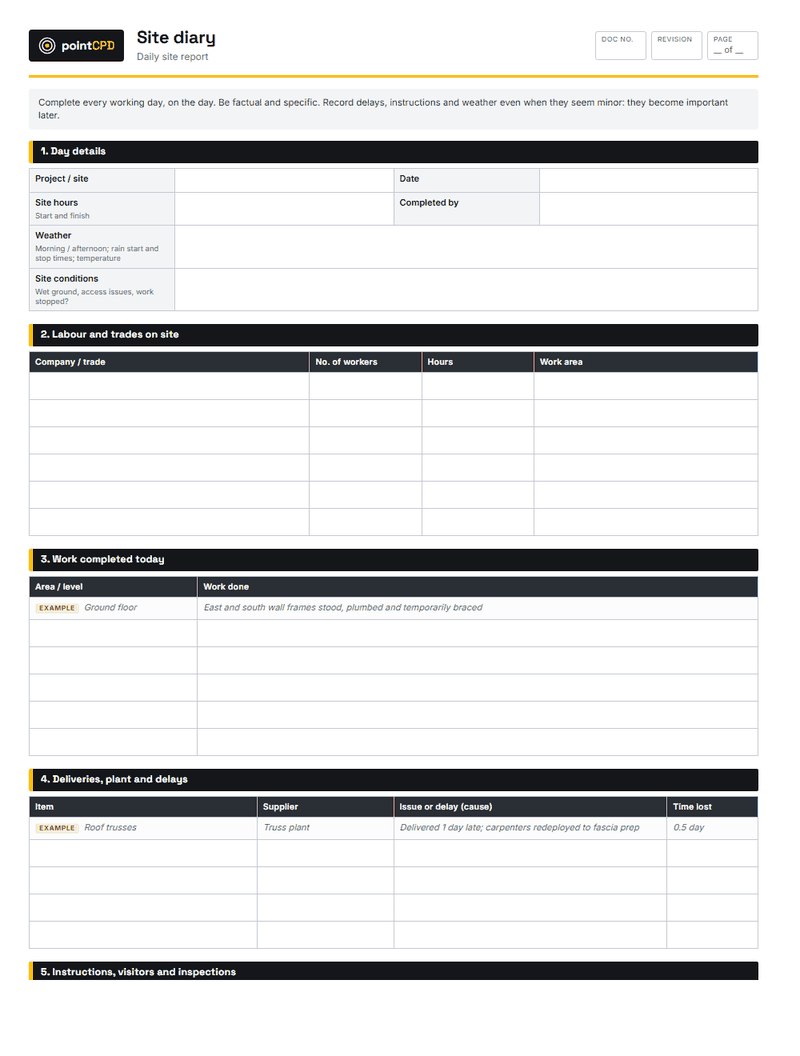
Check what your contract works insurance covers for theft of materials and fixtures on site, and what the excess is. Tools are often covered separately, and cover may depend on how they were secured. Keep receipts, serial numbers and photos. Report thefts to police promptly and keep the event number for the insurer. Record thefts in the site diary, including the effect on the programme, because a significant theft may support an extension of time claim under some contracts.
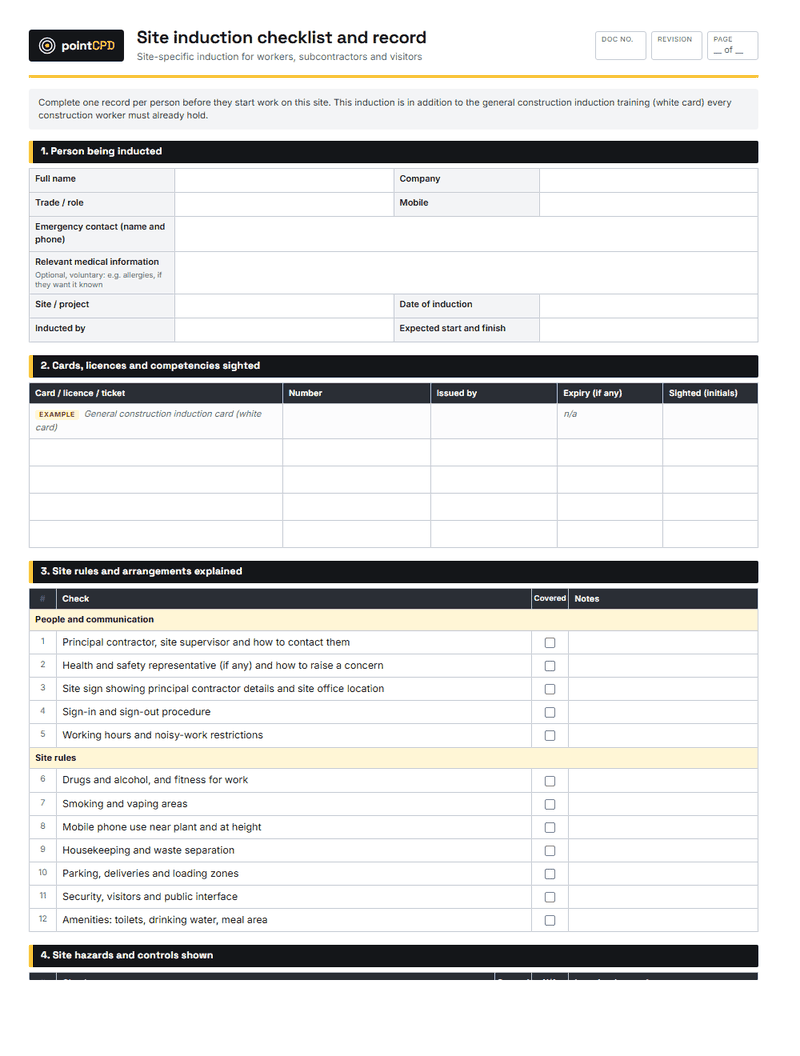
End-of-day lock-up checklist
- Gates locked, fence panels clamped and intact.
- Tools and small plant in the locked container or taken off site.
- Keys removed from plant; plant immobilised where possible.
- Valuable materials stored out of sight or not yet delivered.
- Doors and windows locked once the house is at lock-up.
- Cameras and alarm armed, and working.
- Site safe for anyone who does get in: excavations fenced, no ladders left up.
Security through the stages of a build
The right controls change as the job progresses. During site establishment and earthworks, the main risks are plant, trailers, fuel and materials stacked in the open, so fencing, immobilisers, trackers and a camera covering the plant area matter most. During framing, timber packs, steel, roofing materials and tools are the targets; order to the programme and use a lockable container. Services rough-in brings copper pipe and electrical cable into an open frame, which is why rough-in is a common time for theft. Once the house is at lock-up, the building itself becomes the secure store, and door and window locks, alarms and key control take over. The final weeks, with appliances, tapware, lighting and air conditioning installed in an empty house, are often the most exposed of all.
Planning security by stage also helps with cost. A camera and alarm rented for the higher-risk stages may be all a small job needs, while a larger site or an estate with several houses may justify a monitored system for the whole build.
Who pays, and who is responsible
Under most residential contracts, the builder carries the risk of loss or damage to the works until handover, which is why the builder’s contract works insurance matters. Subcontractors are usually responsible for their own tools and plant. Make the site rules clear at induction: where tools must be stored, who locks up, and who has keys and codes. When something goes missing, that clarity avoids arguments about who should have secured it.
A worked example: the appliance delivery
A builder completing a home in a new estate has the kitchen appliances and air conditioning units delivered on a Friday, ready for installation the following week. Over the weekend, the house is broken into and the appliances are taken. The job is delayed while replacements are ordered, and the insurance claim carries an excess.
On the next job, the builder changes the process. Appliances are delivered on the morning they are installed. A solar 4G camera covers the driveway and front door, with signs at the gate, and alerts go to the site supervisor’s phone. The house is locked every night once it reaches lock-up, and access codes are changed when each trade finishes. The builder introduces themselves to the neighbours at the start of the job. There are no thefts on that site.
The bottom line
Site security works best in layers: make the site hard to enter, keep valuables off it overnight, make theft visible, and make stolen items traceable. Cameras and trackers are now affordable for residential sites, but they come with obligations: notice, signage, no audio, and secure systems. Build security into site establishment, and it costs far less than the theft it prevents.
Questions builders ask
What is the best security camera for a building site?
For most residential sites, a solar-powered camera with a 4G connection works well because it needs no mains power or internet. Look for alerts, remote viewing, good night vision and, ideally, analytics that reduce false alarms.
Do I need to tell workers about security cameras on site in NSW?
Generally yes. Under the Workplace Surveillance Act 2005, camera surveillance of employees needs written notice at least 14 days before it starts, clearly visible cameras, and signs at each entrance.
Can site security cameras record audio?
Separate laws restrict recording private conversations without consent. The safest approach is to turn off audio recording unless you have clear advice that it is lawful.
How do I stop appliances being stolen from a new house?
Time deliveries so appliances arrive when they will be installed, lock the house every night once it reaches lock-up, and use cameras and alarms during the vulnerable period before handover.
Are tool trackers worth it?
GPS trackers help recover plant, trailers and high-value equipment. Small Bluetooth tags are useful for finding misplaced tools but have limited range for recovering stolen ones.
Sources
- Workplace Surveillance Act 2005 · NSW Legislation
- Small business cyber security · Australian Signals Directorate
Published 11 September 2026. General information for builders, not legal, financial or engineering advice for a specific job. Check current requirements with the relevant regulator or standard before relying on them.