Skip to content
  • NSW-first CPD, built by a practising builder
  • Instant PDF certificates
  • Unlimited assessment attempts
  • 12 points a year, sorted
  • 15% off your first order — get your code
  • Content aligned to the NCC 2022

Free template Safety and WHS

Free excavation permit and dig checklist

Authorise digging only once underground services are located and the excavation is planned: service checks, ground support, spoil, access and daily inspection record.

The short version

Before any digging, locate every underground service: lodge a Before You Dig Australia enquiry, read the plans, then physically locate services before machine digging near them. Plan how the excavation will be kept from collapsing (benching, battering or shoring), where spoil goes, and how people get in and out. A trench or shaft deeper than 1.5 metres is high-risk construction work and needs a SWMS.

  • No sign-up
  • Free for commercial use
  • Add your own logo
  • Updated 14 Sep 2026

Reviewed by Daniel Betros, Licensed Building Practitioner

Animated walkthrough · 7 steps

How to complete an excavation permit

Seven steps. The permit is signed only when the services are located and the ground support is in place.

1 / 7
  1. Location, purpose, planned length, width and depth, method (machine or hand) and dates. Depth drives most of what follows.

  2. Lodge a Before You Dig Australia enquiry well before work, and check site plans, previous work and visible signs of services: pits, meters, marker posts.

  3. Plans are indicative. Use a locator and pothole by hand or vacuum excavation to expose services before machine digging near them. Mark them on the ground.

  4. Choose benching, battering or shoring to suit the soil, depth and water, as designed by a competent person. Deeper than 1.5 metres means a SWMS as well.

  5. Spoil and plant kept back from the edge, barriers around the excavation, and safe ladders or ramps for getting in and out.

  6. The authorising person checks services are located and marked and the controls are in place, then signs. Display it at the excavation.

  7. Inspect before each shift and after rain, vibration or anything that could affect stability. Record each check.

Excavation injures and kills builders in two ways: the ground falls in, or the bucket finds a service nobody located. Both are almost always preventable with planning done before the machine arrives. An excavation permit forces that planning: it cannot be signed until the services are located and the ground support is in place.

Services first: plans, then the ground

Lodge a Before You Dig Australia enquiry well ahead of the work. Asset owners respond with plans of their gas, electricity, water, sewer and telecommunications assets near the site. Read them, check they cover the dates of your work, and note any conditions the owners set for working near their assets.

Then treat the plans as a starting point, not an answer. Service plans are indicative: depths change, services are moved, and private services on the property are usually not shown at all. Locate services on the ground with a locator, and expose them by hand or with vacuum excavation before machine digging near them. Mark them, and show the operator.

Keeping the sides up

Soil that looks solid can collapse without warning, especially after rain, near vibration or where spoil has been heaped on the edge. There are three main ways to protect an excavation:

MethodWhat it isSuits
BatteringSloping the sides back to a stable angleOpen sites with room to slope, stable soils
BenchingCutting the sides into stepsCohesive soils where steps stay stable
ShoringSupporting vertical sides with shields, props or sheetingTight sites, deeper trenches, poor or wet soils

The choice depends on the soil, depth, water, space and nearby loads, and should be made by a competent person, with shoring designed or certified where required. Deeper than 1.5 metres, the work is on the high-risk construction work list and needs a SWMS.

Spoil, plant and edges

Spoil heaped on the edge adds load to the side and can fall back onto anyone below. Plant and trucks near the edge do the same. Set the distances in the plan. Put barriers or covers around the excavation, especially where the public or other trades pass, and never have anyone in the excavation while the machine is still digging.

Getting in and out

People in a trench need a way out that is quick in an emergency: ladders or ramps close to where they are working. Plan rescue before anyone goes in. If the excavation could collect gas or lack oxygen, such as near sewer lines or in low-lying ground, check the atmosphere.

Inspections

Excavations change. Inspect before each shift, after rain, and after anything that could affect stability: heavy plant nearby, vibration, a burst pipe. The inspection table on the permit records who looked and whether it was safe to enter. If in doubt, no one goes in until a competent person has checked it.

When things go wrong

If a service is struck, stop, keep people away, and follow the emergency procedure for that service: evacuate upwind for gas, stay clear of damaged cables, call the asset owner and emergency services. A collapse or a strike may be a notifiable incident, so record it on an incident report and check whether the regulator must be told.

Renovation and small-site excavation

Many excavation incidents on residential work happen on small jobs: a trench for a stormwater line beside the house, underpinning, a footing for a deck, a sewer connection. These jobs often feel too small for a permit, but they concentrate the hazards. Trenches beside existing footings can undermine them. Private services on the property, such as the sewer line, a garden lighting cable or a gas line to a barbecue, are rarely on Before You Dig plans. Access is tight, so spoil ends up on the edge. A short permit still asks the right questions: where are the services, how will the sides be kept up, where does the spoil go, and is anyone going in?

Pool excavations

Swimming pool excavations combine depth, often well beyond 1.5 metres, tight rear-yard access, spoil that has nowhere to go, and neighbours’ structures close to the boundary. They also often happen after the house is occupied, with children and pets nearby. Treat them as high-risk construction work with a SWMS, plan the spoil removal before digging, protect adjoining structures with engineering advice where the excavation is near them, fence the excavation securely at the end of each day, and check it after rain before anyone enters. Coordinate with the dilapidation report for neighbouring properties, which is often a consent condition for pool work near boundaries.

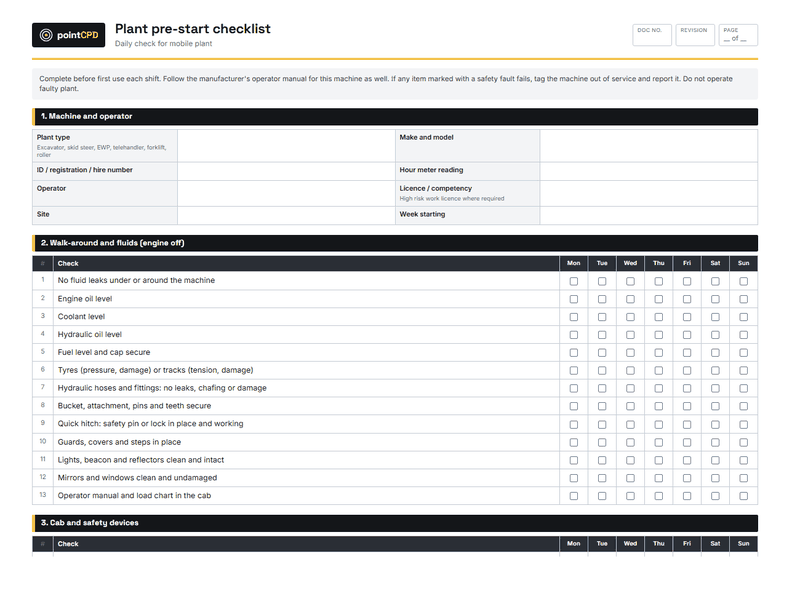
Preview the full Excavation permit template

Every section, field and check in the download, exactly as it prints. Edit the Word version to add your logo, delete what does not apply and add your own site-specific items.

pointCPD

Excavation permit

Permit to dig and excavation checklist

Doc no.
Revision
Page
__ of __

No excavation may start until this permit is authorised. Plans of underground services are indicative only: locate services physically before machine excavation near them. Excavations in or near a shaft or trench deeper than 1.5 metres are high-risk construction work and require a SWMS.

1. Excavation details

Permit numberSite
Location
PurposeFootings, stormwater, services, pool, retaining wall
Length x width x depth (planned)MethodMachine, hand, vacuum
Excavation contractorPlant operator
Start dateExpected backfill date
SWMS reference (required if deeper than 1.5 m)Soil / geotechnical report reference

2. Underground services

#CheckYesNoN/ADetails / reference
1Before You Dig Australia enquiry lodged and plans received for all asset owners
2Plans current for the dates of the work
3Site plans, previous works and visible services (pits, meters, markers) checked
4Services located on the ground with a locator
5Services exposed by hand or vacuum excavation before machine digging nearby
6Services marked on the ground and shown to the operator
7Asset owner requirements for work near their services noted and followed
8Overhead powerlines near plant identified and controlled

3. Services identified

ServiceOwnerLocated by / methodDepth foundControls
ExampleGas serviceGas networkLocator, then potholed by handHand dig within the owner's specified distance; operator briefed

4. Ground support, spoil and access

#CheckYesNoN/ADetails
1Ground support method chosen by a competent person: benching, battering or shoring
2Shoring or trench shield designed or certified where required
3Water in the excavation controlled (pumping, diversion)
4Spoil placed back from the edge, not surcharging the side
5Plant and vehicles kept back from the edge
6Nearby structures, footings and fences assessed for undermining
7Barriers or covers around the excavation, with signage
8Safe access and egress: ladder or ramp at suitable spacing
9No one in the excavation while plant is digging
10Atmosphere checked if the excavation could collect gas or lack oxygen
11Rescue arrangements planned

5. Authorisation

Services have been located and marked and the controls above are in place.

Authorised bySignature
Date and timeValid until
Operator: I have been shown the services and controls (signature)

6. Daily and after-event inspections

Inspect before each shift, after rain, and after any event that could affect stability.

DateTimeCondition (walls, water, edges, support)Safe to enter?Inspected by

7. Close-out

Backfilled / made safe (date)Services reinstated and as-built recorded?
Permit closed byDate
Template by PointCPD · pointcpd.com.au/resources/templates/excavation-permit-template/Free to use, copy and adapt, including commercially (CC BY 4.0). Keep this credit line.v1.0

Download Word Download PDF

Questions builders ask

Do I need to use Before You Dig Australia?

You should lodge an enquiry before any excavation so asset owners can provide plans of their services, and many asset owners and regulators expect it. The plans are indicative, so services still need to be located on the ground before digging near them.

When is a SWMS required for excavation?

When the work is in or near a shaft or trench with an excavated depth greater than 1.5 metres, or a tunnel, because that is on the high-risk construction work list. Other excavation work still needs its risks managed.

What is the difference between benching, battering and shoring?

Benching cuts the sides into steps; battering slopes the sides back to a stable angle; shoring supports vertical sides with a structure such as a trench shield or props. Which is right depends on the soil, depth, water and space, and should be decided by a competent person.

How far back should spoil be placed?

Far enough that it does not add load to the edge or fall back in. The right distance depends on the depth and soil, so set it in the excavation plan rather than by habit.

How often should an excavation be inspected?

Before each shift, and after rain, vibration from plant or traffic, or anything else that could affect the stability of the sides. Record each inspection.

What if a service is struck?

Stop work, keep people clear, and follow the emergency procedure for that service: evacuate upwind for gas, keep away from damaged electrical cables, and call the asset owner and emergency services. A strike may also be a notifiable incident.

Free to use, adapt and share, including commercially

This template is licensed under Creative Commons Attribution 4.0. Copy it, rebrand it, edit it for your jobs, hand it to clients and subcontractors, or republish it. The one condition: keep the small PointCPD credit line on the document. If you publish it online, credit it like this:

<a href="https://pointcpd.com.au/resources/templates/excavation-permit-template/">Excavation permit template</a> by PointCPD, CC BY 4.0

Last reviewed 14 September 2026. A template is a starting point: it becomes a compliant document only once it is completed for the actual job by people who understand the work, and kept current as the work changes. General information, not legal advice. Check the requirements of your state regulator and your contract.

Sources: Safe Work Australia, Code of Practice: Excavation work. Model Work Health and Safety Regulations (high-risk construction work: shafts and trenches deeper than 1.5 metres). Before You Dig Australia.