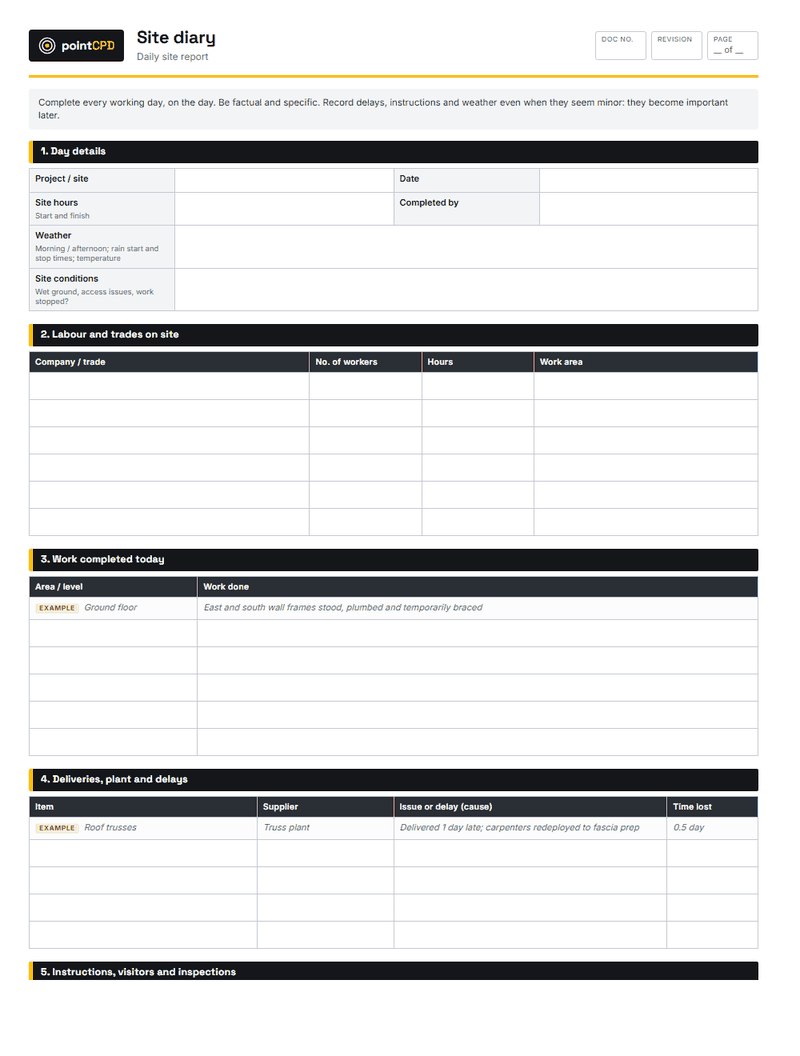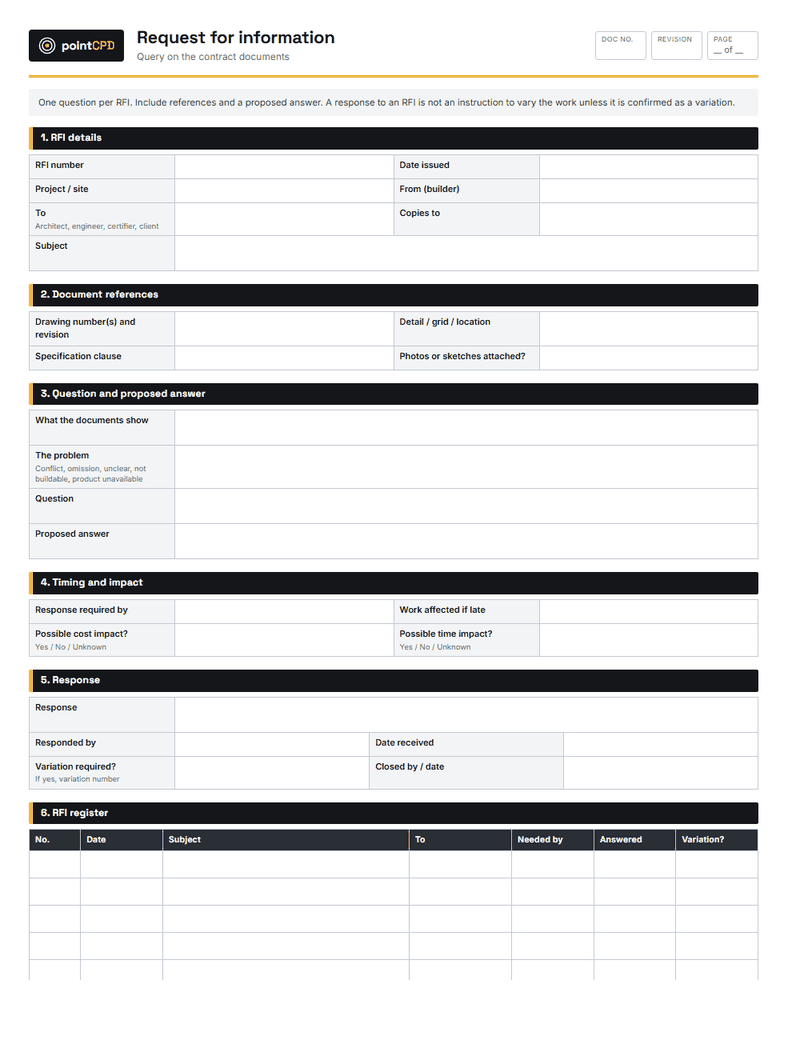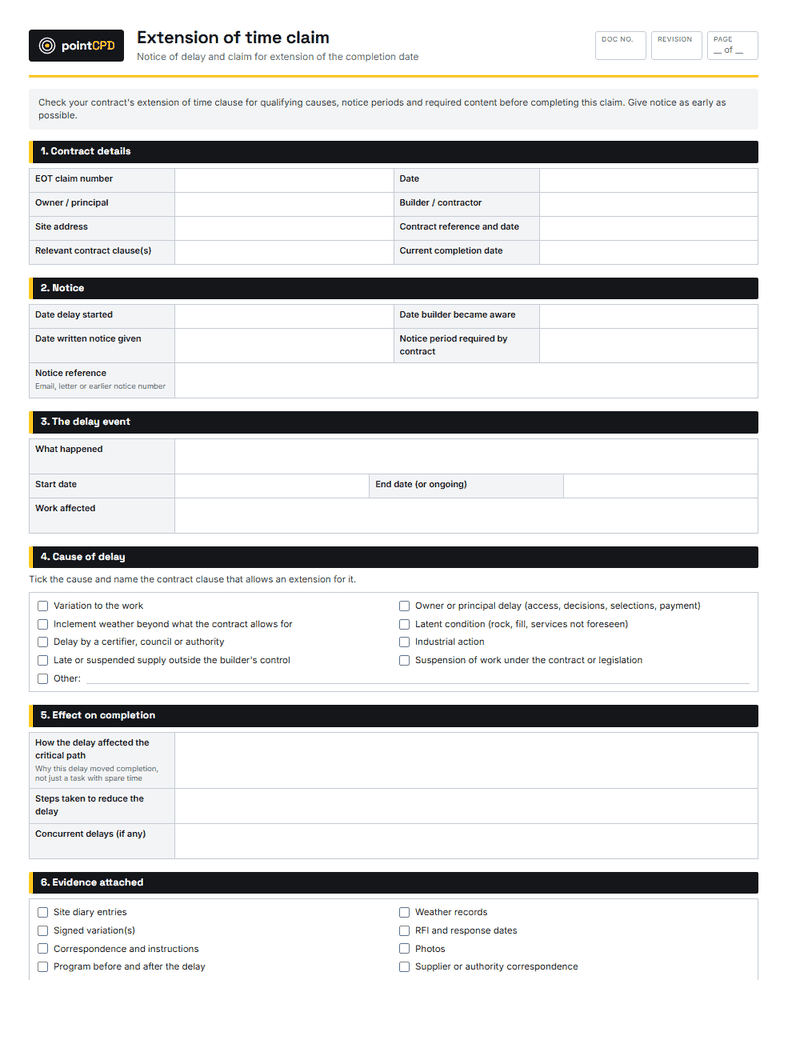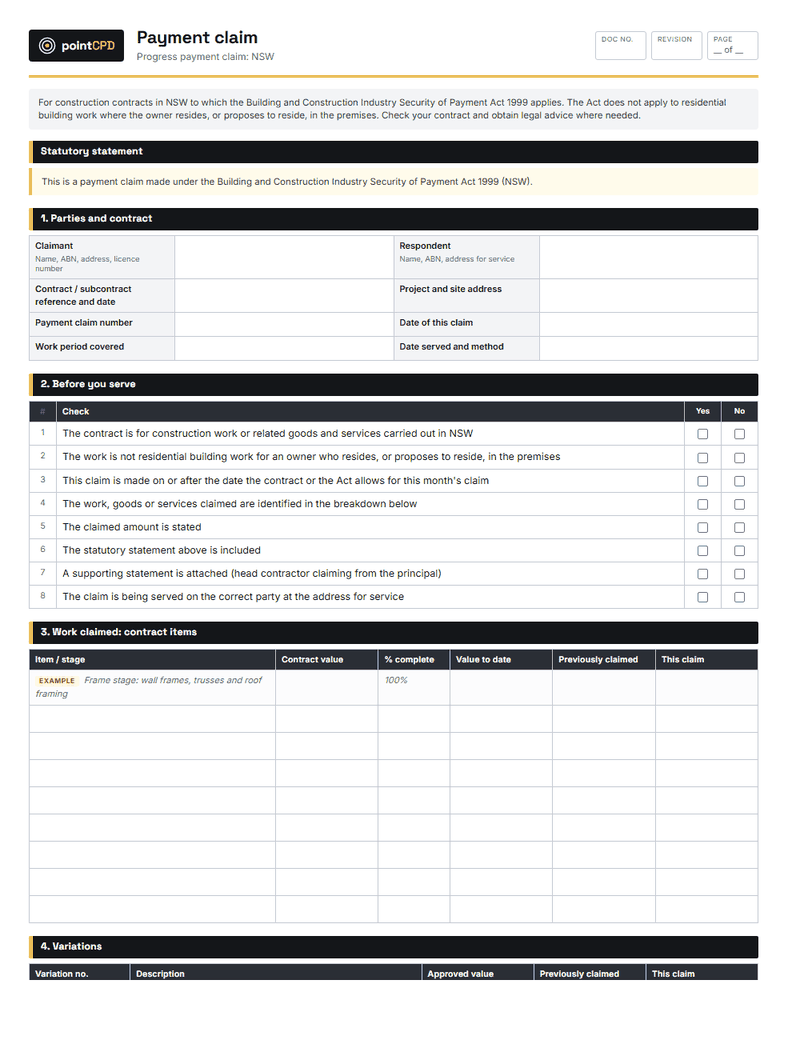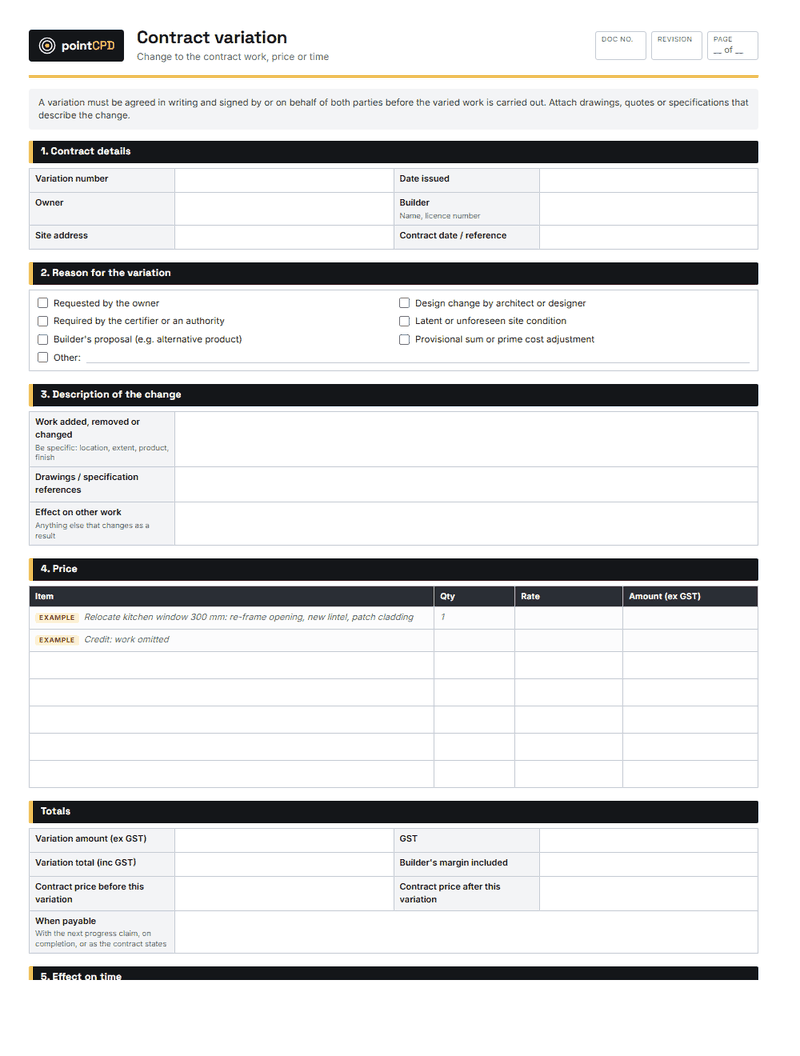
Variations are where good jobs go bad. The owner asks for a small change on site, it gets done, and the invoice arrives weeks later as a surprise. By then nobody remembers the conversation the same way. A signed variation form, done before the work, prevents almost all of it. This template covers the change, the price, the time impact and the signatures, with a running register.
What counts as a variation
A variation is any change to the work described in the contract. Common sources on residential jobs:
- Owner requests: move a window, upgrade tapware, add a power point.
- Design changes: revised drawings from the architect or engineer.
- Certifier or authority requirements: changes needed to comply.
- Site conditions: rock, fill or services not anticipated in the contract.
- Provisional sums and prime cost items: adjustments when the actual cost is known.
The NSW rule: in writing, signed by both
For residential building work in NSW, contracts must require variations to be in writing and signed by or on behalf of both parties. The practical meaning is simple: if the variation is not written and signed, the builder may struggle to be paid for it. Do not start varied work on a handshake, however friendly the owner. If a change is genuinely urgent, get a signed note of the instruction on the day and issue the full variation straight after. Check your own contract’s variation clause too: most set out how variations are requested, priced and paid.
Describe it so it cannot be misunderstood
“Kitchen changes” is not a variation description. “Relocate kitchen window W3 300 mm to the left as shown on sketch SK-04, including re-framing, new lintel and cladding patch” is. Reference drawings, specifications and product selections, and note anything else the change affects, such as the splashback, the rangehood position or a power point.
Price it transparently
Owners dispute prices they cannot follow. Break the variation into labour, materials, subcontract costs and credits for work omitted, show the margin and GST, and state the new contract price. Say when it is payable: with the next progress claim, on completion of the varied work, or as the contract says.
Never leave the time box blank
A change that adds work usually adds time. If the variation affects the completion date, state how many days and why. Many builders leave this blank to keep the owner happy, then find they cannot claim the time later and face delay damages. If there is no time impact, write zero. Where the time effect cannot be known yet, say so and follow up with an extension of time claim.
Keep a register
Section 7 is a running register of every variation: number, date, description, amount, days and whether it is signed. It makes the final account straightforward and shows at a glance which variations are still unsigned. Tie each one back to the site diary entry where the instruction was given, and claim approved variations in your progress claims.
Questions before variations
Not every query is a variation. If something on the drawings is unclear or conflicting, issue an RFI first. The answer may turn out to be a variation, but the RFI records the question, the date and the response, which is the evidence you need either way.
Pricing variations fairly
Most variation disputes are about price, not scope. A few habits reduce them:
- Use the contract’s method. Many contracts set how variations are valued: agreed price, rates in the contract, or cost plus a stated margin. Follow it.
- Show credits. If the change removes work, show the credit alongside the added cost, so the owner sees the net effect.
- Include the knock-on costs. Re-inspection, extra scaffold time, disposal and supervision are real costs; list them rather than hiding them in a lump sum.
- Price before the work. A price agreed in advance is rarely disputed. A price presented afterwards often is.
Provisional sums and prime cost items
Many residential contracts include provisional sums (allowances for work that cannot be fully priced at signing, such as rock excavation) and prime cost items (allowances for items the owner will select, such as tapware or appliances). When the actual cost is known, the difference is adjusted, usually with the builder’s margin on any increase as the contract provides. Treat each adjustment like a variation: record the allowance, the actual cost, the margin and the adjustment, and have it acknowledged. Owners are often surprised by prime cost adjustments at the end of a job; recording each one as it happens avoids that surprise.