Key takeaways
- The BASIX water section sets a target for reducing drinking water use, which varies by location. It is met through water-efficient fixtures, rainwater or recycled water use, and landscape and pool choices.
- If the certificate commits to a rainwater tank, the tank size, the roof area draining to it and the connections, such as toilets, laundry and garden, must all be installed as listed.
- Fixture ratings under the national Water Efficiency Labelling and Standards scheme must meet what the certificate specifies for showers, toilets and taps.
- Rainwater plumbing must be installed by a licensed plumber and include the backflow protection and mains supply arrangements the plumbing rules require.
- A BASIX rainwater tank is not the same as on-site stormwater detention that a council may require. Some sites need both.
The energy and thermal sections of a BASIX certificate get most of the attention. The water section is usually treated as the easy one: fit water-efficient taps, add a rainwater tank, done. Then the certifier asks at the final inspection whether the toilets are actually connected to the tank, whether enough roof drains to it, and whether the showerheads match the rating on the certificate, and the occupation certificate stalls.
This guide explains how the BASIX water section works, what a rainwater tank commitment really requires, and how to make sure the house matches the certificate.
How the BASIX water section works
BASIX sets a target for reducing the use of drinking-quality water in new homes compared with an average benchmark. The target varies with location, reflecting differences in climate and water supply. A design meets it through a combination of measures:
- Water-efficient fixtures, such as showerheads, toilets and taps with specified efficiency ratings.
- Alternative water sources, most commonly a rainwater tank, and in some cases recycled water or greywater.
- Landscape choices, such as the area of lawn and garden and the plants used.
- Pools and spas, where relevant, including their volume and covers.
The BASIX certificate records the specific commitments the design relies on. Those commitments must be built.
What goes into the BASIX water section
| Item | What it means | Site check |
|---|---|---|
| Fixtures | Water-efficient showers, toilets and taps with specified ratings | Labels match the certificate’s ratings |
| Rainwater tank | Tank volume, roof catchment and connections | Size, roof area and every connection installed |
| Alternative water | Recycled or greywater systems where used | Installed and connected as listed |
| Landscape | Garden area and water-efficient planting where relevant | Built as described |
| Pools and spas | Pool volume, covers and rainwater use where relevant | As listed on the certificate |
Source: NSW Planning Portal, BASIX water help notes.
Fixture ratings
Water-efficient fixtures are rated under the national Water Efficiency Labelling and Standards (WELS) scheme, which requires labels on products such as showers, toilets, taps, washing machines and dishwashers. The BASIX certificate may specify minimum ratings for showerheads, toilets and taps. The installed products must meet or exceed those ratings.
The common problem is client-selected tapware and showerheads. A client chooses a rain shower or a designer mixer that looks right but has a lower rating than the certificate requires. Check ratings during selections, not at the final inspection.
What a rainwater tank commitment means
When a BASIX certificate commits to a rainwater tank, it usually specifies three things:
- The tank volume: the minimum storage capacity.
- The roof catchment: the minimum area of roof that must drain to the tank.
- The connections: which uses will be supplied from the tank, commonly toilets, the laundry cold water tap and outdoor taps.
All three matter. A large tank with only a small area of roof draining to it will not collect the water the design assumed. A tank that is not connected to the toilets does not reduce drinking water use as the certificate claims. Certifiers check these items, and they are among the most common BASIX water failures.
Catchment: plan the roof drainage early
The roof catchment requirement affects the roof design and the drainage layout. If the tank is at the back of the house but most of the roof drains to the front, meeting the catchment may need extra downpipes, charged lines or a different tank location. Resolve this at design and pricing, not when the plumber is on site.
Connections
The connections are plumbing work and must be done by a licensed plumber. They typically involve a pump, a separate plumbing line from the tank to the connected fixtures, and an arrangement for mains water supply when the tank runs low, whether a mains top-up or an automatic switching device, with the backflow protection the plumbing rules require to protect the drinking water supply. The overflow must be connected to the stormwater system.
Rainwater tank checks before the occupation certificate
- Tank volume at least the size on the certificate.
- Roof area draining to the tank at least the catchment on the certificate.
- Every listed connection plumbed: for example toilets, laundry cold tap, garden taps.
- Pump installed, working and located to limit noise.
- Mains supply arrangement and backflow protection as the plumbing rules require.
- Overflow connected to the stormwater system.
- First flush device and screens installed where specified; tank sealed against mosquitoes.
- Plumber’s certificate or confirmation of the connections for the certifier.
Brief the plumber with the certificate, not just the plans. Many rainwater failures happen because the plumber was never told which fixtures the certificate commits to connecting. Give them the BASIX commitments before rough-in.
Rainwater tanks and stormwater detention: not the same thing
Many councils require on-site stormwater detention on some developments, to hold back stormwater during storms and release it slowly to protect the drainage system. That is a separate requirement from the BASIX rainwater tank, which is about reusing water. A detention tank is designed to empty; a rainwater tank is designed to stay full for use. Some sites need both, and in some cases councils accept combined systems designed for both purposes. Read the development consent conditions and the BASIX certificate together.
Practical installation details
- Base. A full tank is very heavy. Install it on a base designed for the load, as the manufacturer specifies.
- Pump noise. Locate the pump away from bedrooms, yours and the neighbours’, and consider an enclosure.
- Mosquito protection. Screens on inlets and overflows keep mosquitoes out.
- First flush. A first flush device diverts the first, dirtiest runoff away from the tank where specified.
- Labelling. Rainwater outlets and pipes should be identified as required by the plumbing rules, so nobody drinks from them unknowingly.
- Access. Leave access for cleaning and servicing the tank and pump.
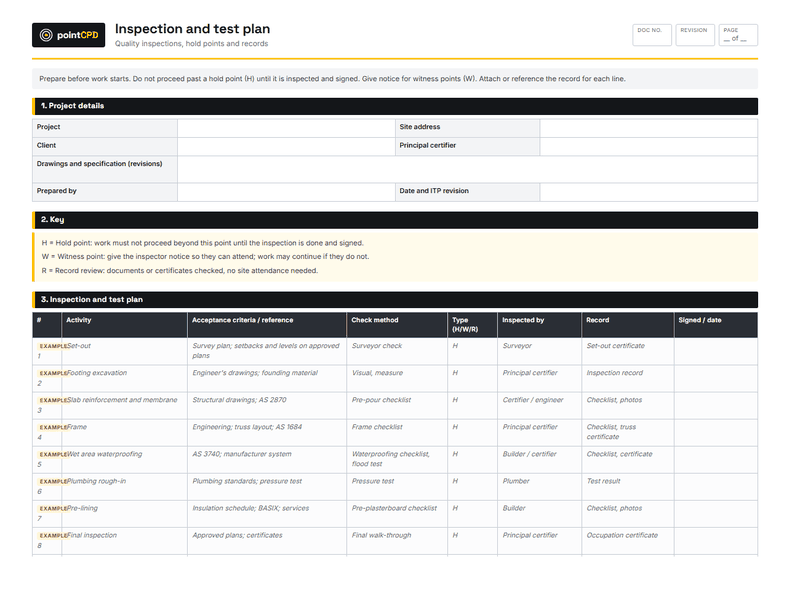
Evidence for the certifier
From certificate to sign-off
- 1Read the certificateNote tank size, catchment, connections and fixture ratings before pricing.
- 2Plan the roof drainageMake sure enough roof area can drain to the tank location.
- 3Brief the plumberGive them the certificate commitments, not just the plans.
- 4Install and testTank, pump, connections, backflow, overflow; test that fixtures draw rainwater.
- 5EvidencePhotos, plumber’s confirmation and fixture labels for the certifier.
The certifier must be satisfied the BASIX commitments have been met before issuing the occupation certificate. For water, that typically means evidence of tank size, the connected roof area, the fixtures connected to the tank, and fixture ratings. A plumber’s confirmation of the connections, photos of the tank and pump, and photos of fixture labels usually cover it. Collect them as the work is done.
A worked example: the certificate nobody read
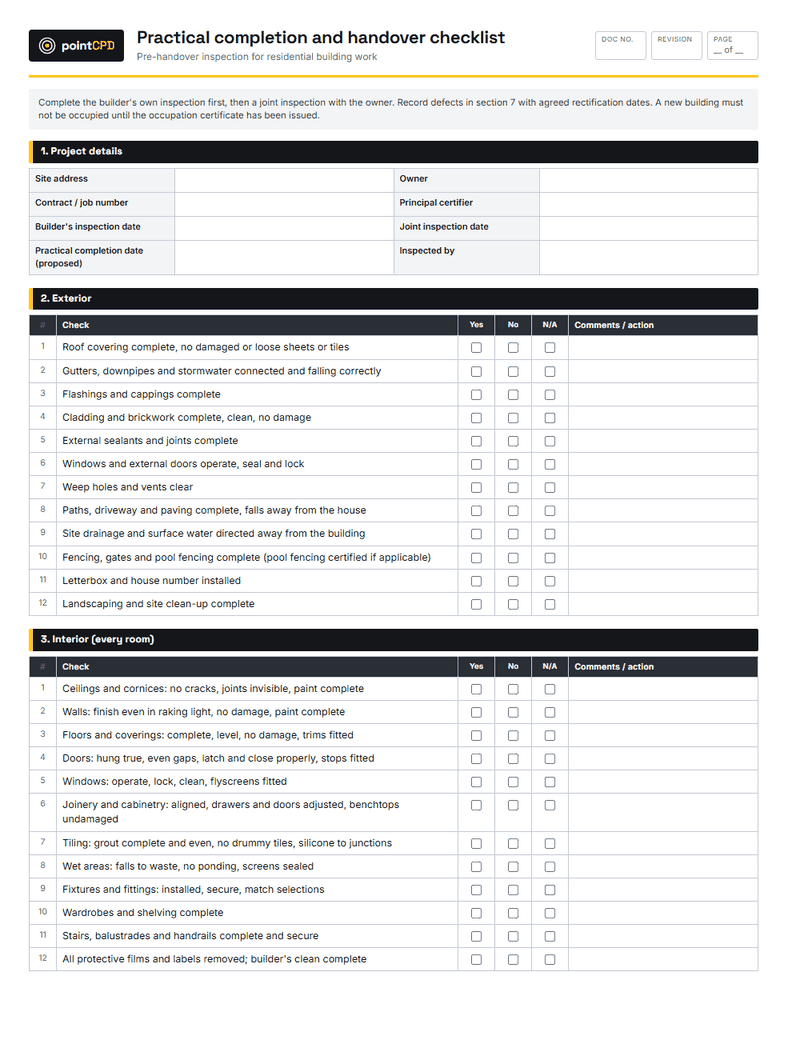
A builder completes a new home with a rainwater tank at the side of the house. At the final inspection, the certifier checks the BASIX certificate: it commits to connecting the tank to all toilets, the laundry cold tap and two outdoor taps, with a specified roof area draining to the tank.
The plumber has connected the tank to one outdoor tap only. Nobody gave them the certificate. And because most of the roof drains to the front of the house, the roof area connected to the tank is well short of the commitment. The occupation certificate is delayed while the plumber runs new lines to the toilets and laundry through finished walls and ceilings, and the roof plumber adds downpipes and a charged line to the tank. The client is unhappy about the delay and the disruption.
Handled properly, the same commitments would have cost a fraction of the price at rough-in.
Design changes that break the water commitments
As with the thermal and energy sections, changes during the build can quietly break the water commitments. Common examples include a roof redesign that sends more water to the front of the house, away from the tank; moving the tank to a spot with less catchment; a client swapping a toilet suite or showerhead for one with a lower rating; enlarging the lawn area in the landscape plan; or deleting the tank to save money on a tight budget. Each can mean the certificate no longer matches the house.
When a change affects any water commitment, check the certificate first. If the house will no longer match, get the certificate revised before building the change. It is a small amount of work at the time, and it prevents a delayed occupation certificate later.
Renovations and additions
Renovations of $50,000 or more also need a BASIX certificate, and the water section may apply to the new work, for example new bathrooms and fixtures. Additions that increase the roof area may also create an opportunity, or a requirement, to connect more roof to an existing tank. Read the certificate for the renovation carefully; it will not always match what the client expects from a new home.
Water efficiency beyond the certificate
BASIX sets a minimum. Many clients are happy to go further, particularly with rising water bills and dry summers. Options include higher-rated fixtures, larger tanks, connecting the tank to more uses, drought-tolerant landscaping, and greywater systems where local rules permit. These are worth offering as upgrades, priced separately, especially to clients who have asked about sustainability.
Pools and spas
Pools and spas with a volume of more than 40,000 litres need a BASIX certificate, and water commitments can include a pool cover and rainwater top-up. Pool builders working with house builders should coordinate so the pool’s commitments are met.
Talking to clients
Start the conversation during selections, when tapware, toilets and showerheads are chosen.
Clients generally like rainwater tanks: they save on water bills and are useful in the garden. What they need to understand is that the connections are part of the approval, that the pump uses some electricity and makes some noise, and that tanks and pumps need occasional maintenance. A short maintenance note in the handover pack helps.
The bottom line
The BASIX water section is straightforward if the certificate is read early and followed. Check fixture ratings during selections, plan roof drainage to meet the catchment, brief the plumber on every connection, install backflow protection and overflow properly, and collect evidence as you go. The water commitments are cheap to meet at rough-in and expensive to fix at the final inspection.
Questions builders ask
Does every new home in NSW need a rainwater tank?
Not necessarily. BASIX sets a water target that can be met in different ways. Many designs use a rainwater tank, but the BASIX certificate for the specific home sets out what is required.
What does a BASIX rainwater tank commitment include?
Usually a minimum tank volume, a minimum roof area draining to the tank, and specified connections such as toilets, the laundry cold tap and outdoor taps.
Is a rainwater tank the same as on-site stormwater detention?
No. A rainwater tank stores water for reuse; stormwater detention holds back storm runoff and releases it slowly. Some sites need both, as required by BASIX and council.
Who can connect a rainwater tank to the house?
A licensed plumber, including the backflow protection and mains supply arrangements required by the plumbing rules.
Do pools need BASIX?
Pools and spas of more than 40,000 litres need a BASIX certificate, which can include water commitments such as a pool cover.
Sources
- BASIX · NSW Planning Portal
- Water Efficiency Labelling and Standards (WELS) scheme · Australian Government
Published 24 August 2026. General information for builders, not legal, financial or engineering advice for a specific job. Check current requirements with the relevant regulator or standard before relying on them.