Key takeaways
- An occupation certificate authorises the occupation and use of a new building, or part of one. A new building must not be occupied without one.
- The principal certifier must be satisfied that consent is in force, the building is consistent with it, pre-conditions are met, a construction certificate was issued where required, and the building is suitable for occupation.
- The principal certifier must carry out the final inspection personally, and for BASIX development must issue a BASIX completion receipt before the occupation certificate.
- Most delays come from missing documents: waterproofing, termite, glazing, electrical and plumbing certificates, engineer inspections and evidence of BASIX commitments.
- Collect certificates as each stage finishes, not in the last week. A complete handover pack makes the final inspection straightforward.
For a client, the occupation certificate is the moment the house becomes theirs to live in. For their lender, it is often a condition of the final drawdown. For the builder, it is the point at which the job can be closed out and the final payment secured. And yet occupation certificates are regularly delayed by days or weeks, usually not because anything is wrong with the building, but because a document is missing, a condition was overlooked, or something was built differently from the approved plans.
This guide explains what an occupation certificate is in NSW, what the principal certifier must be satisfied of, the documents builders should have ready, and how to avoid the common causes of delay.
What an occupation certificate is
An occupation certificate authorises the occupation and use of a new building, or of a new part of a building. For staged works, an interim occupation certificate can allow the completed part of a building to be occupied, with a final occupation certificate issued when the whole development is complete. The NSW Department of Planning describes the final occupation certificate as the last step in the formal development and construction process. A new building must not be occupied or used without one.
Occupation certificates are issued by the principal certifier, who may be a registered certifier, the council or a certification company. Applications are made through the NSW Planning Portal. The certifier is an independent regulator, not the builder’s or the owner’s agent, and can only issue a certificate if the legislative requirements are met.
What the certifier must be satisfied of
What the principal certifier must be satisfied of
- 1Consent in forceA development consent or complying development certificate is in force.
- 2Built as approvedThe design and construction are not inconsistent with the consent.
- 3Conditions metPre-conditions in the consent, and any planning agreement requirements, are satisfied.
- 4Construction certificateA construction certificate has been issued where one was required.
- 5Suitable for occupationThe building is suitable for occupation for its BCA classification.
Source: NSW Department of Planning
Depending on the certificate sought, the principal certifier must generally be satisfied that a development consent is in force, that the design and construction of the building are not inconsistent with it, that any pre-conditions in the consent or in planning agreements have been met, that a construction certificate has been issued where one was required, and that the building is suitable for occupation in accordance with its classification under the Building Code of Australia.
The final inspection, carried out after building work is complete and before the occupation certificate is issued, cannot be delegated. The principal certifier must carry it out personally.
BASIX completion receipts
For development that needs a BASIX certificate, the certifier must issue a BASIX completion receipt after the final inspection and before issuing the occupation certificate, confirming that the project has been built as the BASIX certificate requires. This is now done through the occupation certificate workflow on the Planning Portal.
That makes BASIX commitments a common cause of delay. If windows with a different performance, a different hot water system, less insulation or a smaller rainwater tank were installed than the certificate requires, the certifier cannot confirm the commitments were met. The fix is either to correct the work or to obtain a revised BASIX certificate and the necessary approvals, both of which take time. Check commitments before ordering, and treat any substitution as a BASIX question. See our guide to product substitution.
Built differently from the plans? If the building departs from the approved plans in a way that is not minor, the certifier cannot simply accept it. The change may need a modification to the consent or a new or amended certificate. Deal with changes through the right approval before they are built, not at the final inspection.
The documents to have ready
The certifier needs evidence that the parts of the building they cannot see were built correctly. For a typical new house, that means a pack of certificates from the trades and consultants, collected throughout the job. Consent conditions and the construction certificate may also require specific documents, so check them at the start of the job and add them to the list.
The builder’s occupation certificate pack for a new house
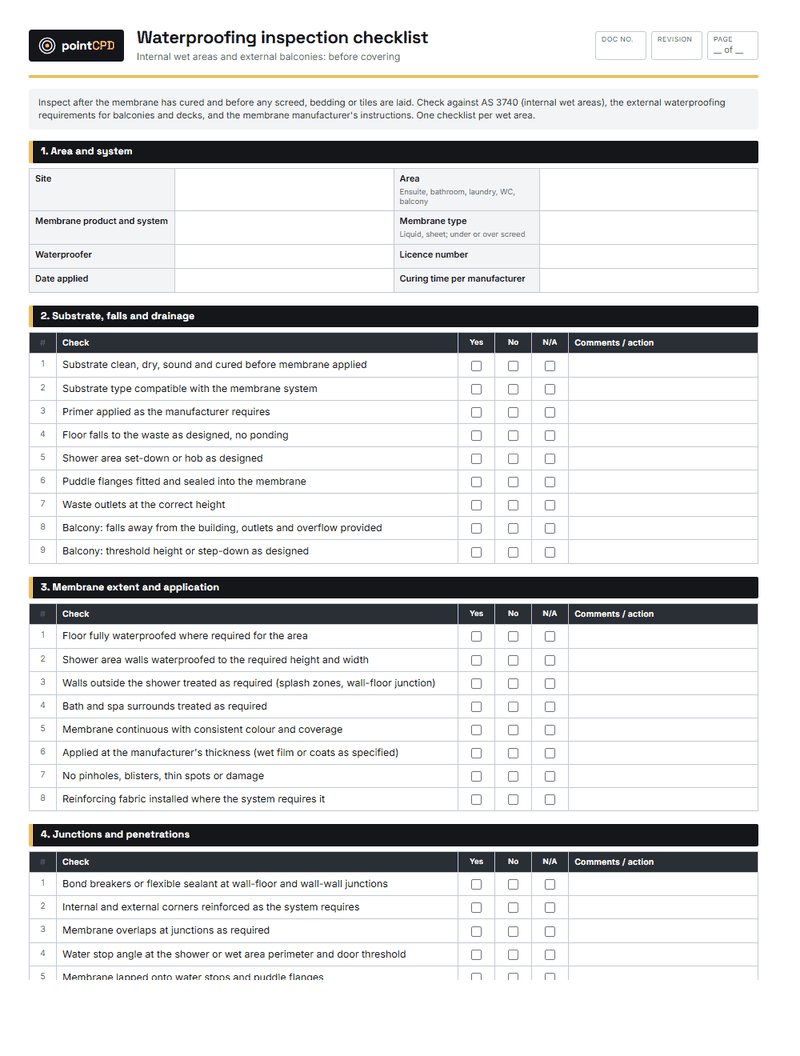
- Waterproofing certificates for wet areas and any external membranes.
- Termite management certificate and durable notice.
- Glazing certificate, including safety glass locations.
- Electrical certificate of compliance and smoke alarm installation details.
- Plumbing and drainage certification from the licensed plumber.
- Engineer’s inspection certificates required by the consent or construction certificate.
- Evidence of BASIX commitments: windows, insulation, hot water, rainwater, lighting and fixtures.
- Pool barrier compliance, where there is a pool.
- Any other certificates the consent conditions require.
Each certificate must come from the right person, identify the work, and be dated. A waterproofing certificate that does not identify which areas it covers, or an electrical certificate for a different address, will be sent back. Electrical work in NSW needs a Certificate of Compliance for Electrical Work, and our recent article on the CCEW advisory note explains when one is required.
Critical stage inspections
The principal certifier carries out mandatory inspections during construction, at stages such as before pouring footings, before covering the frame and before covering waterproofing in wet areas. If one of those inspections was missed, the certifier may not be able to issue the occupation certificate without further evidence, and in some cases work may need to be opened up. Book every critical stage inspection before covering the work. See our guide to NSW critical stage inspections.
Complying development, alterations and additions
Occupation certificates are not only for new houses approved by a development application. Work approved through a complying development certificate also needs an occupation certificate before the new building or new part is occupied, and the same principles apply: the certifier must be satisfied the work matches the approval and meets its conditions. Alterations and additions count too. An extension, a new storey or a significant renovation approved under a DA or a CDC generally needs an occupation certificate for the new work, even though the family may be living in the rest of the house throughout. That can create awkward situations on renovations, where the owners use a new kitchen or bedroom before the paperwork is finished. Explain the requirement at the start of the job, and plan the sequence so that the certificate can be obtained when the new areas are ready.
When the certifier finds a problem
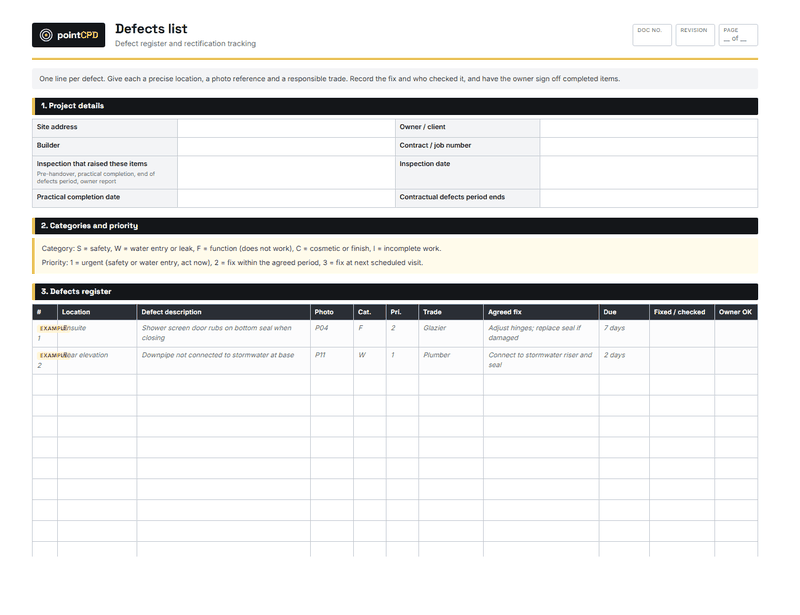
If the certifier finds non-compliant work during an inspection, the NSW Government explains that they must issue a written direction to comply to the person responsible for the work, and if the issue is not resolved, report it to the council. Treat a direction as a priority: fix the work, document the fix with photos and any required certificates, and ask the certifier to confirm it is resolved. A direction left unresolved does not go away at the final inspection. It becomes the reason the occupation certificate cannot be issued, and it can escalate into council enforcement action.
The certifier is not the builder’s supervisor. The NSW Government is clear that the builder is responsible for building in accordance with the approved plans and for the work of subcontractors. A builder who relies on the certifier’s inspections to find defects is relying on the wrong person.
Why occupation certificates get delayed
Why OCs get delayed, and the fix
| Cause | Fix |
|---|---|
| Certificates chased in the last week | Collect each certificate when the trade finishes |
| Built work differs from the approved plans | Resolve changes through the right approval before they are built |
| BASIX items changed or missing | Check commitments before ordering windows, insulation and hot water |
| Consent conditions overlooked | Keep a conditions register and tick off each one |
| Critical stage inspection missed | Book every mandatory inspection before covering work |
| Defects found at final inspection | Do your own pre-final inspection a week earlier |
The pattern is consistent. Delays rarely come from the building failing at the final inspection. They come from documents chased in the last week, BASIX items that changed during the build, consent conditions nobody tracked, departures from the approved plans, and missed inspections. Every one of those can be managed during the job.
A system that works
- Conditions register. At the start of the job, list every consent and construction certificate condition that must be met before occupation, and who is responsible. Tick them off as they are met.
- Certificate tracker. List every certificate the certifier will need, and collect each one when the trade finishes, as a condition of the trade’s final payment.
- BASIX check. Before ordering windows, insulation, hot water, lighting and fixtures, check them against the BASIX certificate.
- Inspection bookings. Book critical stage inspections ahead, and do not cover work until they are done.
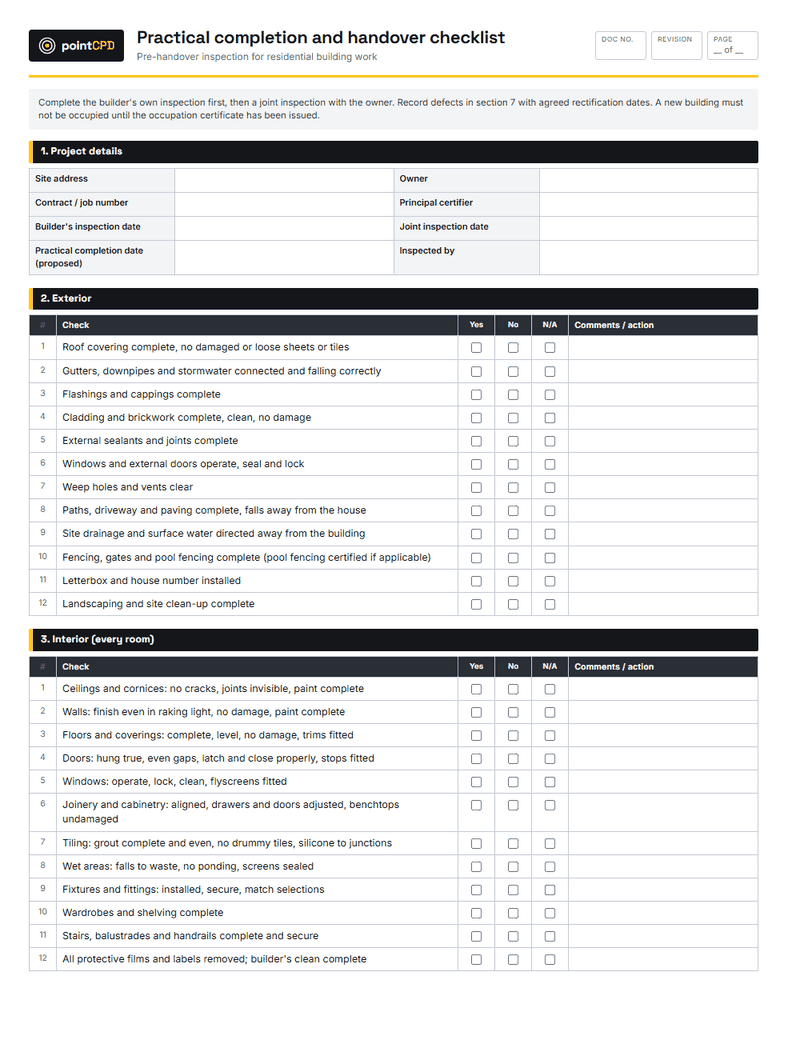
- Pre-final inspection. A week before the final inspection, walk the house against the approved plans and the conditions, as the certifier will.
- Handover pack. Assemble the certificates, warranties, manuals and as-built information in one place for the certifier and the client.
Occupation certificates and the contract
Many residential contracts link practical completion, the final payment or handover to the occupation certificate, or to the builder providing the documents needed to obtain it. Read your contract carefully. If final payment depends on the occupation certificate, delays in paperwork directly delay your cash flow. Clients should not move in before the occupation certificate is issued, and builders should not hand over keys for occupation before it.
A worked example: the missing tank
A builder books the final inspection for a new house. The certifier finds everything in order except one item: the BASIX certificate requires a rainwater tank connected to the toilets and laundry, and the tank has been installed but not connected to the laundry. The certifier cannot issue the BASIX completion receipt. The plumber returns the next day, provides an updated certificate, and the occupation certificate is issued two days later than planned. On the next job, the builder adds a BASIX check to the plumbing rough-in stage.
The bottom line
An occupation certificate depends on evidence, and most delays come from missing evidence rather than defective work. Know what the certifier must be satisfied of, track the conditions and BASIX commitments from day one, book every inspection, and collect certificates as each trade finishes. A complete pack makes the final inspection a formality.
Questions builders ask
What is an occupation certificate in NSW?
A certificate issued by the principal certifier that authorises the occupation and use of a new building or part of a building. A new building must not be occupied without one.
Who issues an occupation certificate?
The principal certifier for the development, which may be a registered certifier, the council or a certification company. Applications are made through the NSW Planning Portal.
What is an interim occupation certificate?
For staged works, an interim occupation certificate allows the completed part of a building to be occupied before the whole development is finished.
What is a BASIX completion receipt?
A receipt issued by the certifier after the final inspection, and before the occupation certificate, confirming the building was built as the BASIX certificate requires.
Why is my occupation certificate delayed?
Common causes are missing certificates, BASIX commitments not met, consent conditions not satisfied, work built differently from the approved plans, or a missed critical stage inspection.
Sources
- Stage 6 – Get your Occupation Certificate · NSW Department of Planning
- What certifiers do · NSW Government
- BASIX and planning approvals · NSW Planning Portal
Published 11 September 2026. General information for builders, not legal, financial or engineering advice for a specific job. Check current requirements with the relevant regulator or standard before relying on them.