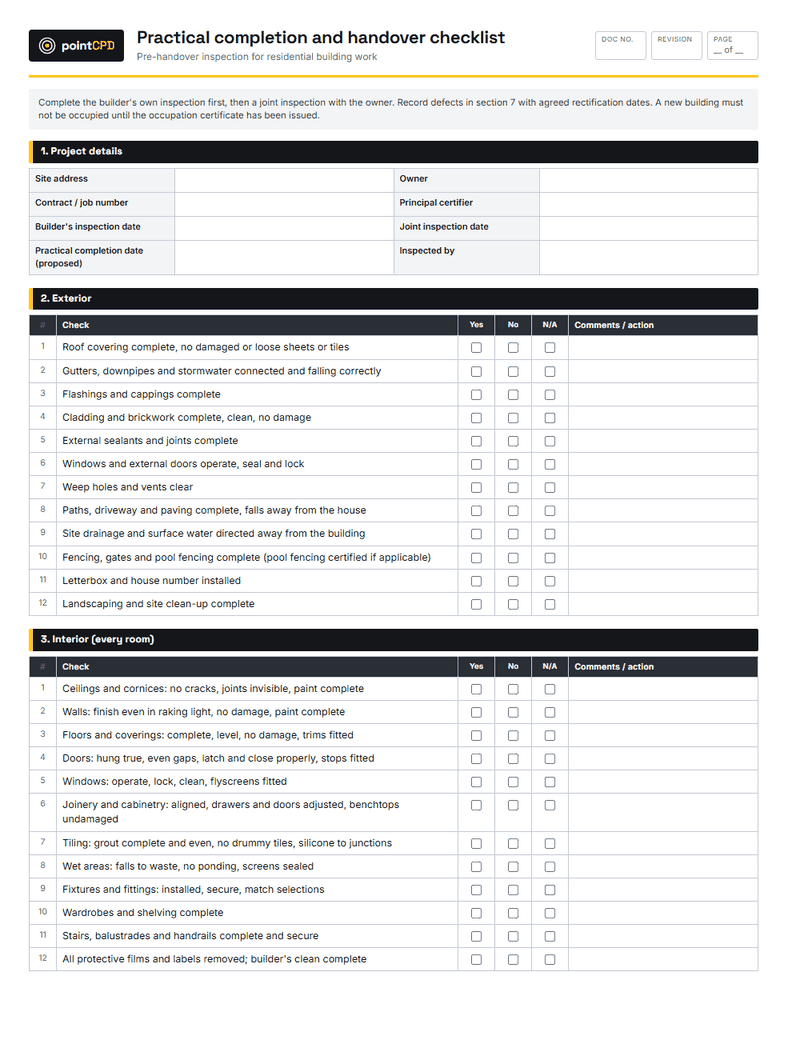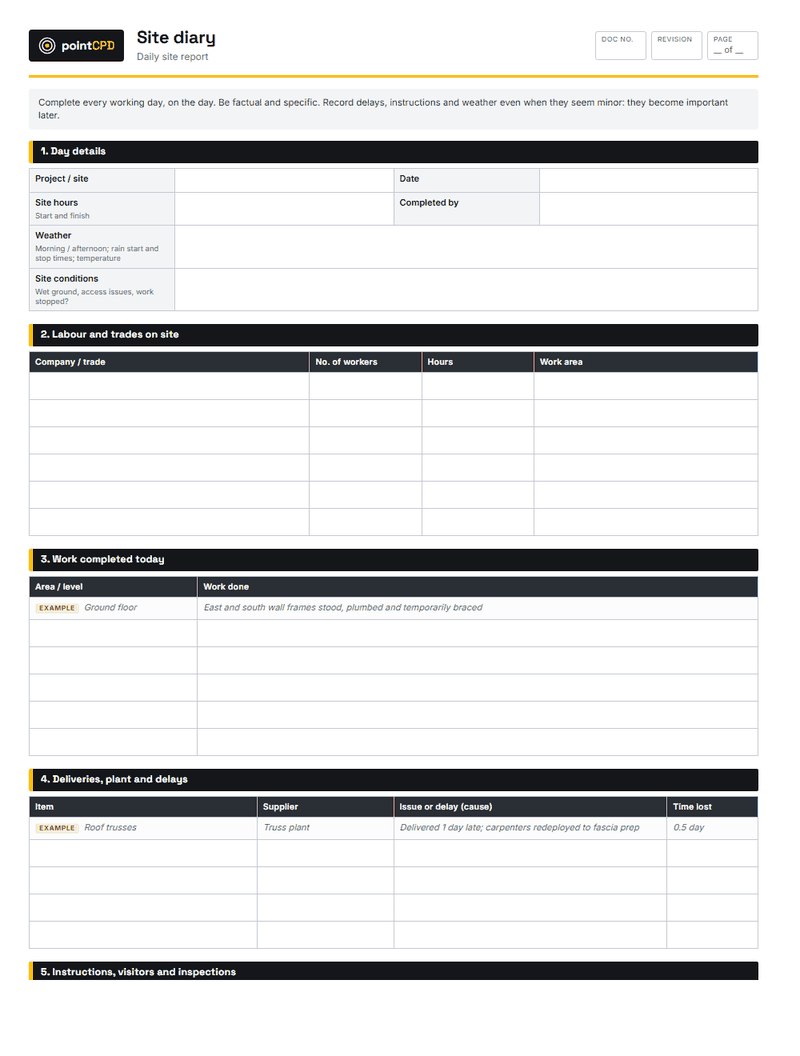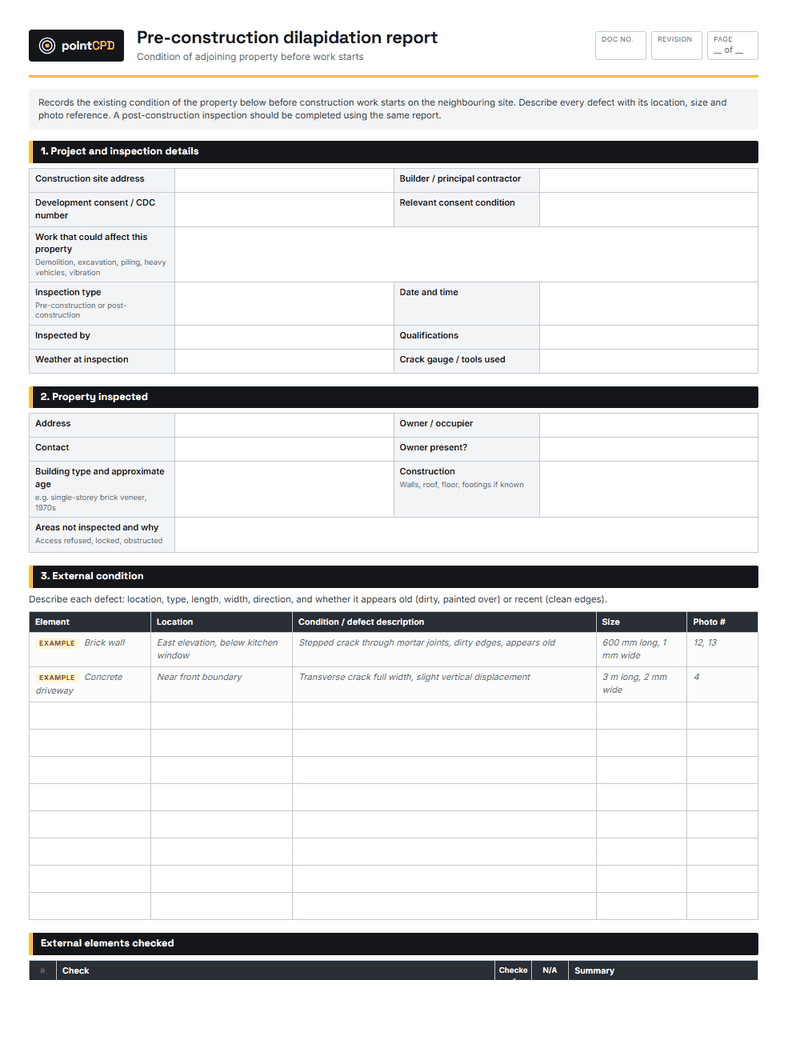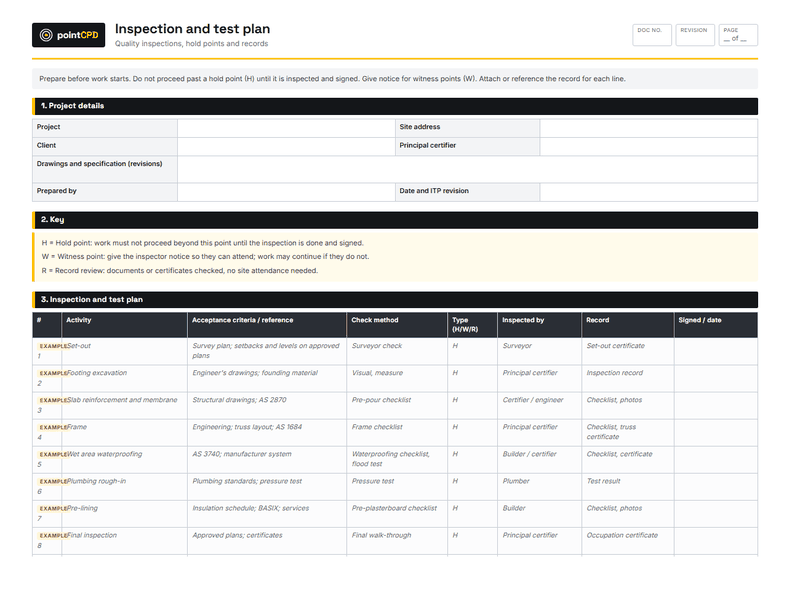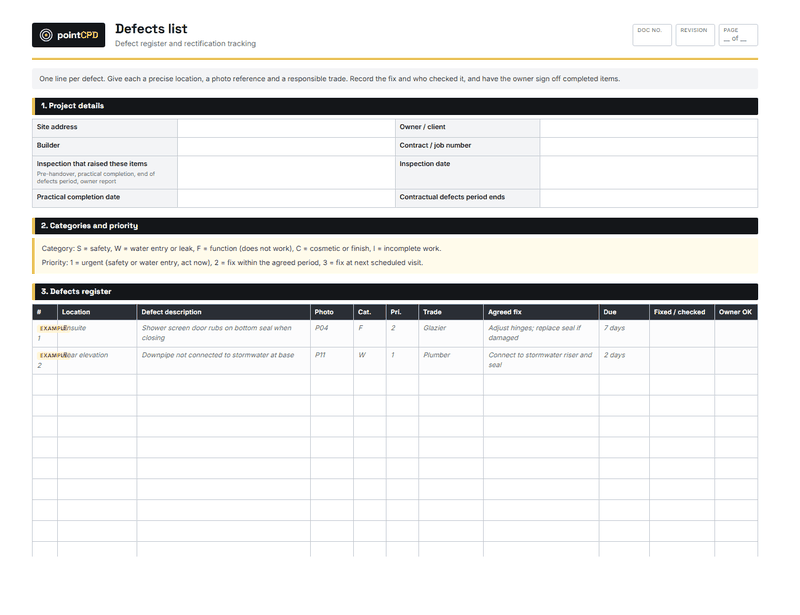
Most disputes between builders and owners are not about big defects. They are about “the list”: forty small items, raised in three different emails, half of them fixed, nobody sure which. A single, precise defects register ends that. Each item is recorded once, with a location and photo, a trade, a fix, a date, and a signature when it is done.
When to use it
- Before handover: the builder’s own inspection, so items are fixed before the owner sees them.
- At practical completion: items agreed with the owner at the joint inspection, from the practical completion checklist.
- During the defects period: items reported by the owner after they move in.
- At the end of the defects period: the final inspection before the retention or final payment is released, where the contract provides for it.
Write defects so they can be fixed in one visit
| Vague | Precise |
|---|---|
| Paint issues in lounge | Lounge, north wall, screw heads visible in raking light around the window, approx. six locations (photo P07) |
| Door problem | Bedroom 2 door swings open on its own; hinge side out of plumb (P12) |
| Leak outside | Rear elevation, downpipe beside laundry not connected to stormwater riser (P11) |
A precise description lets the right trade bring the right materials and fix it first time. It also makes it much harder for an item to be argued about later.
Categories and priority
Not every defect is equal. The template sorts items into safety, water entry, function, cosmetic and incomplete work, and gives each a priority. Safety items and anything letting water in are fixed first, because water damage grows every day it is left. Cosmetic items can be grouped by trade and area, so the painter comes once for all the touch-ups rather than four times.
Defects, tolerances and disagreements
A builder must fix genuine defects in the work. But not every item an owner raises is a defect. Some are within the tolerances the relevant standards and industry guides allow; some are damage done after handover; some are outside the contract. Section 4 records those items with the reason and any evidence, instead of leaving them open or silently ignoring them. An item recorded and explained is far easier to resolve, including through NSW Fair Trading’s dispute process if it comes to that.
Warranties and the defects period
Many building contracts set a defects liability period after practical completion during which the builder returns to fix defects. In NSW, statutory warranties under the Home Building Act also apply to residential building work, for longer periods, whatever the contract says. The defects register is useful across both: it shows what was reported, when, and what was done. Owners are expected to allow the builder reasonable access to rectify; record every access request and appointment.
Closing items properly
- Record the fix and who checked it. The builder or supervisor confirms, not just the trade.
- Photograph significant fixes, especially anything that was disputed or involved water.
- Walk completed items with the owner and have them initial the “Owner OK” column.
- Sign the list off when every item is either completed or recorded as not accepted with reasons.
Keep the register with the site diary and handover records. If a claim arrives years later, it shows what was raised, what was fixed and what the owner signed.
Photos and apps
A photo per defect, taken at the inspection, removes most arguments about what an item meant. Number photos to match the list, take a wide shot to locate the item and a close-up to show it, and take another photo when it is fixed. Many builders now run defects in an app that pins items to the floor plan and sends them to the right trade; that works well as long as the owner can see the same list and the final sign-off is recorded. Whatever the tool, the list must be one list, not a spreadsheet, three emails and a text message.
Resolving disputed items
When the builder and owner disagree about whether something is a defect, a few steps usually resolve it before it escalates:
- Refer to a standard or tolerance. Many items, such as floor flatness, plaster finish and tile lippage, have published tolerances in standards or industry guides. Quote the source.
- Offer an independent look. A neutral building consultant’s opinion on a disputed item is often cheaper than the argument.
- Use NSW Fair Trading. For residential work in NSW, Fair Trading provides a free dispute resolution service that can include a site visit by a building inspector.
- Keep it in writing. Record each step on the list and in correspondence.
Items that go to NCAT are decided on evidence. A precise, photographed, dated defects list is the evidence.