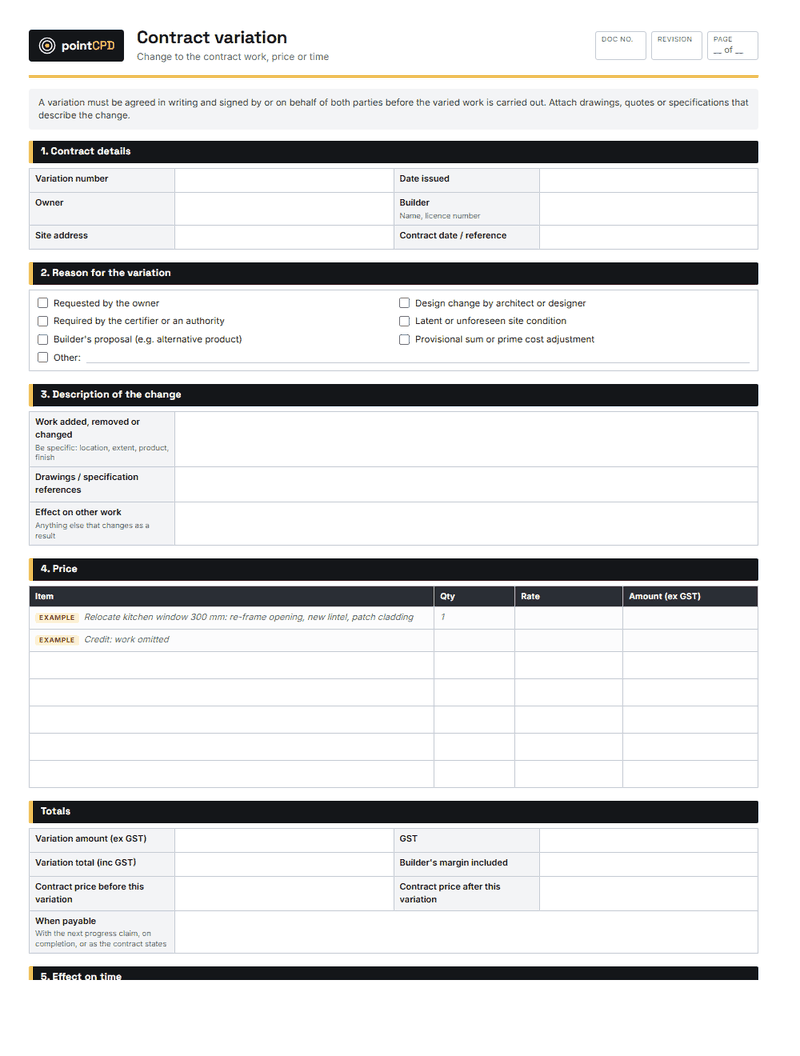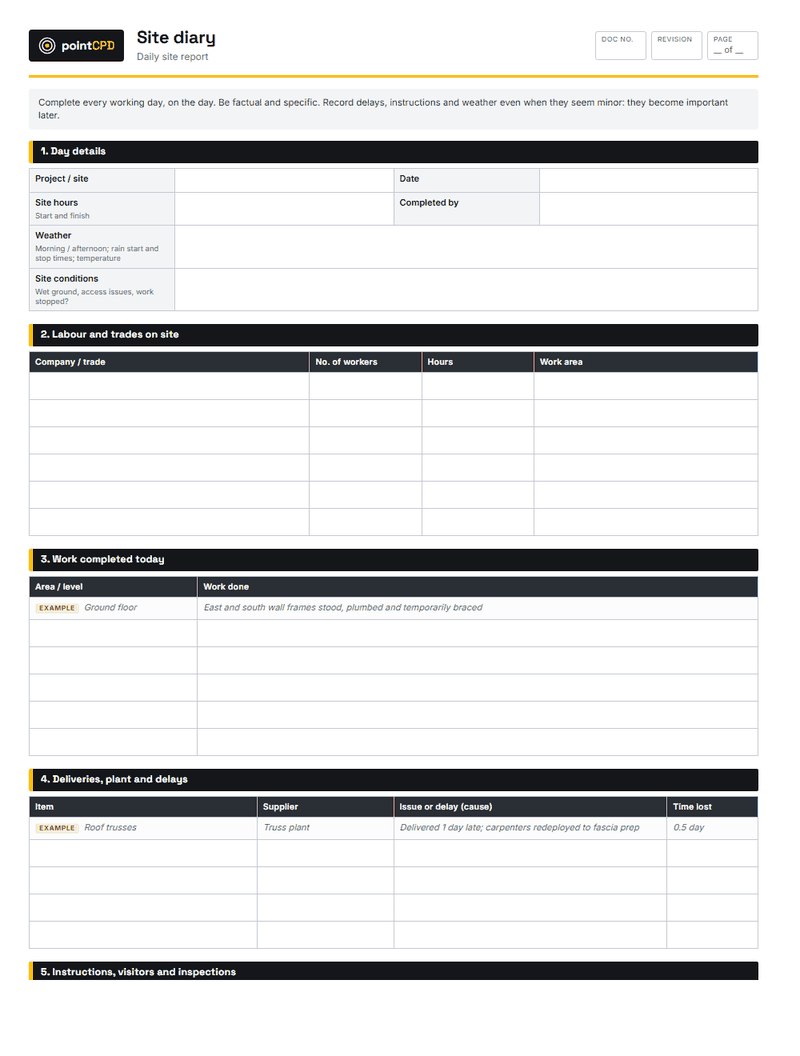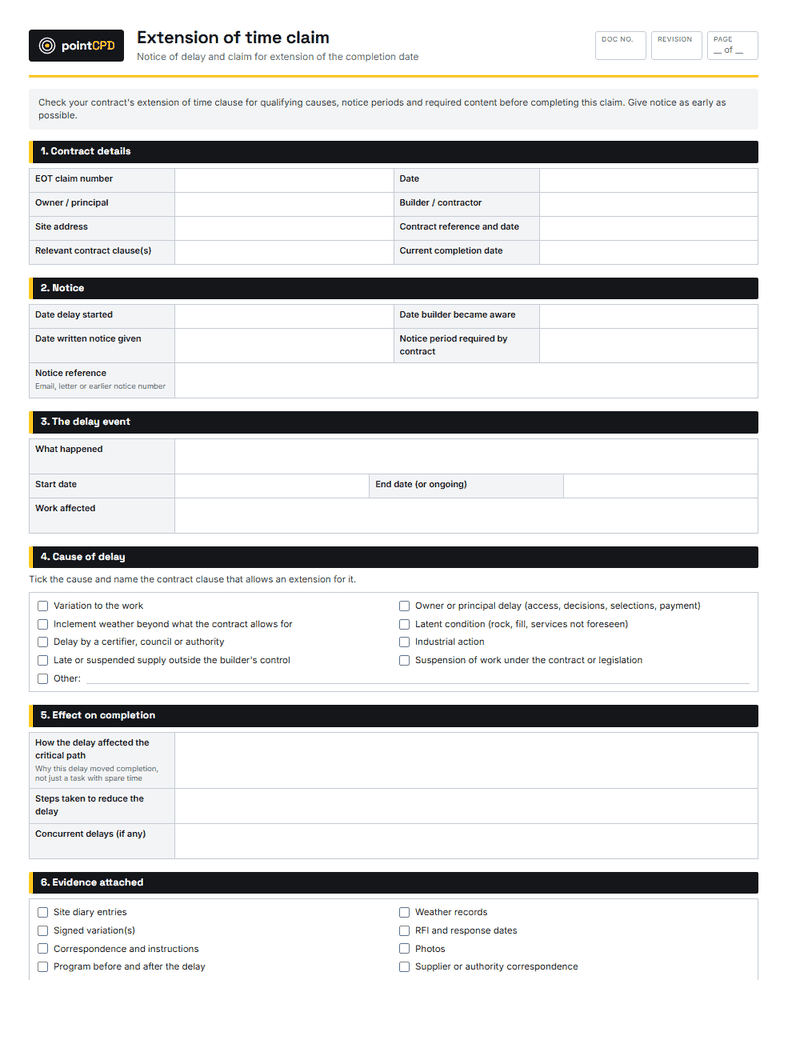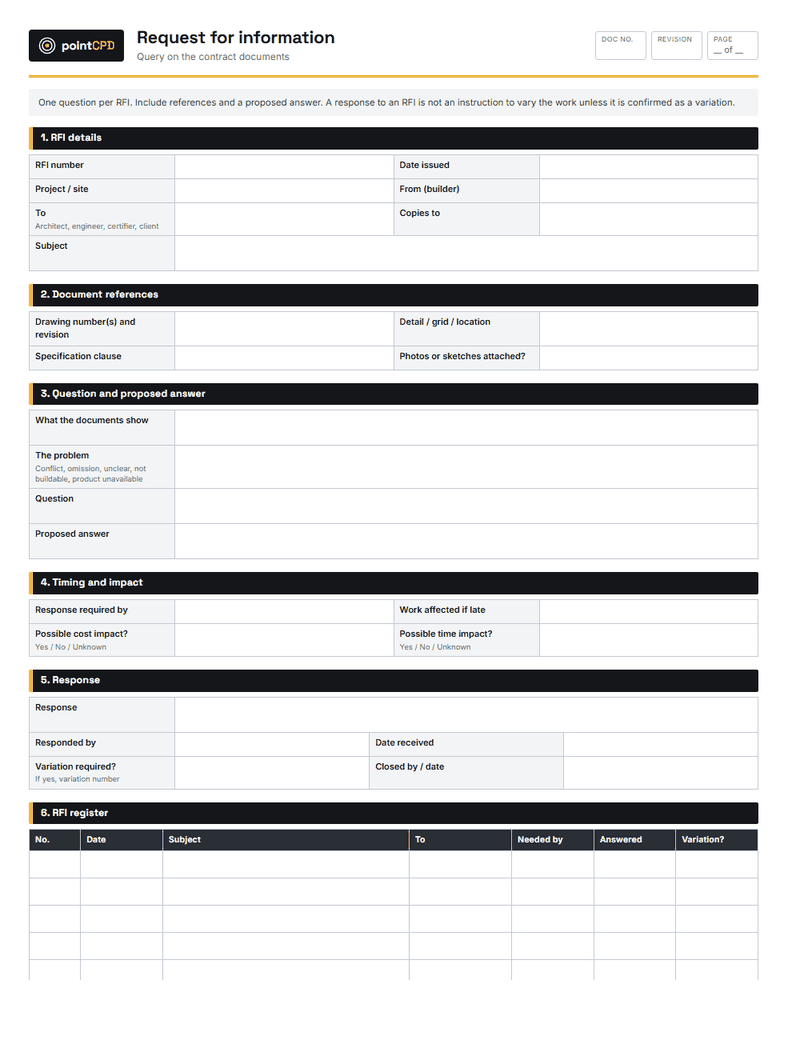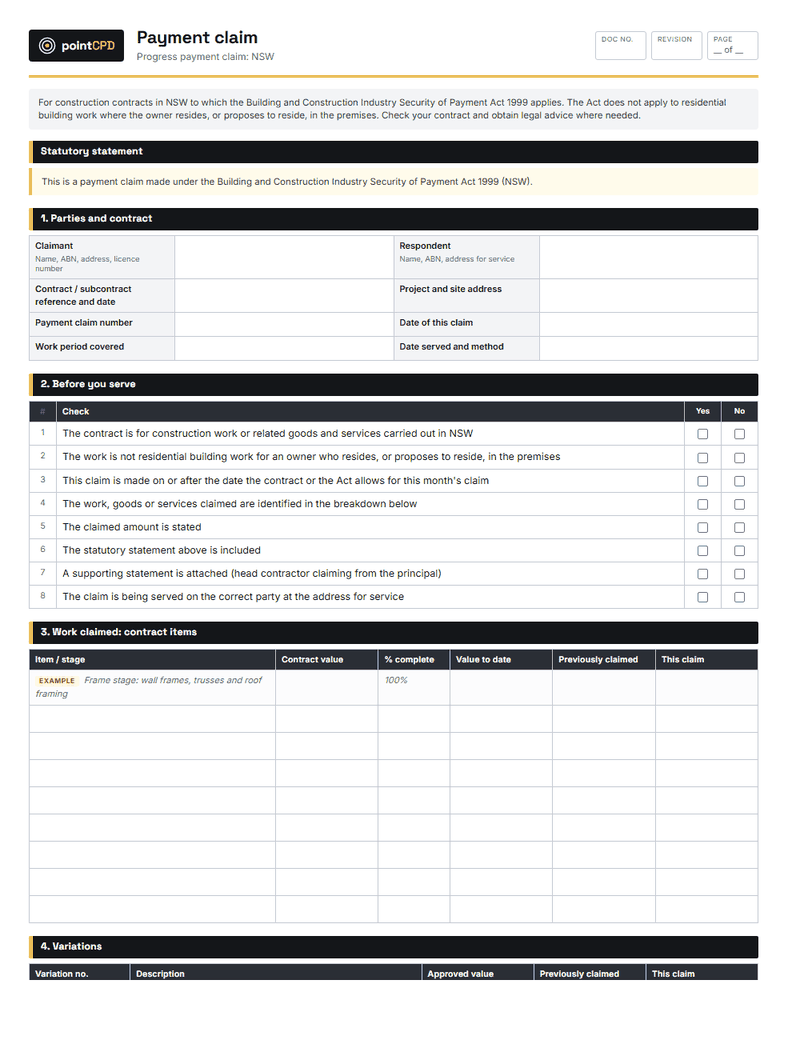
In NSW, a payment claim is more than an invoice. Served properly under the Security of Payment Act, it starts a statutory clock: the other side must respond with a payment schedule in time, or they risk becoming liable for the whole amount. Served improperly, it is just a request. This template is built around what the Act requires, so the claim does what it is meant to do.
Does the Act apply to your contract?
The Building and Construction Industry Security of Payment Act 1999 applies to most construction contracts in NSW, including subcontracts and supply contracts. The big exception for builders is residential building work where the owner resides, or proposes to reside, in the premises. If you are building a home for the family who will live in it, claims against them are governed by the contract and the Home Building Act, not the Security of Payment Act. Subcontractors claiming from that builder, however, are generally covered.
The three things a claim must do
| Requirement | How the template meets it |
|---|---|
| Identify the construction work, or related goods and services, the claim relates to | Sections 3 and 4 break the claim down by contract item and variation |
| Indicate the amount of the progress payment claimed | Section 5 arrives at one claimed amount, including GST |
| State that it is made under the Act | The statutory statement at the top of the claim |
The statement requirement is the one that trips people up. It was removed from NSW law in 2014 and reinstated from 21 October 2019, so claims written from older templates may be missing it. Without it, the claim may not engage the Act at all.
Identify the work properly
The respondent must be able to understand what is being claimed. A lump sum with “progress to date” invites a dispute about whether the claim identified the work. Break it down by contract item or stage, show percentages and values, list variations separately with their numbers, and deduct previous payments and retention. The more precise the breakdown, the harder it is to argue the claim was invalid.
Timing and service
Under the NSW Act, a claimant is generally entitled to make one payment claim a month, from the date set by the contract or the Act, plus a final claim after the contract is terminated. Serve the claim on the correct entity, by a method the contract and the Act allow, and keep proof of service. Then diarise the dates that follow:
- Payment schedule: if the respondent intends to pay less than the claimed amount, it must provide a payment schedule within 10 business days after the claim is served, or earlier if the contract requires, stating what it will pay and why it is withholding the rest.
- Payment: progress payments to subcontractors are due no later than 20 business days after the claim, unless the contract provides for earlier payment; payments to head contractors have a shorter maximum.
If no schedule arrives in time and the amount is not paid, the claimant may be able to recover the full claimed amount as a debt, or apply for adjudication. Get advice before taking either step.
Supporting statements
A head contractor serving a payment claim on the principal must attach a supporting statement, in the form the regulations require, declaring that its subcontractors have been paid what is due and payable. Giving a statement you know to be false carries significant penalties. The template reminds you to attach it, but the statement itself must be in the prescribed form.
Keep the evidence behind the claim
Claims are stronger when the evidence is organised: the signed variations being claimed, the site diary showing the work was done, photos of completed stages, and delivery dockets for materials. If a claim goes to adjudication, the adjudicator decides on the documents, so the documents need to exist.
This template and page are general information about the NSW Act, not legal advice. Security of payment disputes move quickly and have strict deadlines; if a claim is disputed or unpaid, speak to a construction lawyer promptly.
Claiming from owner-occupiers: use the contract
Because the Security of Payment Act does not apply to residential building work for owner-occupiers, builders of homes claim progress payments under their contract instead. A good contract claim looks similar: it identifies the stage or work completed, the amount, previous payments and any variations, with evidence that the stage has been reached. The contract sets when claims can be made, when payment is due and what happens if it is not paid. NSW home building contracts also carry rules about deposits and progress payments. Keep the claim precise and tie it to the contract’s stages, and use the site diary and photos as evidence.
Adjudication in brief
Where the Act applies and a claim is disputed or unpaid, the claimant may be able to apply for adjudication: a fast, documents-based determination by an adjudicator, available through authorised nominating authorities. It is designed to resolve payment disputes quickly and keep money flowing, with the parties’ final rights preserved for later proceedings. Deadlines are short and strict, and the adjudicator decides on the documents, so the quality of the payment claim, the evidence and the submissions matter a great deal. If you are heading towards adjudication, get advice from a construction lawyer early.