What happened, in short
- Building Commission NSW completed more than 150 site inspections across Port Macquarie, Forster, Nelson Bay and New England in July, issuing 25 fines worth $17,600 in total.
- Around Port Macquarie, Forster and Nelson Bay, 123 inspections of Class 1 sites led to 21 fines totalling $14,850 and 21 cautions.
- The most common reasons for fines were unlicensed residential building work, failing to display signage on development consent work, a licensee not ensuring a contractor is supervised, and unauthorised plumbing or drainage work.
- In New England, 32 sites were inspected and four fines totalling $2,750 were issued. No written directions or rectification orders were needed on this trip.
- Further inspections are planned in both regions before the end of the year.
Building Commission NSW completed more than 150 inspections of residential building sites across the Mid North Coast and New England in July, issuing 25 fines with a total value of $17,600, the NSW Government announced on 18 August. The regulator described compliance in the regions as generally high, but the reasons behind the fines are a checklist every builder in NSW should know.
The July blitz in numbers
Source: NSW Government, 18 August 2026
What the inspectors found
Around Port Macquarie, Forster and Nelson Bay, Building Commission NSW carried out 123 general compliance inspections at Class 1 residential building sites. Those inspections resulted in 21 fines totalling $14,850, along with 21 cautions, mainly for failing to display site signage and for unlicensed work.
In New England, the regulator visited 32 Class 1 sites across Armidale, Calala, East Tamworth, Kootingal, Moore Creek and North Tamworth. Four fines totalling $2,750 were issued: two for failing to display signage and two for unlicensed work.
Results by region
| Region | Sites inspected | Fines | Value |
|---|---|---|---|
| Port Macquarie, Forster, Nelson Bay | 123 | 21 | $14,850 |
| New England (Armidale, Tamworth area) | 32 | 4 | $2,750 |
Source: NSW Government, 18 August 2026.
The Government said the number of fines was similar to two visits to the Mid North Coast in 2025, even though inspectors visited around 50 more sites this time. It also noted that no written direction notices or building rectification orders were needed on this trip, compared with previous visits where both enforcement actions were required.
Why builders were fined
Across the Port Macquarie region, the most common reasons for fines were:
What the inspectors fined builders for
- Unlicensed residential building work.
- Failing to display the required signage on development consent work.
- A licensee not ensuring a contractor is supervised.
- Unauthorised plumbing or drainage work.
Source: NSW Government, 18 August 2026 (most common reasons for fines).
None of these is a technical construction defect. They are basic compliance items: who is doing the work, whether they are licensed, whether they are supervised, and whether the site shows the information the law requires. That is both reassuring and a warning. It suggests most builders are getting the building work right, but that simple administrative lapses are still costing money and attracting the regulator’s attention.
Licensing and supervision
Unlicensed work and unsupervised contractors are the two findings with the most serious implications. In NSW, most residential building work valued at more than $5,000 must be done by a licensed contractor, and specialist work such as plumbing, drainage, gasfitting and electrical work requires the relevant licence regardless of value. A licensed builder who engages contractors is responsible for making sure they are properly licensed and supervised.
For builders, the practical steps are simple: check every trade’s licence before they start, record the check, and make sure the supervision arrangements for each contractor are clear. Building Commission NSW’s online licence check makes the first step quick.
Check licences, and keep the evidence. A screenshot or printout of each contractor’s licence check, filed with the job, takes a minute and answers an inspector’s question on the spot.
Signage
Development consent work in NSW generally requires a sign on site showing specified information, such as the principal contractor’s details and the certifier’s details. It is one of the easiest things to get right and one of the most common reasons for fines and cautions. Check that your site sign is present, legible and up to date on every job.
Plumbing and drainage
Unauthorised plumbing or drainage work was another common finding. Plumbing and drainage in NSW must be done by licensed plumbers, and the required notices and certificates must be lodged. Builders should not allow unlicensed workers, including general labourers, to carry out plumbing or drainage work, even for small tasks.
What happens during an inspection
A general compliance inspection is usually unannounced. An inspector arrives on site, identifies themselves, and asks who is in charge. They typically check the site sign, ask who the principal contractor and licence holder are, check the licences of workers present, look at whether work is being done by appropriately licensed people, and look at the general state of the site. They may ask to see approval documents or plans.
Outcomes range from no action, through a caution, to a penalty notice for an offence. More serious matters can lead to directions to fix work, rectification orders, or investigation and disciplinary action against a licence. On this trip, the regulator used fines and cautions and did not need to issue directions or rectification orders.
For builders, the best preparation is to make the basics automatic, so that whoever is on site when an inspector arrives can answer the questions and show the paperwork.
Why regional inspections matter
Regional building markets are often busy, with trades travelling long distances and a mix of local and visiting contractors. That can create gaps: an unlicensed worker brought in to cover a shortage, a plumber’s offsider doing drainage work unsupervised, or a job started before the sign was ordered. Regional blitzes are the regulator’s way of checking those gaps, and the combination of inspections and seminars suggests an intention to educate as much as penalise.
Education as well as enforcement
Building Commission NSW combines regional inspections with education. In Port Macquarie, it ran a trade seminar attended by around 50 local tradespeople. It has also announced a free seminar in the Riverina next week, as part of its regional program. These seminars are a chance to hear directly from the regulator about what it is looking for.
What it means for builders elsewhere
Regional blitzes are not limited to the Mid North Coast and New England. Building Commission NSW has run inspection programs across the state since it became the dedicated building regulator in 2023, and it has said further inspections will be carried out in both regions before the end of the year. Any residential site in NSW can be inspected without notice.
Is your site ready for an unannounced inspection?
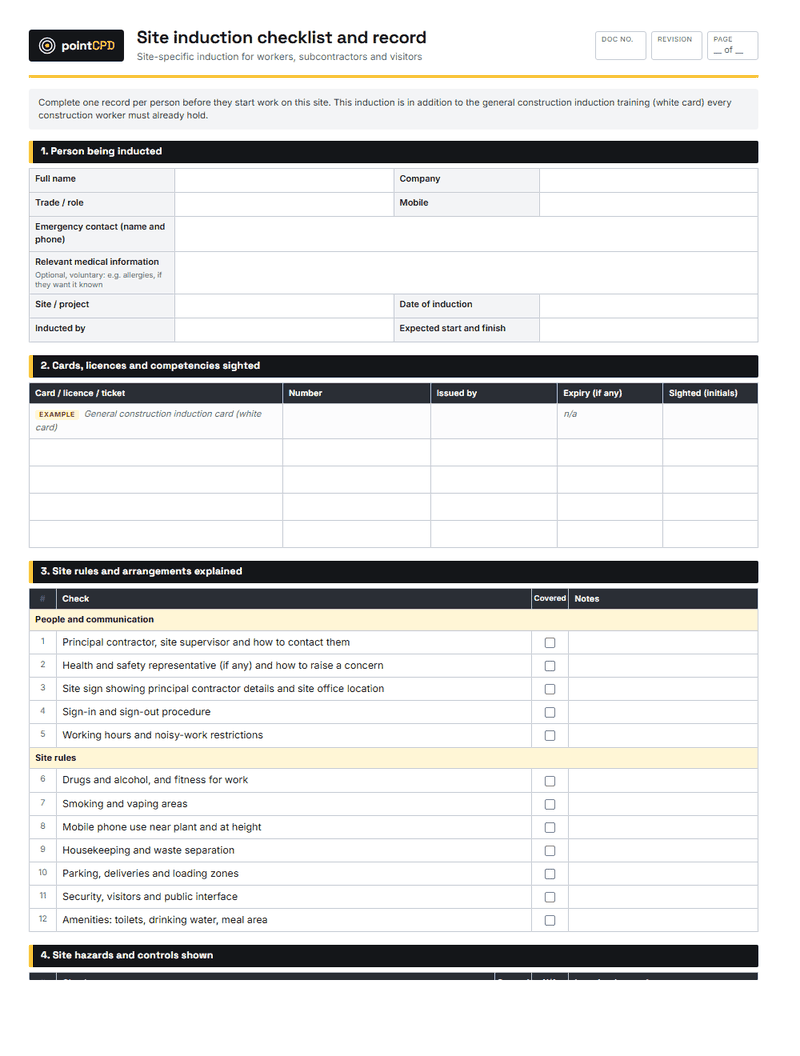
- Site sign displayed with the principal contractor’s details and the approval information required.
- Every trade doing licensed work holds the right licence, and you have checked it.
- Subcontractors are supervised by a licensed person, and you can show how.
- Plumbing and drainage work done by licensed plumbers, with the required notices and certificates.
- Approved plans and approval documents on site and current.
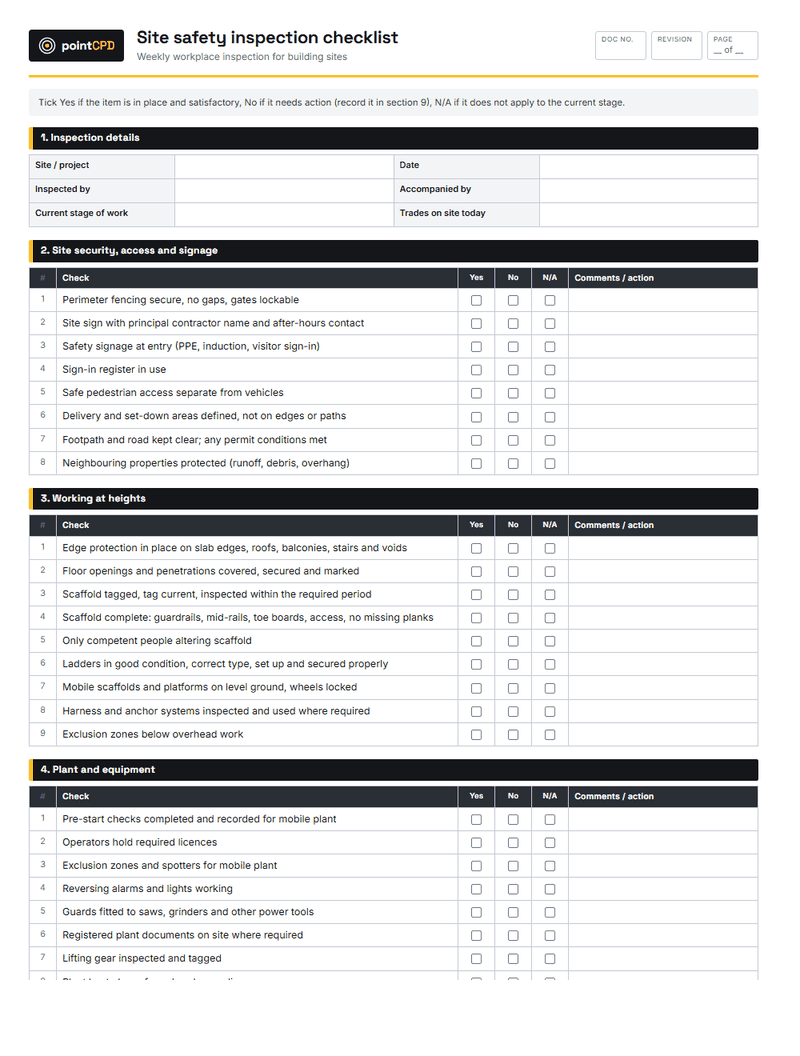
- Safety basics in place: fencing, amenities, edge protection, housekeeping.
Builders who are unsure what their site sign must show, or which work needs which licence, can check Building Commission NSW’s guidance or attend one of its regional seminars. The regulator has made clear it would rather help builders comply than fine them.
The lesson from this round is encouraging: compliance was generally good, and the regulator noticed improvement. But the fines came from items that any builder can control with a simple routine: check licences, supervise contractors, display the site sign, and keep plumbing work in licensed hands.
A simple site compliance routine
A five-minute check at the start of each job, and each time a new trade arrives, covers most of what the inspectors looked for: the site sign is up and correct, every trade’s licence has been checked and recorded, supervision arrangements are clear, and plumbing and drainage are in the hands of licensed plumbers. Put it in the site induction and the supervisor’s start-of-job checklist.
What to watch
- The Riverina visit and any results published afterwards.
- Return visits to the Mid North Coast and New England before the end of the year.
- New licensing requirements, including the national police checks now required for many new individual licence applications.
Questions builders ask
How many sites did Building Commission NSW inspect in its July 2026 regional blitz?
More than 150 residential sites across the Port Macquarie, Forster, Nelson Bay and New England areas, resulting in 25 fines totalling $17,600.
What were builders fined for?
Most commonly unlicensed residential building work, failing to display signage on development consent work, a licensee not ensuring a contractor was supervised, and unauthorised plumbing or drainage work.
Can Building Commission NSW inspect my site without notice?
Yes. The regulator carries out compliance inspections across NSW and has said it will return to these regions before the end of the year.
How do I check a contractor’s licence in NSW?
Use the NSW online licence check before the contractor starts work, and keep a record of the check with the job.
Sources
- Blitzed building sites show improvements in Port Macquarie and New England · NSW Government · 2026-08-18
- Building Commission NSW to visit Riverina region and connect with local tradies · Building Commission NSW · 2026-08-18
Published 19 August 2026. General information for builders, not legal, financial or engineering advice for a specific job. Check current requirements with the relevant regulator or standard before relying on them.