Key takeaways
- The Design and Building Practitioners Act 2020 applies to Class 2 buildings (apartments) and mixed-use buildings with a Class 2 part, including alteration, repair and renovation work on existing Class 2 buildings.
- Designs must be prepared by registered design practitioners who declare them compliant, and registered building practitioners must declare that the building work complies before an occupation certificate.
- In June 2026, NSW deferred extending the Act to remedial work on Class 3 and 9c buildings until 1 July 2028.
- The exemption allowing registered building practitioners to operate without professional indemnity insurance was extended to 30 June 2027, and legislation passed in August removes the need to renew it every year.
- The Act also created a statutory duty of care owed to owners for economic loss caused by defects. Builders should get legal advice on how it applies to their work.
The Design and Building Practitioners Act 2020, known as the DBP Act, was NSW’s central response to the apartment defects crisis that followed Opal Tower and Mascot Towers. It changed how Class 2 buildings are designed and built, introduced registration and declarations for designers and builders, and created a statutory duty of care for defects. In 2026, some of its planned expansions were deferred, and new legislation has altered parts of the framework around it.
This guide explains what the Act requires, which changes were deferred, and how it fits with the reforms NSW passed in August.
What the DBP Act applies to
The Act’s design and building compliance requirements apply to Class 2 buildings, which are apartment buildings, and to mixed-use buildings that include a Class 2 part. According to Building Commission NSW, it continues to apply to alteration, repair and renovation work on existing Class 2 buildings and mixed-use buildings with a Class 2 part, so remedial work on apartments is covered as well as new construction.
Most house builders do not work under the Act’s declaration regime, because houses are Class 1 buildings. But builders who move into apartments, mixed-use projects or remedial work on apartment buildings need to understand it, and all builders should be aware of the statutory duty of care it created.
How it works
How the DBP Act works on a Class 2 project
- 1Registered practitionersDesign and building practitioners are registered for the work they do.
- 2Regulated designsDesigns for building elements and performance solutions are prepared by registered design practitioners.
- 3Design compliance declarationsDesign practitioners declare their designs comply with the Building Code of Australia.
- 4Lodge before workDeclared designs are lodged before the relevant building work starts; variations need new declarations.
- 5Build to the designsThe building practitioner builds to the declared designs.
- 6Building compliance declarationThe building practitioner declares the work complies before an occupation certificate is sought.
Source: Design and Building Practitioners Act 2020 (NSW) and Regulation; Building Commission NSW.
Registration
Practitioners who design regulated elements or carry out building work on Class 2 buildings must be registered for that work. Building practitioners, typically the builder responsible for the building work, must hold the appropriate registration.
Regulated designs and declarations
Designs for building elements, such as the structure, waterproofing, fire safety systems and the building enclosure, and for performance solutions, must be prepared by registered design practitioners. Each design practitioner declares that their design complies with the requirements of the Building Code of Australia. These declared designs must be lodged before the relevant building work starts. If a design is varied, the varied design needs a new declaration.
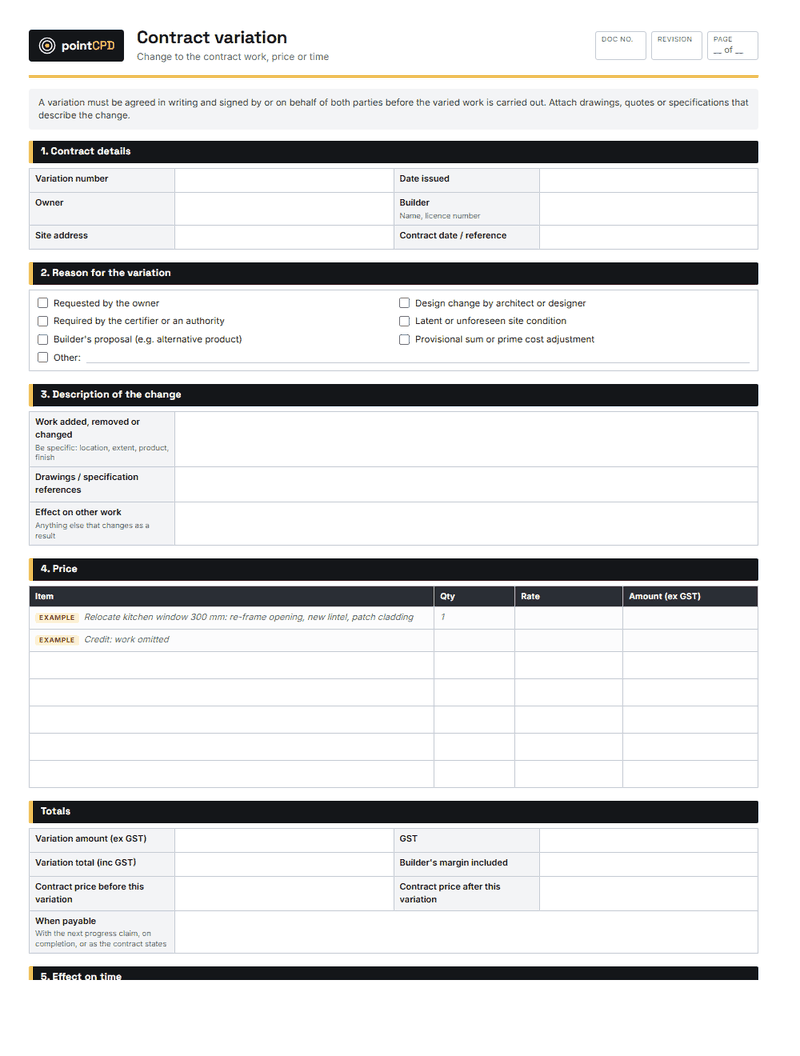
That last point is important for builders. On a Class 2 project, a change on site to a regulated element, such as a waterproofing detail or a fire-stopping system, is not just a variation to agree with the client. It may need a varied design and declaration from the design practitioner before the work is done.
Building compliance declarations
Before an occupation certificate is sought, the registered building practitioner must declare that the building work complies with the Building Code of Australia and has been built in accordance with the declared designs, or identify the steps needed to make it comply. The declaration is a personal statement by a registered practitioner, and making a false or misleading declaration is an offence.
The duty of care
The DBP Act also created a statutory duty of care owed by people who carry out construction work to owners and subsequent owners, to exercise reasonable care to avoid economic loss caused by defects. The duty cannot be contracted out of. It has been the subject of significant litigation since 2020, and its scope, including which buildings and which parties it applies to, has been tested in the courts. Builders should get legal advice on how it applies to their own work and contracts.
What changed in 2026
Recent and upcoming changes
- 26 June 2026Deferrals announcedClass 3 and 9c remedial work deferred to 1 July 2028; building practitioner PI exemption extended to 30 June 2027.
- 5 August 2026Approvals reforms passedNSW passes building approvals and practitioner reforms, including prefabricated building laws and certifier penalties.
- 6 August 2026Fair Trading and Building Bill passedGroundwork for decennial liability insurance; removes the need to renew the PI exemption regulation every 12 months.
- 30 June 2027PI exemption end date (as extended)Unless extended again, registered building practitioners need adequate professional indemnity insurance.
- 1 July 2028Class 3 and 9c remedial workThe DBP Act’s expansion to remedial work on these buildings is due to start.
Source: Building Commission NSW, 26 June 2026; NSW Government, August 2026; Holding Redlich, 19 August 2026.
Class 3 and 9c remedial work deferred
The DBP Act was due to expand from 1 July 2026 to regulate repair, alteration and renovation work on existing Class 3 buildings, such as hotels, hostels and some boarding houses, and Class 9c buildings, which are residential aged care buildings. In June, the NSW Government amended the regulation to defer that expansion by two years, to 1 July 2028.
Professional indemnity insurance exemption extended
The Act anticipates that registered building practitioners will hold adequate professional indemnity insurance. Because the insurance market has not offered suitable products, practitioners have been exempted. In June, the exemption was extended by 12 months to 30 June 2027. The Fair Trading and Building Legislation Amendment Bill passed in August removes the restriction that required a new regulation every 12 months to continue the exemption, according to law firm Holding Redlich, meaning the exemption can continue until the market matures.
Strata building bond increase deferred
Separately, the planned increase in the strata building bond from 2% to 3% of the contract price, for new strata buildings not covered by home building compensation insurance, was deferred to 1 July 2028. That bond is part of the defects protection for apartment owners that decennial liability insurance is intended to strengthen.
Deferred is not cancelled. The Class 3 and 9c expansion and the bond increase have been pushed back, not abandoned. Builders who do remedial work on hotels, boarding houses or aged care buildings should plan for the DBP Act to apply from July 2028.
How it fits with the August 2026 reforms
NSW passed two major building bills in August. The building approvals and practitioners reforms consolidate building approvals, recognise prefabricated buildings and increase penalties for certifier conflicts of interest. The Fair Trading and Building Legislation Amendment Bill lays the groundwork for decennial liability insurance on apartment buildings, gives regulators clearer powers over licences, and stops certifiers surrendering their registration to avoid discipline.
Together with the DBP Act and the Residential Apartment Buildings (Compliance and Enforcement Powers) Act, which gives Building Commission NSW powers to investigate apartment buildings, delay occupation certificates and order rectification of serious defects, these laws make up the framework that apartment builders in NSW now work within. Much of the detail of the August reforms is still to come through regulations and commencement notices.
Why the Act matters beyond apartments
Even builders who never work on Class 2 buildings are affected by the DBP Act’s approach, because it signals where regulation of building quality is heading: registered practitioners, documented designs, declarations of compliance, and personal accountability. The August 2026 reforms, with their tougher penalties for certifiers and clearer powers to cancel licences, continue the same direction. Builders who already document their work thoroughly, keep evidence of compliance and manage design changes formally will find each new layer of regulation easier to absorb.
Evidence that supports a declaration
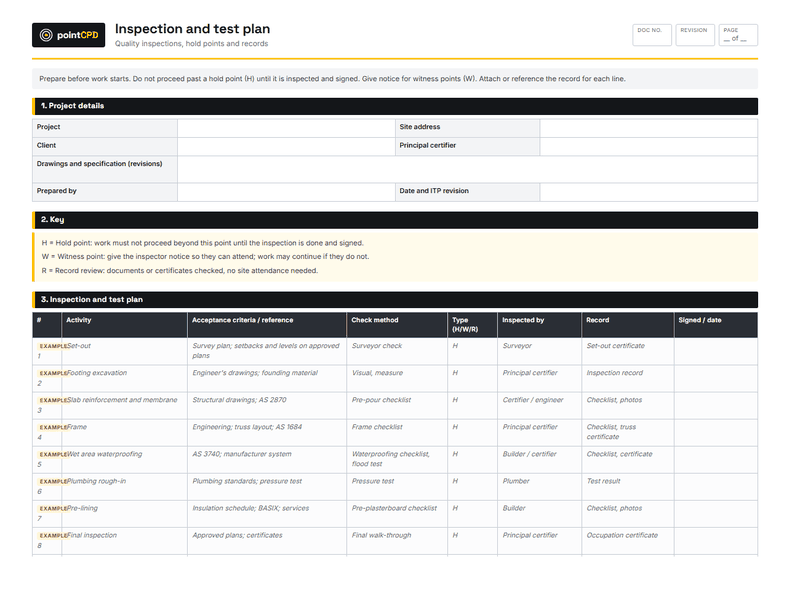
A building compliance declaration is only as good as the evidence behind it. Builders on Class 2 projects typically rely on inspection and test plans, dated photographs of concealed work, product certifications, test results for systems such as fire stopping and waterproofing, subcontractor declarations, and records of every design variation. Assembling that evidence as the job progresses makes the declaration straightforward; reconstructing it at the end is slow and risky.
Practical steps for builders
For builders working on Class 2 buildings
- Hold the right building practitioner registration before contracting for the work.
- Do not start regulated building work until the declared regulated designs are lodged.
- Build to the declared designs; if the design must change, get a varied design and declaration first.
- Keep evidence of how the work complies: inspections, photos, test results, product documents.
- Prepare to make the building compliance declaration honestly and accurately.
- Check whether a job on an existing Class 2 building is remedial work covered by the Act.
Remedial work on existing apartments
Remedial builders working on existing apartment buildings, fixing waterproofing, cladding, fire safety or structural defects, are covered by the Act for Class 2 buildings. Remedial work often involves discovering conditions that were not expected, which means designs can need to change mid-job. Planning for that, with design practitioners available to vary and declare designs promptly, avoids delays. NSW’s variation to NCC 2025, allowing remedial apartment work to use either the current or the new waterproofing requirements, is a reminder that remedial work often has specific rules.
A worked example: the balcony detail change
On a four-storey apartment project, the builder’s waterproofer suggests changing the balcony membrane system because the specified product is on a long lead time. On a house, that might be a variation discussion with the client and a check with the certifier. On a Class 2 building under the DBP Act, the balcony waterproofing is a regulated design prepared and declared by a registered design practitioner.
The builder therefore asks the design practitioner to assess the alternative. The design practitioner prepares a varied design, declares it compliant, and it is lodged before the balcony waterproofing proceeds. The builder records the change in the project documentation. At the end of the job, the building compliance declaration reflects the varied design. Had the waterproofer simply swapped the product, the builder would have been unable to truthfully declare that the work was built to the declared designs.
The bottom line
The DBP Act is the rulebook for apartment design and construction in NSW: registered practitioners, declared designs lodged before work, building to those designs, and a building compliance declaration at the end, backed by a statutory duty of care. In 2026, its expansion to Class 3 and 9c remedial work was deferred to 2028 and the professional indemnity exemption extended, while new laws on approvals, prefabrication and defects insurance were passed around it. For builders moving into apartment work, understanding the Act is not optional.
Questions builders ask
Does the Design and Building Practitioners Act apply to houses?
Its design and building compliance declaration requirements apply to Class 2 buildings (apartments) and mixed-use buildings with a Class 2 part, not houses. The statutory duty of care it created is broader in scope; get legal advice on how it applies to your work.
What is a building compliance declaration?
A declaration by the registered building practitioner, before an occupation certificate is sought, that the building work complies with the Building Code of Australia and was built in accordance with the declared designs, or identifying what is needed to make it comply.
Has the DBP Act expansion to Class 3 and 9c buildings been delayed?
Yes. In June 2026, the expansion to remedial work on Class 3 and 9c buildings was deferred to 1 July 2028.
Do registered building practitioners need professional indemnity insurance?
An exemption applies. It was extended to 30 June 2027, and August 2026 legislation removes the need to renew the exemption regulation every 12 months.
What happens if a regulated design changes during construction?
The varied design generally needs to be prepared and declared by a registered design practitioner and lodged before the affected work proceeds.
Sources
- Update on amendments to building regulations · Building Commission NSW · 2026-06-26
- A step closer to decennial liability insurance · Holding Redlich · 2026-08-19
- Design and Building Practitioners Act 2020 (NSW) · NSW Legislation
Published 29 August 2026. General information for builders, not legal, financial or engineering advice for a specific job. Check current requirements with the relevant regulator or standard before relying on them.