Key takeaways
- The ABCB released NCC 2025 on 1 May 2026. States and territories adopt it progressively from that date, and NSW and Queensland will adopt it on 1 May 2027.
- The most substantial technical changes are for commercial buildings, including stricter energy efficiency for Class 3 and Class 5 to 9 buildings.
- For residential builders, the headline changes are stronger condensation management, a new approach to water management and external waterproofing in Volume One, and updated referenced standards.
- NSW will vary NCC 2025 so apartment remedial works can use either the current or the new waterproofing requirements, and the new energy standards will not apply to apartment common areas.
- After NCC 2025, governments have paused further residential changes, other than essential quality and safety measures, until mid-2029.
The Australian Building Codes Board released the National Construction Code 2025 on 1 May 2026. If you build houses in NSW or Queensland, you have some breathing room: both states will adopt it on 1 May 2027. If you build elsewhere, or across state lines, the new edition may already apply to some of your work, or will soon.
The good news for residential builders is that NCC 2025 is not a repeat of NCC 2022, which brought 7-star energy ratings, whole-of-home energy budgets and livable housing requirements all at once. The ABCB says the most substantial technical changes apply to commercial buildings. But there are changes that matter for houses and apartments, particularly around condensation and water management, and builders who ignore them until the adoption date will be caught out.
NCC 2025 and the residential pause
- August 2025Residential pause announcedThe Commonwealth says no further residential NCC changes, other than essential quality and safety measures, until mid-2029 after NCC 2025.
- October 2025Ministers agreeBuilding Ministers endorse the pause, with an exception only for serious issues that cannot wait.
- February 2026Preview releasedThe ABCB publishes a preview of NCC 2025.
- 1 May 2026NCC 2025 releasedAll three volumes published. Adoption begins in jurisdictions that chose this date.
- 1 May 2027NSW and Queensland adoptNSW adopts NCC 2025 with state variations after a 12-month transition. Queensland also adopts on this date.
- Mid-2029Next residential changesThe earliest point for the next round of residential code changes under the pause.
Source: ABCB; NSW Government, 25 March 2026; Treasury, Building Ministers’ Meeting communiqué, October 2025.
What NCC 2025 is, and why it is smaller for housing
The NCC is updated on a regular cycle. NCC 2025 is the edition that follows NCC 2022. It reflects public consultation and expert technical review, and the ABCB describes it as a set of targeted updates to support safer, more resilient and more consistent building outcomes.
The residential content is deliberately limited. In August 2025 the Commonwealth announced that, after NCC 2025, there would be no further changes to the residential parts of the code until mid-2029, other than essential quality and safety measures. Building Ministers agreed to that pause in October 2025, with an exception only for serious issues that cannot be deferred. The NSW Government described NCC 2025 as implementing new provisions for commercial construction and “a small subset of essential quality and safety improvements” for residential building.
So NCC 2025 is the last significant residential update for a few years. That makes it worth understanding properly now.
The changes that matter for residential builders
What changed in NCC 2025, and who it affects
| Area | What changed | Who should care |
|---|---|---|
| Condensation management | Stronger minimum requirements: control layer permeance, more roof ventilation in colder climates, drained and ventilated cavities in certain conditions | House and apartment builders, designers, cladding and roofing trades |
| Water management (Volume One) | Reworked Performance Requirements and new Deemed-to-Satisfy provisions for concrete Class 2 balconies, falls, overflows and membrane position | Apartment builders, waterproofers, designers |
| Referenced standards | New, amended or revised standards become compliance options on adoption; a new alternative referenced document register | Everyone who specifies products or details |
| Governing requirements | Changes to how fire hazard test reports are verified, limits on assessment methods for structural and fire Performance Solutions, a new structural verification method | Designers, engineers, certifiers, builders relying on Performance Solutions |
| Commercial energy efficiency | Stricter requirements for Class 3 and Class 5 to 9 buildings; space and capacity for future electrification where gas is installed | Commercial builders and services trades |
| Sanitary facilities | An optional pathway for all-gender facilities | Commercial and public building designers |
Source: ABCB, NCC 2025 release, 1 May 2026; HIA summary of NCC 2025 changes.
Condensation management
For house builders, the most significant change is to condensation management. NCC 2022 introduced stronger condensation provisions, particularly for the vapour permeance of pliable building membranes in colder climates, exhaust fans discharging outside, and roof space ventilation. NCC 2025 goes further. According to the Housing Industry Association’s summary, it strengthens minimum requirements with changes to external wall construction and roof ventilation, including updated requirements for the permeance of control layers, increased roof ventilation in colder climate zones, mandatory drained and ventilated cavities in certain conditions, and reduced ventilation area requirements for small roofs.
The underlying problem is real. Modern homes are better insulated and better sealed than older ones, which is good for energy, but it means moisture generated inside, from showers, cooking, drying clothes and people breathing, has fewer ways to escape. When warm, moist air reaches a cold surface inside the wall or roof, it condenses. Over time, that water can cause mould, rot, corrosion and staining, often hidden until the damage is serious. Getting the layers of the wall and roof in the right order, with the right properties, and giving moisture a way out is the answer.
For builders, the practical implication is that standard wall and roof details, including the wrap, the cavity, the cladding fixing and the roof space ventilation, need checking against the NCC 2025 provisions for your climate zone before the edition applies. This is not a paperwork change. It affects what products you buy and how trades install them.
Condensation failures builders see on site
The code changes are easier to understand once you have seen what goes wrong. The same handful of failures turns up again and again in condensation investigations:
- The wrong wrap in the wrong climate. A membrane that resists vapour too strongly, installed on the outside of the frame in a cold climate, traps moisture inside the wall where it condenses against the back of the wrap.
- Cladding fixed hard against the wrap. With no cavity, moisture that gets behind the cladding or condenses on the wrap has nowhere to drain or dry.
- Exhaust fans that discharge into the roof space. Moist air from bathrooms and kitchens dumped into the roof condenses on the underside of cold roofing, then drips onto the ceiling insulation and plasterboard.
- Unventilated roof spaces over well-insulated ceilings. The better the ceiling insulation, the colder the roof space in winter, and the more easily moist air condenses there if it cannot escape.
- Gaps in the air barrier. Penetrations for downlights, pipes and cables let warm, moist indoor air into the wall and roof cavities, carrying moisture with it.
Every one of those is a detailing and installation issue. That is why the NCC 2025 changes are aimed at the layers of the wall and roof, and why the trades who install wrap, sarking, cladding, roofing and exhaust fans need to understand them, not just the designer.
Water management and external waterproofing
Volume One of NCC 2025, which covers apartments and other buildings beyond houses, introduces a new water management framework. It reworks the Performance Requirements for how rainwater and other moisture are managed around buildings and adds new Deemed-to-Satisfy provisions for concrete balconies on Class 2 apartment buildings. HIA’s summary highlights falls in structural slabs, overflow requirements and where membranes and surface finishes must sit in the build-up.
Balcony and podium waterproofing failures have been among the most common and costly defects in apartment buildings. The new provisions aim to design those failures out. Apartment builders, waterproofers and designers need to review their standard details.
NSW has decided that apartment building owners undertaking remedial building works will be able to use either the current waterproofing requirements or those in NCC 2025. That is a variation intended to keep remediation costs down, and it applies to remedial work, not new apartment buildings.
Referenced standards
The NCC calls up Australian Standards for many technical details. NCC 2025 brings new, amended or revised referenced standards into the code as compliance options on adoption, and introduces a new register of alternative referenced documents. For builders, the practical task is to make sure your specifications refer to the right version of each standard once NCC 2025 applies, and that suppliers can show compliance with the version called up.
Governing requirements and Performance Solutions
The governing requirements are the rules about how the NCC is applied. NCC 2025 changes how reports from accredited testing laboratories verify the fire hazard properties of materials, restricts the assessment methods that can be used for structural and fire safety Performance Solutions, and adds a new verification method for structural solutions.
Most residential builders rely on Deemed-to-Satisfy solutions and will not notice these changes directly. But builders who regularly rely on Performance Solutions, for example for unusual cladding, timber structures or fire separations, should check with their designers and certifiers whether the approaches they have used before will still be accepted under NCC 2025.
The commercial changes, briefly
For commercial builders, NCC 2025 is a bigger deal. It introduces stricter energy efficiency requirements for Class 3 and Class 5 to 9 buildings, aimed at moving them closer to near net-zero operational energy use: more efficient air conditioning, insulation, glazing and sealing, updated rules for lighting controls, pumps and fans, and, where gas appliances are installed, space and electrical capacity for future electrification. There are also updates to fire safety and an optional pathway for all-gender sanitary facilities.
NSW has decided the new energy efficiency standards will not apply to the common areas of apartment buildings.
When NCC 2025 applies
The NCC only takes legal effect when a state or territory adopts it through its building laws. NCC 2025 was available for adoption from 1 May 2026, and each jurisdiction has its own implementation arrangements.
NSW announced on 25 March 2026 that it will adopt NCC 2025 on 1 May 2027. The NSW Government said the 12-month transition would give industry time to adjust and plan the changes into new projects. Queensland is also adopting on 1 May 2027. Builders working in other states should check their regulator’s adoption date and transition rules.
Which edition applies to my job?
- 1Check your state’s adoption dateNCC 2025 applies from each state or territory’s own adoption date. In NSW and Queensland that is 1 May 2027.
- 2Check the application dateGenerally, the edition in force when the application for the building approval is made governs the work. Transition rules vary.
- 3Ask your certifier earlyFor jobs lodged close to the change-over, confirm in writing which edition the certifier is assessing against.
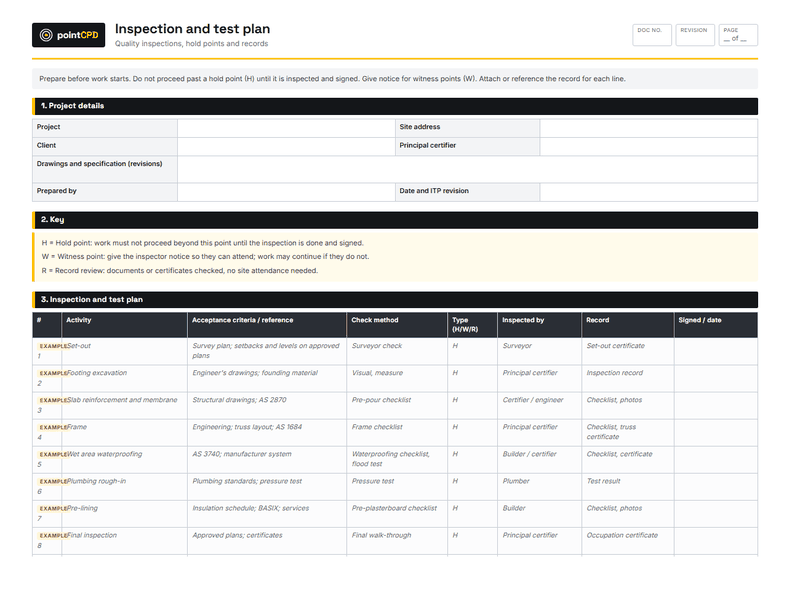
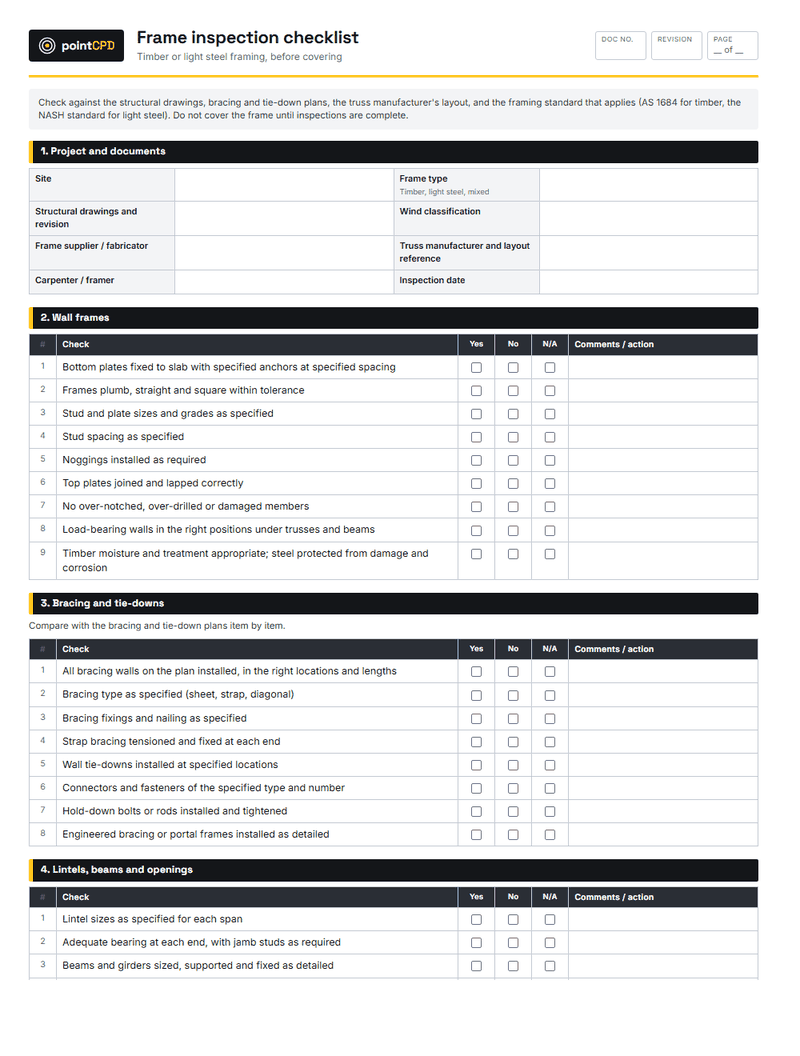
- 4Record itNote the applicable edition on the job file and in your specifications and inspection checklists.
Transition periods also affect suppliers. Product manufacturers need time to test and certify products against revised standards, and some will release updated installation instructions. A product that was acceptable under NCC 2022 may need a different installation detail under NCC 2025, particularly for membranes, cladding systems and roof ventilation products. Ask your suppliers when their NCC 2025 documentation will be available, and file it with your standard details once it is.
For jobs being designed now that will be lodged for approval close to the adoption date, it is worth deciding deliberately which edition the design will follow. A design completed under NCC 2022 but lodged after the change-over may need to be updated. Your certifier is the right person to confirm the position for a specific job.
NSW builders: the variations matter. NSW has flagged a package of variations to NCC 2025 so the changes align with state policy and legislation, including the waterproofing choice for remedial apartment work and the exclusion of apartment common areas from the new energy standards. NSW also continues to use BASIX rather than the NCC’s residential energy provisions. Read the NSW appendix, not just the national text.
How to prepare
Getting ready before NCC 2025 applies to your work
- Read the condensation provisions for your building class and climate zone, and check your standard wall and roof details against them.
- Talk to your wall wrap, sarking, cladding and roofing suppliers about compliant products and details under NCC 2025.
- If you build apartments, review balcony, podium and roof waterproofing details against the new water management provisions.
- Check whether any Performance Solutions you rely on use assessment methods that NCC 2025 restricts.
- Update standard specifications and contract documents that refer to NCC 2022 by name.
- Plan training for supervisors and key trades before your state’s adoption date, not after.
The builders who handle a code change well do three things. They read the changes that affect their type of work early, rather than waiting for a certifier to point them out. They talk to their suppliers, who usually have compliant products and details ready well before the adoption date. And they brief the trades whose work changes, in this case especially cladding, wrap, roofing and waterproofing trades, before the first job under the new edition starts.
What to tell clients
Most clients will never hear about NCC 2025, and they do not need to. But clients building in 2027 and beyond may notice its effects: a slightly different wall build-up, a battened cavity behind cladding, more roof vents, or an exhaust fan that ducts to the eaves instead of the ceiling space. When they ask, the honest explanation is simple and reassuring: the code now asks for walls and roofs that let moisture out, because better-insulated homes need it, and those details protect the house from hidden mould and rot.
For clients signing contracts in the transition period, it is worth being clear in the contract documents which edition of the NCC the design has been prepared under. If a design has to be updated because approval is sought after the adoption date, that is a cost that should be discussed and agreed, not absorbed silently.
What NCC 2025 does not do
It is worth being clear about what is not changing for houses. NCC 2025 does not bring another jump in residential energy star ratings, and it does not introduce a new round of livable housing requirements. The residential pause means the next significant round of residential changes is not expected before mid-2029.
That stability is useful. It gives builders a few years to get the NCC 2022 and NCC 2025 requirements right on every job, rather than chasing a moving target. The condensation provisions in particular reward builders who understand the mechanism, not just the minimum, because a wall or roof that manages moisture properly avoids the hidden defects that surface years after handover.
Where to find the detail
NCC 2025 is free to read on NCC Online. The ABCB also publishes handbooks, including an updated condensation handbook for NCC 2025, along with guidance, calculators and webinars. Industry associations publish summaries for members. For the specific requirements that apply to a job, go to the code itself and the referenced standards, not a summary, including this one.
The bottom line
NCC 2025 is a quieter update for housing than NCC 2022, but it is not a non-event. Condensation management, water management in apartments and updated standards will change details, products and inspections. In NSW and Queensland, there is until 1 May 2027 to prepare. That is enough time to do it properly, and not so much time that it can be left until next year.
Questions builders ask
When does NCC 2025 start in NSW?
NSW will adopt NCC 2025 on 1 May 2027, after a 12-month transition, with a package of NSW variations.
What are the main NCC 2025 changes for houses?
The main residential change is stronger condensation management, affecting external wall construction and roof ventilation. Updated referenced standards and changes to governing requirements also apply. The most substantial technical changes are commercial.
Does NCC 2025 increase energy star ratings for houses?
No. NCC 2025 does not bring another jump in residential star ratings. Its stricter energy efficiency requirements apply to commercial buildings (Class 3 and Class 5 to 9).
Will there be more residential NCC changes soon?
Governments have agreed to pause further residential NCC changes, other than essential quality and safety measures, until mid-2029.
Which NCC edition applies to a job lodged near the change-over?
Generally the edition in force when the application for the building approval is made, but transition rules vary by state. Confirm with your certifier in writing for any job lodged close to the adoption date.
Sources
- NCC 2025 has been released · Australian Building Codes Board · 2026-05-01
- NSW to adopt new National Construction Code May 2027 · NSW Government · 2026-03-25
- National Construction Code 2025: what’s changed for residential builders · Housing Industry Association
- Building Ministers’ Meeting communiqué, October 2025 · The Treasury · 2025-10-22
Published 5 August 2026. General information for builders, not legal, financial or engineering advice for a specific job. Check current requirements with the relevant regulator or standard before relying on them.