Key takeaways
- Temporary electrical supply on construction sites must meet the Australian Standard for electrical installations on construction and demolition sites, including RCD protection for socket outlets.
- Portable tools, leads and RCDs on construction sites must be inspected and tested at the intervals set by the relevant standards, and damaged equipment removed from use.
- Before digging, lodge an enquiry with Before You Dig Australia and locate services on site. Excavating into a live cable or gas main can be fatal.
- Work near overhead power lines requires planning under the network operator’s rules. Contact with a boom, tipper or long material can electrocute everyone touching the plant.
- Only licensed electricians may carry out electrical work, and work on energised equipment is prohibited except in limited circumstances.
Electricity is invisible, silent and unforgiving. On building sites, it hurts people in a handful of predictable ways: a damaged extension lead in a puddle, a power tool with a fault and no RCD, an excavator bucket hitting a buried cable, a crane boom or a tipper tray touching an overhead line, or a trade working on a circuit they assumed was off. Each of those has a well-known, low-cost control.
This guide covers the essentials for residential and small commercial builders: temporary power, RCDs, testing and tagging, underground and overhead services, and electrical work during fit-out.
Temporary power on site
Most sites run on temporary power: a builder’s temporary supply with a site switchboard, or a generator. The Australian Standard for electrical installations on construction and demolition sites sets out requirements for these installations, including RCD protection, the construction and location of switchboards, and the inspection and testing of the installation and equipment.
The temporary supply must be installed by a licensed electrician. The switchboard should be secure, weatherproof and clearly labelled, with RCD protection for socket outlets. Leads should be run so they are not damaged by traffic, water or sharp edges, ideally supported off the ground on lead stands or hooks.
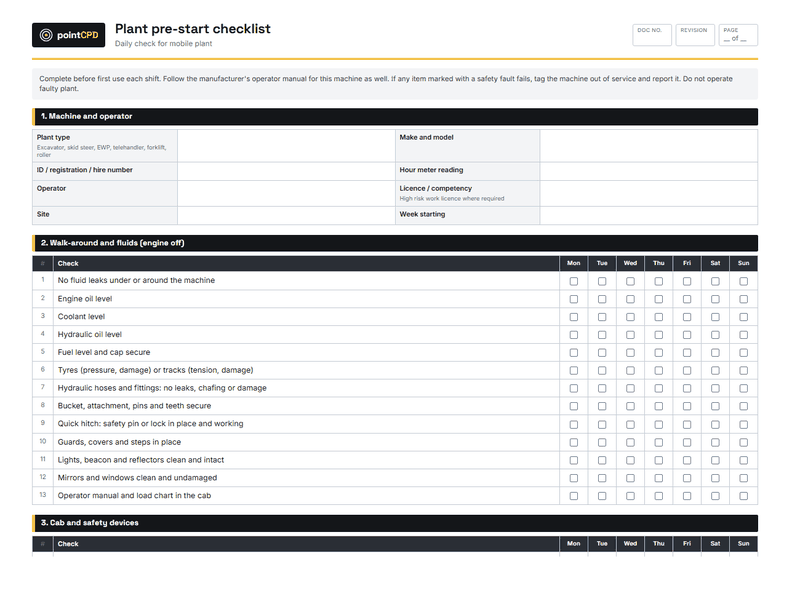
Temporary power set-up checklist
- Temporary supply installed by a licensed electrician to the construction site standard.
- Socket outlets protected by RCDs, and RCDs tested as required.
- Switchboard secured, weatherproof and accessible, with clear labels.
- Leads kept off the ground on stands or hooks, away from water, traffic and sharp edges.
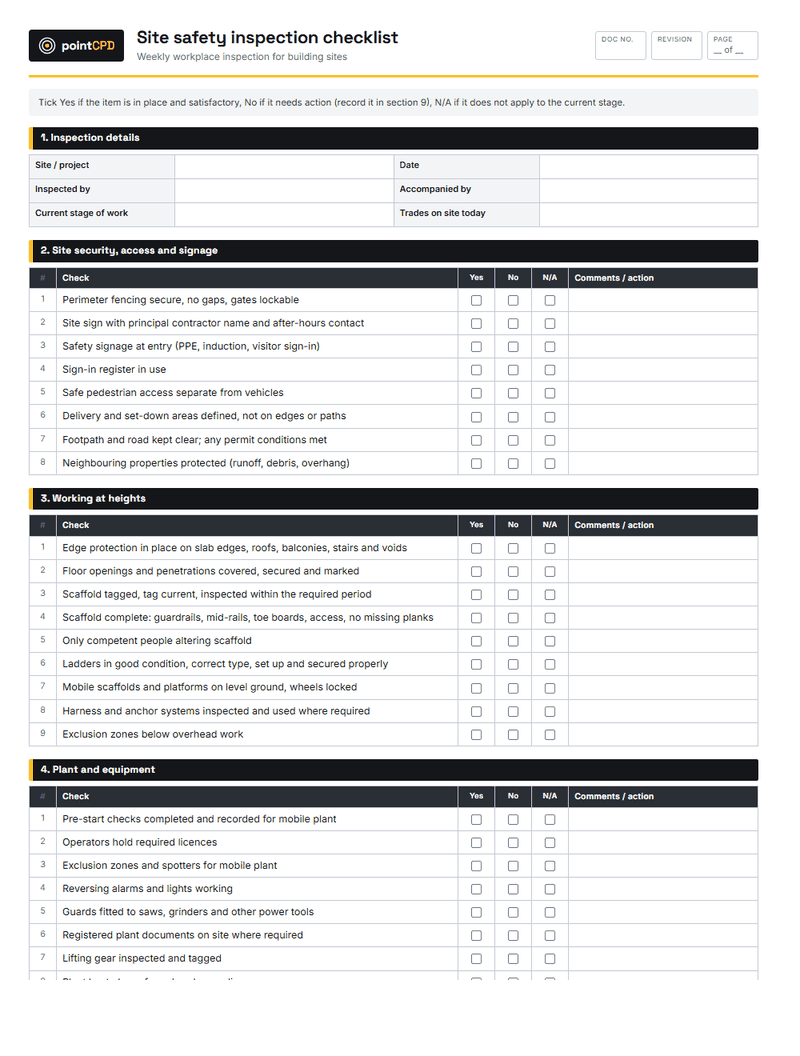
- Tools and leads inspected and tagged as the standards require; damaged items removed.
- Generators located, earthed or protected as the manufacturer and standards require.
- A process for reporting and isolating faulty equipment immediately.
RCDs: the single most important control
A residual current device detects when electricity is leaking to earth, for example through a person, and cuts the power in a fraction of a second. It is the difference between a shock and a fatality in many site incidents. RCD protection is required for socket outlets on construction sites, and portable RCDs add protection where needed. RCDs themselves must be tested regularly to confirm they still trip as they should.
Testing and tagging
Portable electrical equipment, leads and RCDs used on construction sites must be inspected and tested at the intervals set by the relevant standards, and tagged to show the last test. Construction sites are harsh environments, so the required intervals are shorter than in an office. Visual checks before each use catch most obvious damage: cut or crushed leads, broken plugs, exposed wires, damaged tool casings.
Damaged or untagged equipment should be removed from use immediately. Make it a site rule that anyone can tag out faulty equipment, and that nobody uses equipment without a current tag.
Leads on the ground are leads waiting to fail. Extension leads run across muddy ground, through doorways and under trucks are the most common source of site electrical faults. Lift them onto stands or hooks, route them away from traffic, and replace any that are damaged.
Underground services
Excavation on a residential site can strike power cables, gas mains, water mains, telecommunications and stormwater. Striking a live power cable or gas main can kill. Before You Dig Australia is a free service that provides information from asset owners about services in the area, and lodging an enquiry before excavating is the first step.
Before you dig
- 1Lodge a BYDA enquiryGet plans from asset owners for the site and surrounds.
- 2Locate on siteUse a qualified locator to find and mark services; plans can be inaccurate.
- 3Pothole near servicesExpose services carefully by hand or vacuum excavation before machine digging near them.
- 4Brief the operatorMake sure everyone digging knows where the services are.
- 5Stop if in doubtIf an unexpected service is found, stop and get it identified.
Plans from asset owners are a guide, not a guarantee. Services may not be where the plans show, and private services, such as the consumer mains to an existing house, may not appear at all. Using a qualified locator and carefully exposing services near the dig area before bringing in a machine are the controls that prevent strikes.
Overhead power lines
Overhead lines are a hazard for anything tall or long: crane booms, concrete pump booms, tipper trays, excavator arms, elevating work platforms, scaffolds, ladders, and materials such as roof sheets, downpipes and long timber. The electricity network operator’s rules and the relevant codes set approach distances, and some work near lines requires a permit, a safety observer, or the line to be de-energised or insulated by the network operator.
Identify all overhead lines on and next to the site, including the service line to the house, before plant arrives. Mark them, brief operators and trades, and plan lifts and deliveries to keep clear. Where work must happen near lines, contact the network operator early.
Electrical work during fit-out
Only licensed electricians may carry out electrical work. That includes installing, altering or repairing wiring and fixed electrical equipment. Under the WHS Regulations, electrical work on energised equipment is prohibited except in limited circumstances, so circuits must be isolated before work, with lock-out and tag-out to prevent someone switching them back on.
On a building site, the risk often comes from other trades: a plasterer screwing into a wall where a cable runs, a plumber cutting through a wall with a cable in it, or a carpenter removing a light fitting. Clear communication about which circuits are live, isolation of circuits during work in affected areas, and cable locations recorded in photos or a 360 walk-through before lining all reduce the risk.
Compliance certificates
In NSW, electricians must submit a certificate of compliance for electrical work (CCEW) after completing electrical installation work, including the required safety and compliance testing. Builders should make sure they receive compliance certificates for all electrical work on their jobs and keep them with the job file for the final inspection and handover.
Wet weather
Water increases the risk of electric shock. In heavy rain, stop work with electrical tools outdoors, keep switchboards and leads dry, and check equipment before use after it has been wet. Store tools and leads under cover.
SWMS and site rules
Work near energised electrical installations or services, including overhead and underground services, is high-risk construction work that requires a safe work method statement. The site induction should cover electrical rules: tagged equipment only, leads off the ground, report damage immediately, no electrical work except by licensed electricians, and where the overhead and underground services are.
Electrical hazards on a house site, and the controls
| Hazard | How it hurts people | Control |
|---|---|---|
| Damaged leads and tools | Exposed conductors, shock through wet ground | Inspection and testing, removal from use, leads off the ground |
| No RCD protection | A fault does not cut the power fast enough | RCD-protected temporary supply and portable RCDs where needed |
| Buried cables | Excavators and hand tools strike live cables | BYDA enquiry, locating and marking, careful excavation |
| Overhead power lines | Booms, tippers, ladders and materials contact lines | Identify, mark, approach distances, network operator arrangements |
| Live work during fit-out | Trades contact circuits thought to be off | Isolation, lock-out and tag-out; only electricians do electrical work |
| Wet conditions | Water increases shock risk | Weather-rated equipment, dry storage, stop work in heavy rain |
A worked example: the renovation extension
A builder is excavating footings for a rear extension to an existing house. The BYDA enquiry shows no services in the backyard. But the existing house’s consumer mains run underground from the meter box at the side to a detached garage at the back, which is a private service not shown on any asset owner’s plan.
Because the builder uses a locator to scan the dig area before excavation, the cable is found and marked. The footing layout is adjusted slightly, and the section near the cable is dug by hand. Without the locator, the excavator would have gone straight through a live cable in a wet trench.
Solar, batteries and new sources of energy on site
More new homes now have rooftop solar and batteries installed before handover. Solar panels generate electricity whenever light falls on them, and a battery stores energy, so parts of a system can be live even when the main switch is off. Trades working on roofs with installed panels, or near battery systems, need to know how the system is isolated and must follow the installer’s shutdown procedure. Coordinate the timing of solar and battery installation with other trades, and make sure the installer labels isolation points clearly.
Electric shock: what to do
If someone receives an electric shock, do not touch them until the power is off. Switch off at the switchboard or isolate the source, call emergency services, and give first aid if trained. Anyone who has received a significant shock should get medical assessment, even if they feel fine, as effects can be delayed. Serious electrical incidents must be notified to the regulator, and the scene preserved. Have a first aider on site and emergency numbers displayed.
Generators
Portable generators are common on sites without mains supply. They must be suitable for the use, maintained, positioned for ventilation and away from combustibles, and connected in a way that provides protection equivalent to an RCD-protected supply, as the manufacturer and standards require. Never backfeed a building’s wiring from a generator without a proper, licensed installation.
Toolbox talk topics
Electrical safety is a good recurring toolbox subject: checking leads and tools before use, what an RCD does and why never to bypass one, where the overhead and underground services are on this site, and what to do if someone receives a shock. Short, specific talks at the start of each stage keep the message current.
The bottom line
Electrical incidents on building sites follow predictable patterns, and the controls are cheap and well known. Install temporary power properly with RCD protection, test and tag tools and leads, keep leads off the ground, locate underground services before digging, plan around overhead lines, isolate circuits before work, and keep electrical work in the hands of licensed electricians. Nobody should be hurt by electricity on a building site.
Questions builders ask
Do construction sites need RCDs?
Yes. Temporary supplies on construction sites must meet the relevant Australian Standard, which requires RCD protection for socket outlets. RCDs must themselves be tested regularly.
How often do tools and leads need testing on a building site?
At the intervals set by the relevant standards for construction sites, which are shorter than for office environments. Visual checks before each use are also essential.
What is Before You Dig Australia?
A free service that provides information from asset owners about underground services in an area. Lodge an enquiry before excavating, and locate services on site because plans can be inaccurate.
Who can do electrical work on a building site?
Only licensed electricians. Work on energised equipment is prohibited except in limited circumstances, so circuits must be isolated and locked out before work.
Is work near power lines high-risk construction work?
Yes. Work near energised electrical installations or services, including overhead and underground lines, is high-risk construction work requiring a safe work method statement.
Sources
- Electrical safety · Safe Work Australia
- Before You Dig Australia · BYDA
Published 25 August 2026. General information for builders, not legal, financial or engineering advice for a specific job. Check current requirements with the relevant regulator or standard before relying on them.