Key takeaways
- Psychosocial hazards are aspects of work that can cause psychological harm, such as excessive demands, poor support, bullying, harassment, violence and aggression, and traumatic events.
- Work health and safety laws require businesses to manage psychosocial risks like any other risk. NSW introduced specific regulations from 1 October 2022, and the model WHS Regulations followed in 2023.
- Construction has its own psychosocial hazards: long hours, programme pressure, job insecurity, client aggression, isolation for sole traders, and bullying or harassment of apprentices and minority workers.
- Employers also have a positive duty under federal sex discrimination law to take reasonable and proportionate measures to eliminate sexual harassment.
- The practical steps are the same as for physical hazards: identify, assess, control, review, and consult the workers affected.
Construction has always taken safety seriously when it comes to falls, plant and electricity. It has been slower to accept that the way work is organised can also cause harm. Long hours to make up a programme, a supervisor who humiliates apprentices, a client who abuses the site team, a sole trader working alone for months with no one to talk to: these are not personality problems or “part of the job”. Under work health and safety law, they are psychosocial hazards, and they must be managed.
This guide explains what psychosocial hazards are, what the rules require, how they show up on building sites, and the practical steps builders can take.
What psychosocial hazards are
Safe Work Australia defines psychosocial hazards as aspects of work that may cause psychological harm, and they can also contribute to physical harm. Psychological harm includes anxiety, depression, post-traumatic stress and burnout. Physical harm can follow too: fatigue from long hours contributes to accidents, and stress affects health.
Psychosocial hazards recognised in the code of practice
- High or low job demands, including long hours and tight deadlines.
- Low job control: no say in how or when the work is done.
- Poor support from supervisors and co-workers.
- Lack of role clarity: conflicting instructions, unclear responsibilities.
- Poor change management and inadequate reward and recognition.
- Poor organisational justice: inconsistent or unfair treatment.
- Traumatic events, such as serious incidents on site.
- Remote or isolated work.
- Poor physical environment: heat, noise, poor amenities.
- Violence and aggression, including from clients.
- Bullying, harassment including sexual harassment, and conflict.
Source: Safe Work Australia, Model Code of Practice: Managing psychosocial hazards at work.
Hazards often combine. A small crew working long hours on a delayed job, with an aggressive client and a supervisor under pressure, faces several at once. The risk comes from the combination, how often it happens and how long it lasts.
What the law requires
Work health and safety laws have always required businesses to manage risks to health, and health includes psychological health. Over the past few years, that has been made explicit.
- NSW introduced specific regulations on psychosocial risks from 1 October 2022, requiring businesses to manage them in the same way as other risks.
- The model WHS Regulations, adopted in most other jurisdictions, were amended in 2023 to set out duties for managing psychosocial risks.
- Safe Work Australia’s Model Code of Practice on managing psychosocial hazards at work sets out how to meet the duties in practice.
The core duty is familiar: a person conducting a business or undertaking must eliminate psychosocial risks so far as is reasonably practicable, and if that is not possible, minimise them. In deciding how, the business must consider the duration, frequency and severity of exposure, how the hazards interact, the design of the work, the systems of work, and the workplace itself. Consultation with workers is required, as with any WHS risk.
The positive duty on sexual harassment
Separately from WHS law, federal sex discrimination law now places a positive duty on employers to take reasonable and proportionate measures to eliminate sexual harassment, sex-based harassment and related conduct, as far as possible. The Australian Human Rights Commission has powers to enforce that duty. For builders, it means that preventing harassment is not only a matter of responding to complaints; it requires proactive steps.
How psychosocial hazards show up in construction
Hours and programme pressure
Construction runs on programmes, and programmes slip. Weather, late materials, trade shortages and client changes all push work into evenings and weekends. Occasional overtime is normal. Sustained long weeks without recovery are a hazard: fatigue affects judgement and safety, and it wears people down.
The controls start with how jobs are priced and programmed. A builder who wins work with an unrealistic programme is setting up the site team to carry the cost in hours. Realistic programmes, allowance for weather and delays, and enough people to do the work are the most effective controls, and they are business decisions, not HR policies.
Bullying and the treatment of apprentices
Apprentices are young, new, and dependent on their supervisors for training and for their future. That makes them vulnerable to bullying: humiliation, “initiation” rituals, being given only the worst jobs, or being yelled at in front of others. Some of that behaviour has been passed down as tradition. It is also a major reason apprentices leave the industry before finishing, at a time when the industry cannot afford to lose them.
Clear standards of behaviour, supervisors held accountable for how they treat apprentices, and a safe way for an apprentice to raise a problem without fear of losing their job are the basic controls.
Client aggression
Residential building involves people’s homes and life savings. When things go wrong, some clients become abusive: angry calls at night, threatening texts, confrontations on site. Site supervisors and office staff often bear the brunt. Aggression from clients is a recognised psychosocial hazard.
Practical controls include clear communication processes that set expectations from the start, moving difficult conversations into writing, a process for escalating aggressive behaviour to management, and support for staff who deal with it. Builders are entitled to set boundaries on how their staff are treated.
Isolation
Sole traders and small crews often work alone for long periods, with the business owner carrying every problem personally. Remote and regional work adds distance from support. Isolation is a hazard in its own right, and it makes other pressures harder to cope with.
Traumatic events
A serious injury or death on site affects everyone who witnessed it or knew the person involved. Workers may need immediate support, time away and access to counselling. Having a plan for how to respond, including who to call, is part of managing the risk.
Harassment and exclusion
Women and other minority groups in construction continue to report harassment and exclusion on some sites: comments, images, unwanted contact, and poor amenities. Beyond the legal duties, the industry needs more people, and it will not attract or keep them if sites are hostile.
Psychosocial hazards on a building site, and controls that work
| Hazard | What it looks like on site | Controls |
|---|---|---|
| Excessive demands | Six- and seven-day weeks to make up delays; unrealistic programmes | Realistic programmes and pricing; limits on hours; resourcing |
| Bullying of apprentices | Humiliation, “initiation”, being given only rubbish jobs | Clear standards, supervisor accountability, a safe way to report |
| Client aggression | Abusive calls and texts, confrontations on site | A process for escalating, communication in writing, support for staff |
| Isolation | Sole traders and remote workers with nobody to talk to | Regular check-ins, peer networks, support services |
| Traumatic events | A serious fall or injury on site | Immediate support, time off, access to counselling |
| Sexual harassment | Comments, images, unwanted contact, exclusion | Policy, training, reporting and consequences, inclusive amenities |
The practical process
Managing psychosocial risk: the same process as any hazard
- 1IdentifyTalk to workers, look at hours, turnover, complaints and incidents.
- 2AssessHow often, how severe, who is affected, and how the hazards combine.
- 3ControlChange the work first: programmes, resourcing, supervision, amenities. Then policies and training.
- 4ConsultInvolve workers in finding and fixing the problems. They know where the pressure is.
- 5ReviewCheck the controls are working, especially after incidents or changes.
The hierarchy of controls applies here too. The most effective controls change the work itself: realistic programmes, adequate resourcing, clear roles, good supervision, decent amenities. Policies, training and support services matter, but on their own they are the equivalent of handing out hard hats while leaving an unprotected edge.
Start with the programme. For many building businesses, the single biggest psychosocial hazard is a programme that can only be met by working the crew into the ground. Fixing that is a pricing and planning decision, and it sits with the business owner, not the site.
What a small builder can do this month
- Talk to your crew. Ask what makes the job harder than it needs to be. Listen, and act on something.
- Look at the hours. Who is working the longest weeks, and why? Is it a programme problem, a resourcing problem, or a pricing problem?
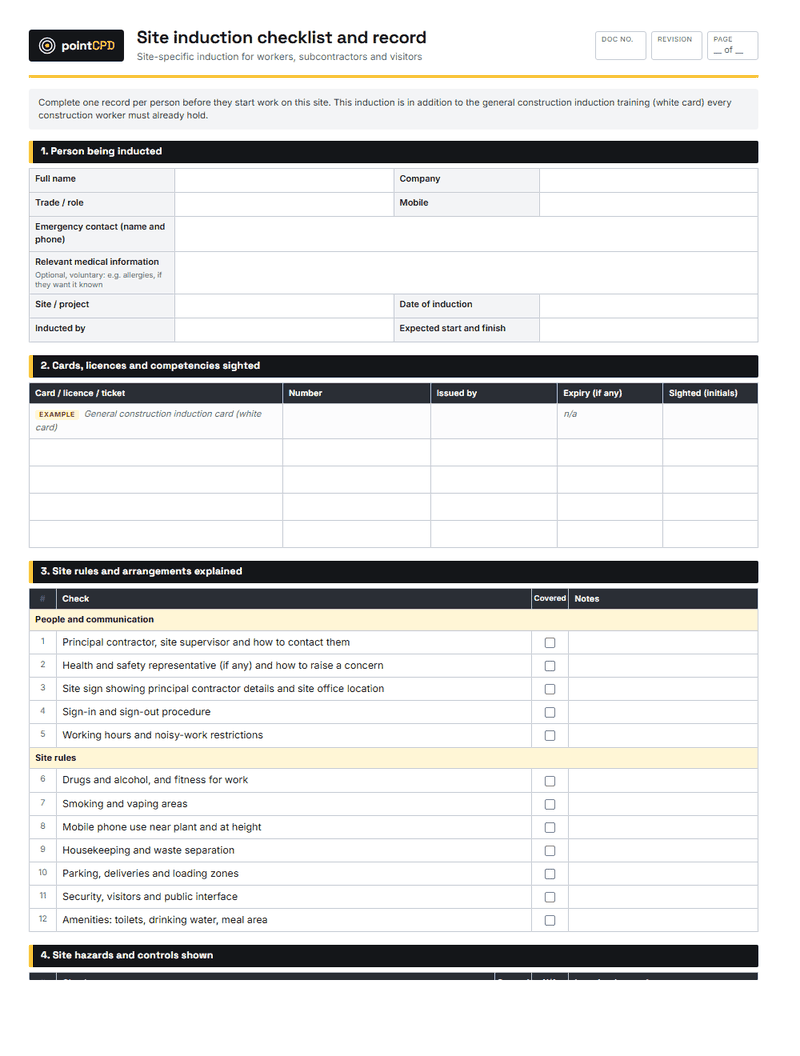
- Set a standard of behaviour. Put it in writing and in the site induction: no bullying, no harassment, respect for apprentices and every trade.
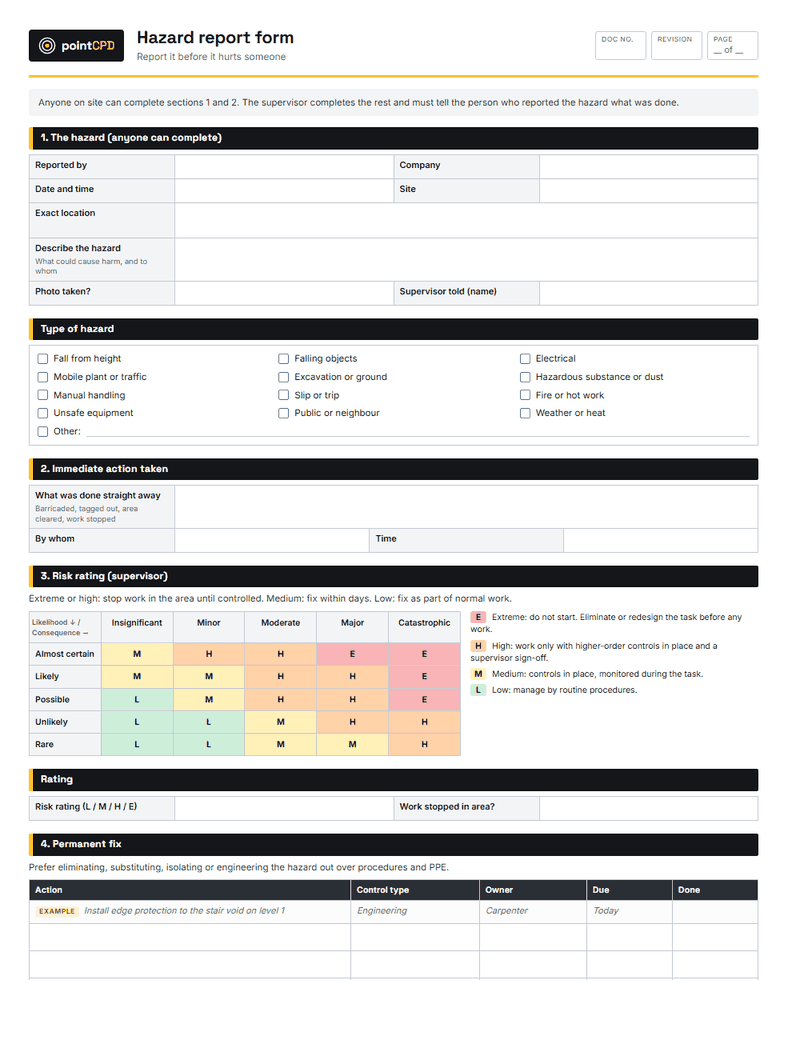
- Give people a way to speak up. Someone other than their direct supervisor they can talk to without fear.
- Plan for client aggression. Decide how staff should respond, when to escalate, and when you will step in.
- Know where to send people. Keep details of support services on site, including industry services such as MATES in Construction and general services such as Lifeline.
- Look after yourself. Small builders carry a heavy load. Your own wellbeing is part of the business’s risk.
A worked example: the delayed job
A builder is three weeks behind on a renovation after a wet month and a late window delivery. The client is angry and calling the site supervisor several times a day. To catch up, the crew has worked six days a week for a month, and the supervisor has been answering client calls at night. The apprentice has been sent to do most of the demolition clean-up alone.
Several psychosocial hazards are stacked here: excessive demands, client aggression, a supervisor with no relief, and an apprentice isolated on unpleasant work with little supervision. None is dramatic on its own, but together they are the kind of situation where someone gets hurt, quits or burns out.
The builder responds by resetting the programme with the client in writing, explaining the causes of delay and a realistic completion date. Client communication moves to the builder, with a weekly written update, and the supervisor is told not to take calls after hours. The crew goes back to five days, with a labourer brought in for two weeks to catch up. The apprentice is paired with a carpenter for the rest of the job. The builder raises it at the next toolbox talk and asks the crew what else would help.
None of this is a policy document. It is how the work is organised, which is exactly what the psychosocial rules are about.
Consultation: the part that makes it work
WHS law requires consultation with workers on health and safety matters, and psychosocial hazards are no exception. On a building site, that can be as simple as raising the topic at toolbox talks, asking workers what is causing pressure, and involving them in finding solutions. Workers are usually the first to know when the programme is unrealistic, when a supervisor is behaving badly, or when a client is becoming a problem.
Records
As with other risks, keep a record of what was identified, what was done and when it was reviewed. That need not be elaborate for a small business: a note in the risk register, the toolbox talk records, and a record of any complaints and how they were handled. If a regulator ever asks how the business manages psychosocial risks, those records are the answer.
The bottom line
Psychosocial hazards are part of the WHS duty, not an optional extra. In construction, the biggest ones are well known: hours and programme pressure, bullying, client aggression, isolation, trauma and harassment. The controls start with how work is priced, programmed and supervised, and they depend on listening to the people doing the work. The payoff is not only compliance. It is a crew that stays, apprentices who finish, and a business people want to work for.
Questions builders ask
What are psychosocial hazards at work?
Aspects of work that can cause psychological harm, such as excessive job demands, low control, poor support, bullying, harassment, violence and aggression, traumatic events and isolated work.
Do builders have to manage psychosocial hazards?
Yes. WHS laws require businesses to manage psychosocial risks like other risks. NSW introduced specific regulations from 1 October 2022, and the model WHS Regulations were amended in 2023.
Is client abuse a WHS issue?
Yes. Violence and aggression, including from clients, is a recognised psychosocial hazard. Businesses should have processes to prevent, escalate and respond to it, and support staff affected.
What is the positive duty on sexual harassment?
Under federal sex discrimination law, employers must take reasonable and proportionate measures to eliminate sexual harassment and related conduct, as far as possible. The Australian Human Rights Commission can enforce the duty.
Where can construction workers get support?
Industry services such as MATES in Construction and general services such as Lifeline provide support. Keep their details on site and in your induction.
Sources
- Model Code of Practice: Managing psychosocial hazards at work · Safe Work Australia
- Psychosocial hazards · Safe Work Australia
- Positive duty under the Sex Discrimination Act · Australian Human Rights Commission
Published 13 August 2026. General information for builders, not legal, financial or engineering advice for a specific job. Check current requirements with the relevant regulator or standard before relying on them.