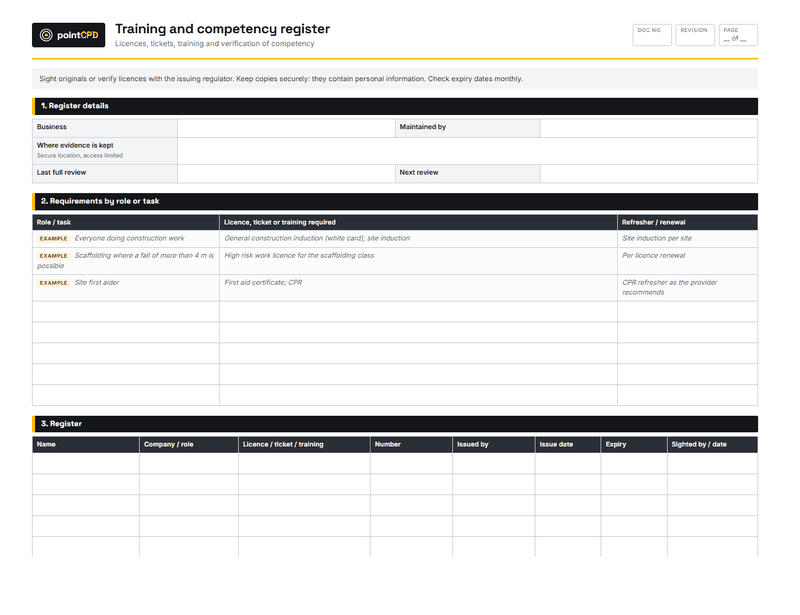
When a regulator, principal contractor or insurer asks whether the person operating a machine or erecting a scaffold was licensed, “I think so” is not an answer. A training and competency register is. It records every worker’s white card, licences, tickets and training in one place, with expiry dates, so a supervisor can check in seconds and renewals do not slip.
What goes in the register
| Type | Examples |
|---|---|
| General construction induction | The white card, required before anyone does construction work |
| High risk work licences | Scaffolding, rigging and dogging, certain cranes and hoists, forklifts, certain boom-type elevating work platforms |
| Trade and building licences | Electrical, plumbing and gasfitting, builder and supervisor licences where relevant |
| First aid | First aid and CPR certificates for nominated first aiders |
| Other tickets | Traffic control, asbestos removal, confined space, working at heights training |
| Verification of competency | Assessed competence on a specific machine or task |
| Site training | SWMS briefings, plant familiarisation, toolbox talks, emergency drills |
Licence versus competence
A licence shows a person passed an assessment at some point. It does not show they can operate this particular machine safely today. That is why many principal contractors ask for a verification of competency: a competent assessor watches the operator work, checks their knowledge of the machine, and records the outcome. It is especially valuable for plant with specific hazards, such as excavators with quick hitches. Section 4 records it.
Setting it up
- Start with requirements. Section 2 lists what each role or task needs. It turns the register from a list of cards into a check: does this person hold what this job needs?
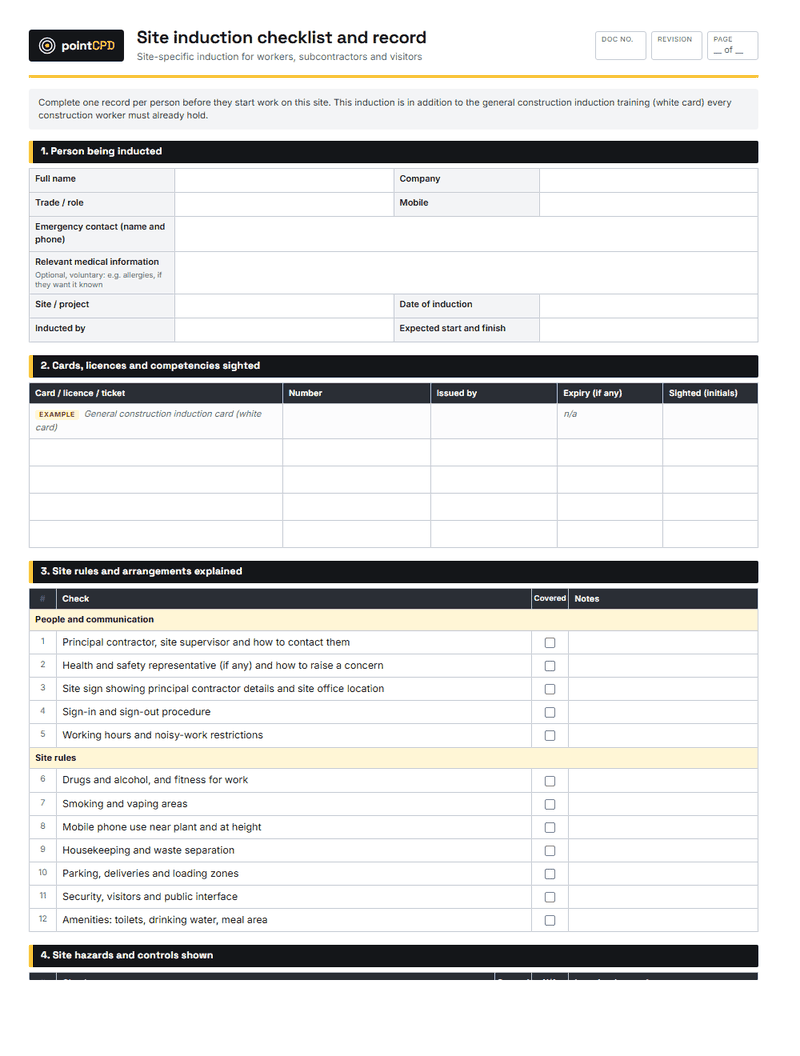
- Add people at induction. The site induction is where cards are sighted, so record them then.
- Sight, do not assume. Check the card or verify the licence with the issuing regulator. A photo of a card you cannot verify is not evidence.
- Record, then protect. Licence numbers and copies are personal information. Keep them secure and limit access.
Expiries: the monthly check
Licences, first aid certificates and some tickets expire. A lapsed licence discovered after an incident is a serious problem for the worker and the business. Sort the register by expiry date once a month and give people notice before anything lapses. If a licence has expired, the person does not do that work until it is renewed.
Subcontractors are on your register too
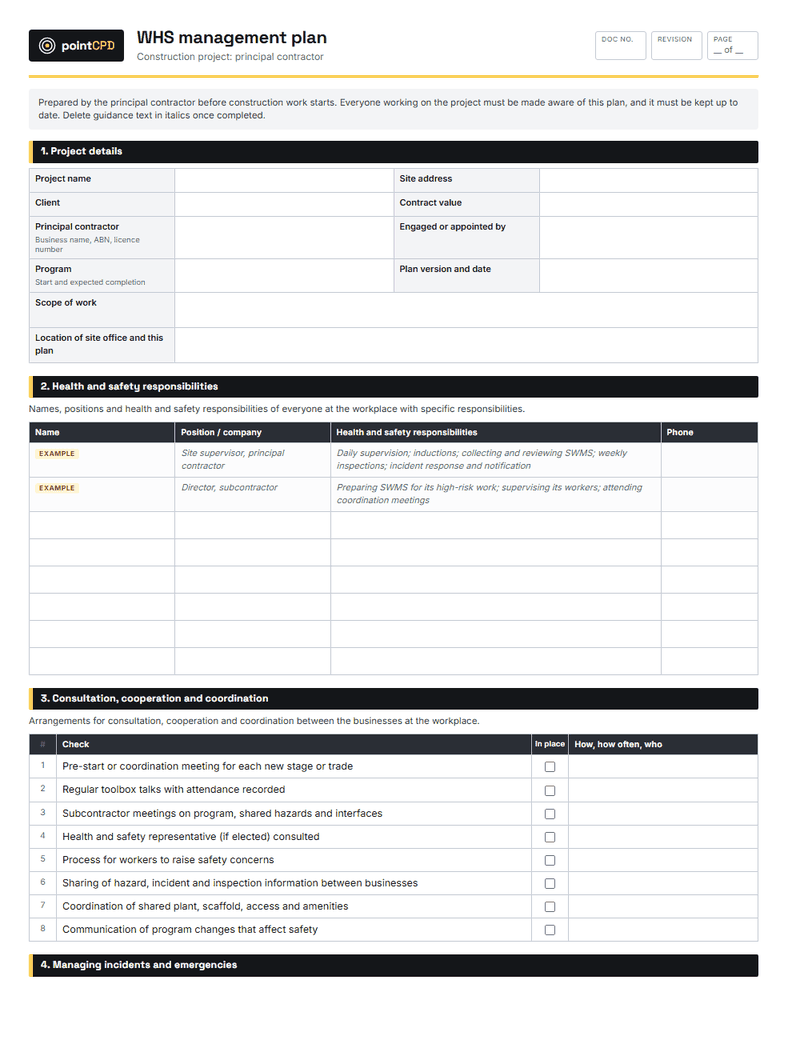
On a construction project the principal contractor has to be satisfied the people on site are qualified for their work, whoever employs them. Record subcontractors’ workers the same way as your own. It also makes WHS management plan arrangements and audits far simpler.
Training given on site counts
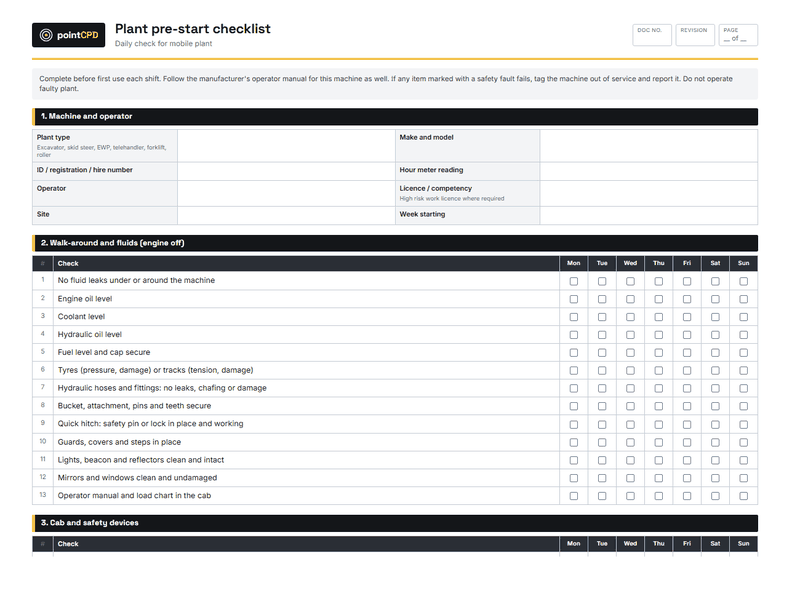
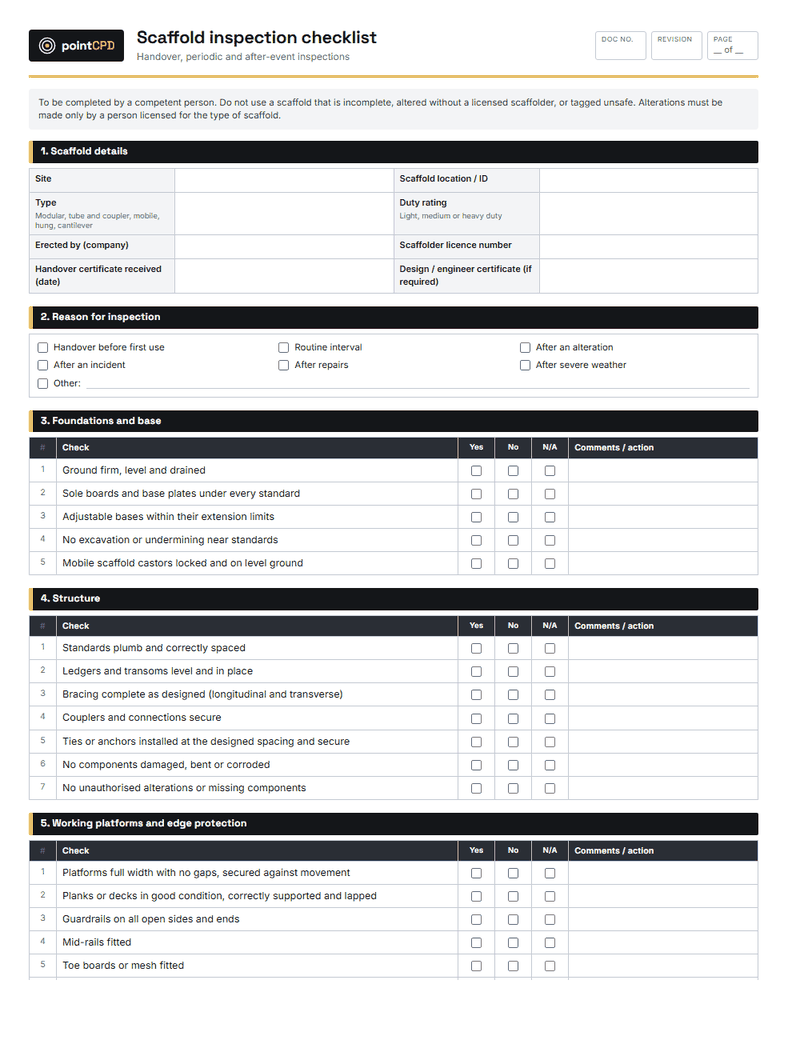
Section 5 records training delivered on the job: familiarisation on a new machine, SWMS briefings, emergency drills, toolbox talks. It completes the picture of what each person was told and trained to do, which is exactly what a regulator asks after an incident. Link it to the plant pre-start and scaffold inspection records, which name the people doing the work.
CPD belongs here too
For licensed builders, continuing professional development is part of keeping the licence current. In NSW, licensed builders need 12 CPD points each year. Recording CPD alongside the other licences keeps everything in one place; see the NSW builder CPD guide for how points are earned and recorded.
Setting it up for a small building business
For a builder with a handful of employees and a regular group of subcontractors, the register can be a single spreadsheet with a tab per person, or the PDF version filled in by hand. The effort is in the first month. After that, it is updated at each induction and checked once a month for expiries. A practical routine:
- List your own employees and their licences, tickets and first aid.
- Ask each regular subcontractor for the same for the workers they send.
- Add new people at site induction, sighting cards as you go.
- Set a monthly calendar reminder to sort by expiry date and send renewal reminders.
Privacy and personal information
Licence numbers, card copies and dates of birth are personal information. Collect only what you need to confirm competency, store it securely with access limited to the people who need it, and do not share it beyond the purpose it was collected for, such as providing evidence to a principal contractor. Tell workers why you are collecting it. When someone stops working with you, keep the record for as long as you may need it for WHS or claims purposes, then dispose of it securely. A register that is easy to check and properly protected is better than a folder of photocopies in the site shed.